
Community initiatives in Kaduna teach violence prevention — Premium Times Nigeria
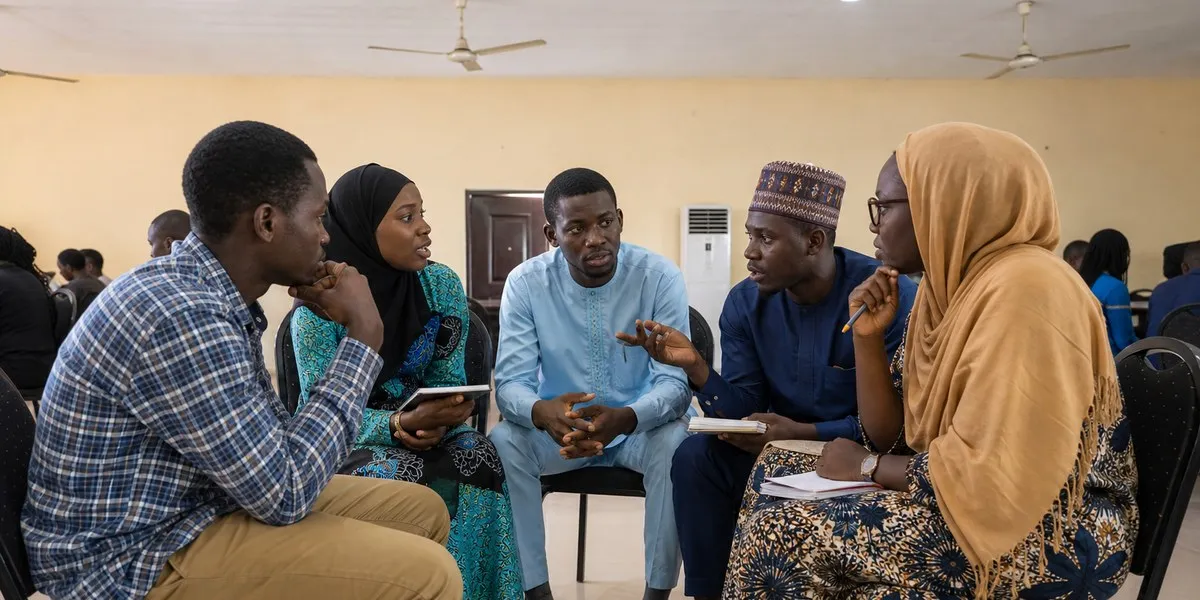
In Nigeria’s Kaduna State, community peacebuilding initiatives are teaching young people, religious and local leaders to recognize tensions and resolve disputes before they escalate into violence. As Premium Times Nigeria reports, the Muslim Peace Network, founded in 2020 and based in Kaduna, plays an important role in this work.
Mistura Hussein, an 18-year-old student at Kaduna State University, said that during a dispute between two young people, she did not try to determine who was right. She listened to both sides and sought to prevent the conflict from becoming personal. Ultimately, the dispute ended without a fight. Hussein applied skills gained during a peacebuilding training session.
Work with schoolchildren and communities
The Muslim Peace Network conducts peace education classes, interfaith dialogues and community-level mediation. The organization’s programs include school peace clubs, community initiatives and a network of community peace representatives in six districts of the state: Kaduna North, Kaduna South, Chikun, Kachia, Zaria and Igabi.
According to the organization, from 2021 to 2025 its peace education program reached more than 3,700 students in seven private schools in Kaduna, where peace clubs were established. About 10 more communities joined the Community Initiatives to Promote Peace program. During that period, the organization held 12 training sessions on peacebuilding, conflict prevention, youth and women’s engagement, as well as work with religious and community leaders; more than 600 people received training.
More current news is available on the UA.News Telegram channel Telegram.
Participants learn to listen to people with opposing views, express grievances without accusations and seek solutions through dialogue. Maryam Ahmed, a student at Maliki International School, said such activities changed how she communicates with peers of other faiths. Monica Ishaya, a student at Ahmadu Bello University in Zaria, said the training helped her see people of other religions primarily as friends rather than through the prism of differences.
Tensions and limited resources
Kaduna has repeatedly experienced interreligious and interethnic violence linked to political, land and historical disputes. According to the EU Agency for Asylum, citing ACLED, 475 security incidents were recorded in the state from January 2024 to August 2025, resulting in 951 deaths.
Community representatives also intervened in local conflicts to prevent them from taking on a religious dimension. Imam Misbahudin Muhammad Raji spoke about reconciling two motorcyclists from different religious backgrounds after they exchanged insults. In the Chikun district, local residents organized a dialogue between participants in a dispute that had begun to cause religious tension.
At the same time, a lack of funding hinders the expansion of the programs. The Kaduna State Ministry of Education approached the Muslim Peace Network about extending school peace clubs to public schools, but the organization said it lacks the resources to work in all such institutions. Its representatives stress that community peacebuilding does not replace security measures and does not eliminate all political and economic causes of violence, but it can help respond to disputes at an early stage.




