
Lithuania Wants to Limit Transit for Russian Citizens to Six Hours — Delfi
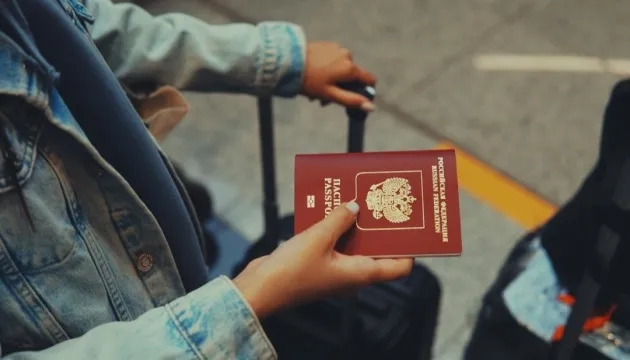
Arvidas Anušauskas, a member of the Lithuanian Seimas, has proposed reducing the permitted transit stay for Russian citizens in the country to six hours. He has submitted the corresponding amendments to the law on the state border and its protection.
The initiative aims to strengthen enforcement of transit time limits. However, in the event of unforeseen circumstances—such as traffic accidents, vehicle breakdowns, or border queues—the stay may be extended within the limits of current EU regulations.
These amendments also propose using an automatic license plate recognition system to monitor compliance with the time limit for Russian citizens.
Anušauskas noted that the draft does not conflict with EU legislation and does not unilaterally alter the maximum 24-hour time limit established by the 2003 EU Council Regulation.
According to him, the law clearly provides for objective circumstances—such as vehicle breakdowns, traffic accidents, border queues, and adverse weather—under which transit may take longer, provided that it does not exceed the established EU maximum 24-hour limit.
To ensure compliance with the rules, Anušauskas proposes using existing automatic license plate recognition infrastructure, which would allow for real-time recording of the start and end of transit, as well as any deviations from the route.
The MP sent a written appeal to Prime Minister Mindaugas Sinkevičius, urging him to immediately assess the effectiveness of current transit control measures and develop a coordinated Lithuanian position at the government level, emphasizing a simplified transit regime through Lithuanian territory for Russian citizens traveling between the main part of the Russian Federation and the Kaliningrad Oblast.
In an appeal to Foreign Minister Kęstutis Budrys and Interior Minister Martynas Katelinas, the deputy stressed the need to take action at the international level.
“The 2003 EU regulation allowing 24-hour transit was adopted under entirely different geopolitical conditions. Today, the Russian Federation is waging war against Ukraine and conducting hybrid operations against the EU. Therefore, I call on the government and the relevant ministers to initiate a review of this EU regulation in cooperation with other states,” he said.
The three-tier action plan proposed by the MP calls for strengthening control over direct transit at the national level, coordinating a unified position with Latvia, Estonia, Poland, and other countries, as well as formally appealing to the European Commission with a proposal to amend relevant regulations.
If approved by the Seimas, the proposed legislative amendments will take effect on January 1, 2027.
According to the State Border Guard Service (SBGS), nearly 13,000 passenger cars with Russian license plates traveled through Lithuanian territory last year using simplified transit documents. There was a more than fourfold increase in the number of cases of abuse of this regime: the number of violations rose from 360 cases in 2024 to 1,493 in 2025.
This was reported by Delfi.
Poland has barred Russian propagandist Artemy Lebedev from entering the Schengen Area.
Russian nuns who assisted the occupiers have been barred from entering the Schengen Area.
Italy has extended the processing time for visa applications from Russian citizens to 60 days.




