
In Nepal, a wild elephant has killed four members of the same family over the past 14 years
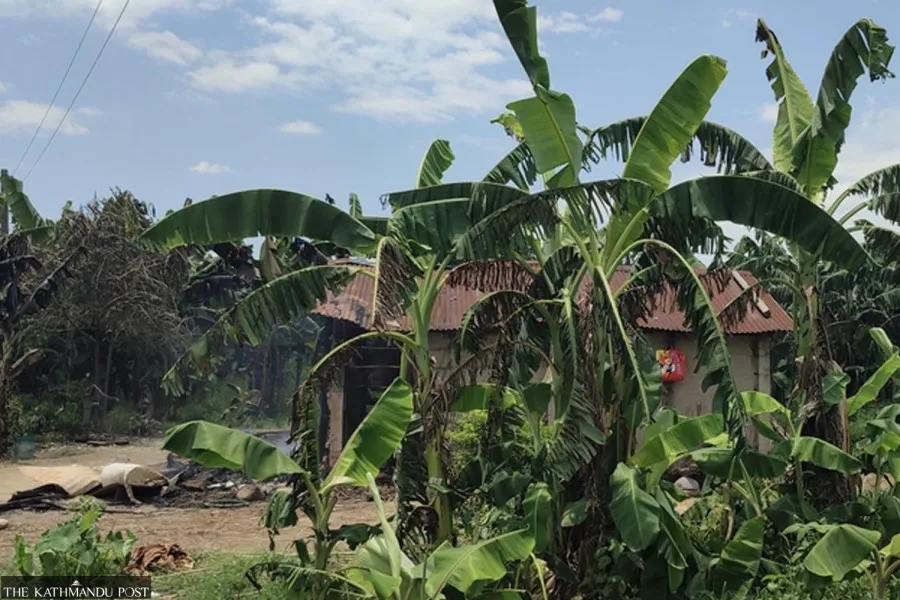
A tragedy has occurred in Nepal that has shocked the entire country. A wild elephant—which had trampled a married couple to death 14 years ago—attacked the same family again after they had moved and killed two more people: a young woman and her four-year-old son.
Nepalese resident Shanichara Bote has now endured a second horrific tragedy at the hands of the same wild elephant. After the animal killed his parents in 2012, the man sold all his possessions, took his family, and moved to another village, hoping to leave the danger behind him forever. However, 14 years later, the tragedy repeated itself.
On the night of July 5, a wild elephant broke into the family’s home in the village of Jagatpur, in the Chitwan district. The victims of the attack were 25-year-old Ashika Bote and her four-year-old son, Bharat. After the tragedy, Shanicharu Bote was found near the district police station. He was in a state of deep shock and was waiting for the forensic medical examination to be completed.
He explained that after his parents’ death, his family had deliberately moved farther away from Chitwan National Park. They had crossed several large rivers and were certain they would now be safe. “We believed that moving across the big rivers would guarantee our safety. But after so many years, that same elephant found us again, broke into our home, and took the lives of my daughter-in-law and my little grandson. We have nowhere else to run,” the man said.
Nine family members lived in the house. According to Shanichari, he was awakened in the middle of the night by loud thuds. “In the middle of the night, it sounded as if someone were hitting the wall very hard. When I went outside, I saw the elephant. The mud walls collapsed instantly. My daughter-in-law ran out holding my grandson in her arms, but the elephant caught up with them,” he recalls.
The rest of the family was saved thanks to Shanichara’s wife. She set fire to some dry straw near the house. The fire scared the animal away, although it also set the house itself on fire. According to the Chitwan National Park administration, this male elephant has been known for his aggressive behavior for many years. The first fatal attacks were recorded as far back as 2010.
Park officials reported that at least 25 deaths from attacks by this animal have now been officially confirmed. Among the victims were not only local residents but also two soldiers who were guarding the reserve and fighting poachers. Park staff have been tracking the elephant’s movements for several years using satellite collars. “We use a satellite collar to track the movements of this extremely aggressive male. Our data shows that on the night of July 4, his location was recorded directly near the site of the tragedy,” said a representative of the administration.
According to him, prior to the latest attack, 23 deaths had been officially confirmed. “Following the two most recent deaths in Jagatpur, the confirmed death toll attributed to this elephant has risen to 25,” the park official noted.
The story of this elephant has long been a focus of attention for the authorities. After the death of Shanichari Bote’s parents in 2012, a decision was made to locate and eliminate the dangerous animal. For two weeks, military personnel and conservation officials combed the forests of Chitwan. In late December 2012, the elephant was shot at twice; it sustained serious injuries but managed to escape.
The government spent more than 1.6 million Nepalese rupees on this operation. For some time, it was believed that the animal had died, but in 2016, it reappeared in the Chitwan area. In 2020, the elephant was fitted with a new satellite collar to replace the old one, which had stopped working. The animal received another device in 2023. The system transmits coordinates every hour, and if the elephant approaches populated areas, park staff try to guide it back into the forest.
However, local residents believe these measures are insufficient. According to them, the elephant has been appearing regularly near villages in recent days, and its route was well known. “This elephant follows the same route every year and returns to the villages, so the park administration could have predicted its arrival,” said a representative of the local committee.
Following the tragedy, residents of Jagatpur blocked the bridge over the Rapti River. They accused the Chitwan National Park administration of inaction and demanded more effective measures to protect people from the dangerous animal. In response, the park administration announced that it plans to modernize its monitoring system. Specifically, this involves installing new satellite collars that will transmit the elephant’s coordinates in real time. Park officials hope this will help them respond more quickly to the elephant’s movements and prevent further casualties, according to The Kathmandu Post.


