
In Nepal, rescuers blast hillside to reach hydropower plant workers
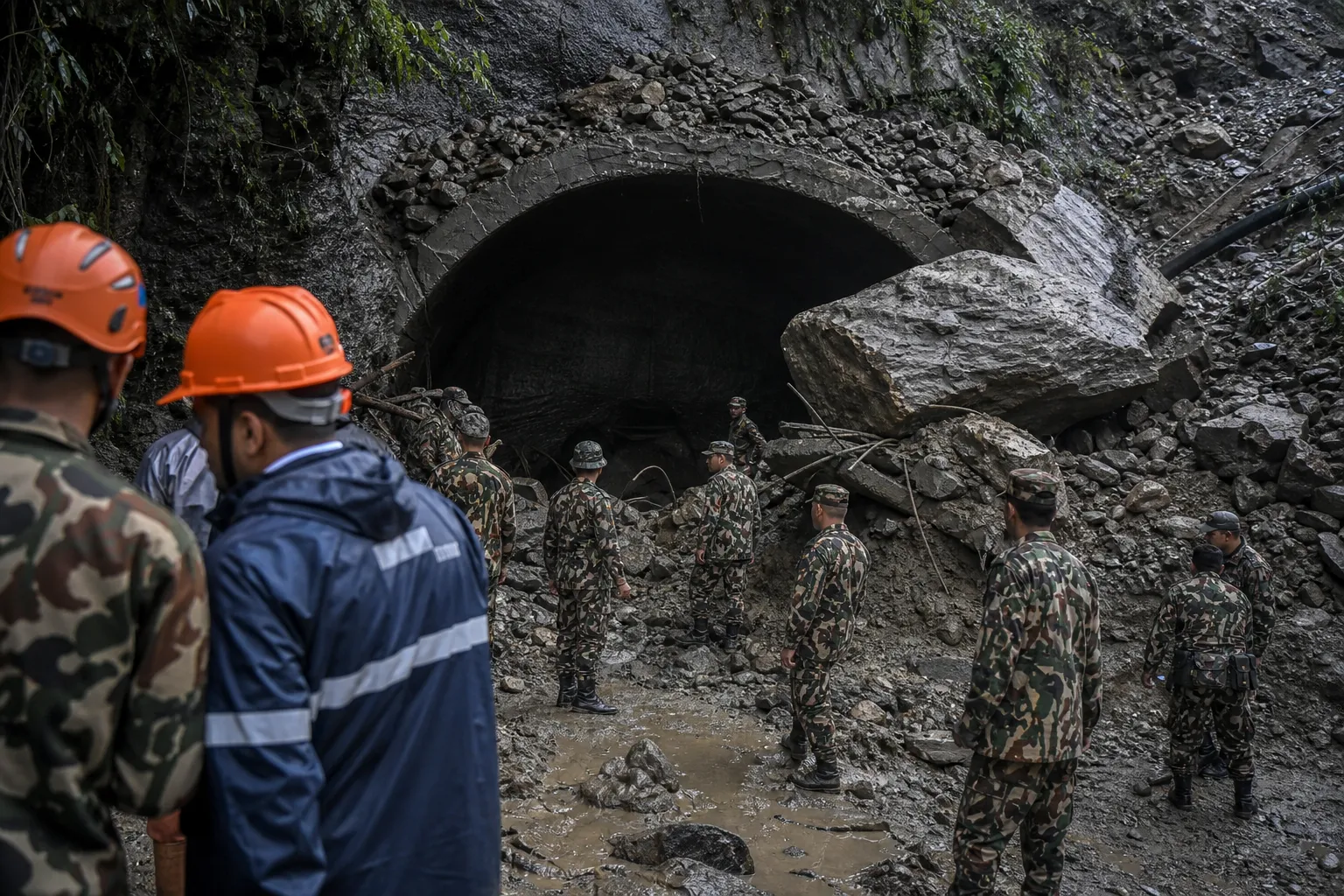
In Nepal, rescuers are using explosives to break through to hydropower plant workers who are believed to remain trapped in mud-filled tunnels along the Trishuli River after flooding. According to BBC News, the families of more than 600 workers hope that their relatives may have survived underground.
According to Nepal’s disaster management authority, the death toll from flooding on the Nepal-Tibet border has reached 939. The number of missing people has been revised to 3,925, including 592 foreign nationals.
Operation near the hydropower plant
On Monday, rescuers blasted a hillside while trying to reach the Trishuli-3A facility and supplied air there. Nepalese Prime Minister Balendra Shah said that 279 people had already been rescued from hydropower plant sites. Overall, he said, 11,379 people have been rescued.
The rescue operation is led by an international team involving Chinese and Nepalese military personnel, with specialists from India, Korea and Australia also participating. One group on Monday managed to enter a tunnel leading to one of the power plants, but found no people there and withdrew.
More current news is available on the UA.News Telegram channel Telegram.
Australian engineer Arnold Dix, who is remotely assisting Nepalese authorities with underground searches, said rescuers are finding it difficult to determine the location of the tunnels because of the scale of the destruction. According to him, once the locations of the power plants are established, a method of access can be chosen, including excavating debris and blasting large boulders.
Search for missing people and burial of bodies
Nepalese authorities said that the floods damaged at least 11 completed or unfinished hydropower projects. Relatives of the trapped workers stress that time is critically important for their rescue. Some of them hope that the workers may have survived thanks to oxygen supply systems inside the structures.
In the Chitwan area, located downstream from the disaster zone, rivers washed nearly 300 bodies ashore. Due to a lack of refrigeration equipment, local authorities resorted to the temporary burial of unidentified victims. Medics and volunteers collected DNA samples to identify the deceased later.
In Tibet, according to official data from Chinese state media, 16 people died and another 546 are considered missing. Chinese authorities imposed administrative penalties on people who suggested online that the number of victims was significantly higher than officially reported.


