
House collapses kill 49 people in Pakistan’s Punjab — Dawn
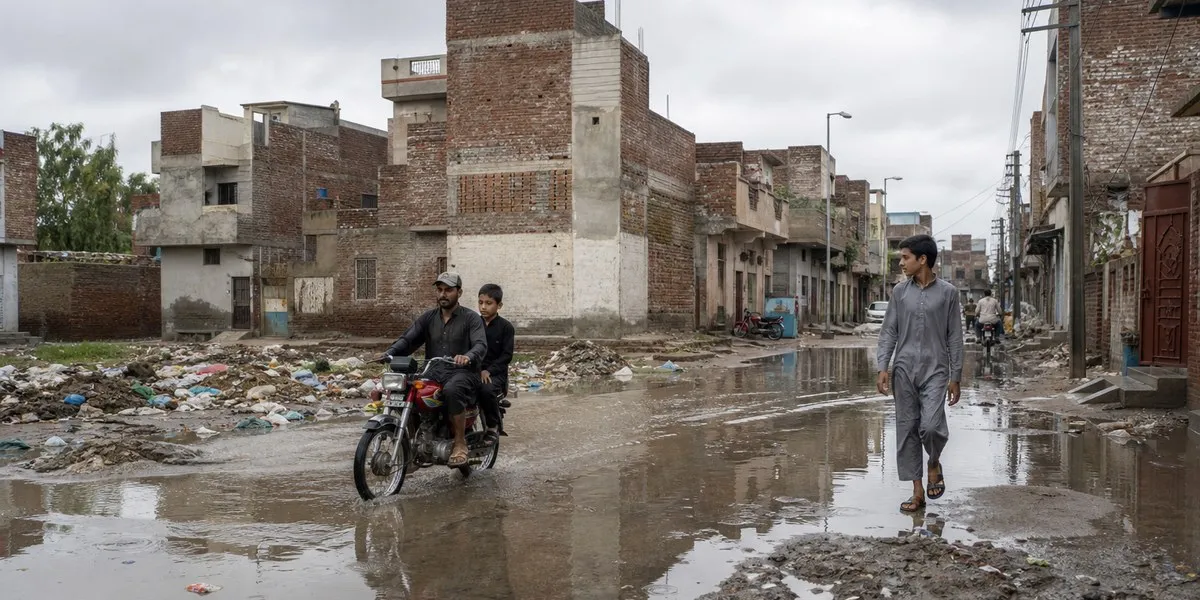
In Pakistan’s Punjab province, house collapses during the monsoon season claimed the lives of 49 of the 69 people killed by severe weather between June 26 and September 22. Another 392 people were injured, while 104 houses were destroyed and 122 were partially damaged, Dawn reports, citing Pakistan’s National Disaster Management Authority.
On July 27, a three-story residential building collapsed in Lahore’s Harbanspura area, where a family was celebrating a birthday. Eleven people were killed and six others were injured. Less than a month earlier, on June 30, a residential building that also housed a training center collapsed in Lahore’s Kahna area: 14 children were killed, with the youngest victim being five years old.
Loans for construction and repairs
After the tragedy in Kahna, Punjab Chief Minister Maryam Nawaz launched the Apni Chhat, Mahfooz Chhat program in July 2026, providing interest-free loans. Up to 500,000 Pakistani rupees can be obtained for adding rooms and repairing roofs, with payments of about 4,700 rupees per month for nine years. Up to 1 million rupees is available for building an additional floor, with a monthly payment of about 9,500 rupees.
More current news is available on the UA.News Telegram channel Telegram.
The program continues Apni Chhat Apna Ghar, launched in August 2024. Owners or users of small land plots can receive up to 1.5 million rupees to build housing. Sikandar Zeeshan, director general of the Punjab Housing and Town Planning Agency, said that 200,000 families had used the program over two years and that their number should increase to 300,000 by 2028. In May 2026, Maryam Nawaz reported the completion of construction on more than 100,000 homes.
Questions over affordability and safety
Jawad Aslam, founder and CEO of developer Ansaar Management Company, questioned the stated scale of the program’s implementation, saying he had not seen evidence of affordable housing being provided in volumes close to those publicly announced. Some potential borrowers also consider the monthly payments unaffordable. Samina, a domestic worker, said that a payment of about 14,000 rupees was impossible for a person with a monthly income of 40,000 rupees.
According to the World Bank’s estimate, Punjab’s urban housing deficit stood at 2.3 million units in 2017 and could grow to 11.3 million by 2047. At the same time, the Pakistan Institute of Development Economics indicated that the key problem was not only the number of homes, but also their technical condition, safety and access to basic services. Data from the 2024–2025 HIES survey do not assess whether houses can withstand heavy rainfall or earthquakes.




