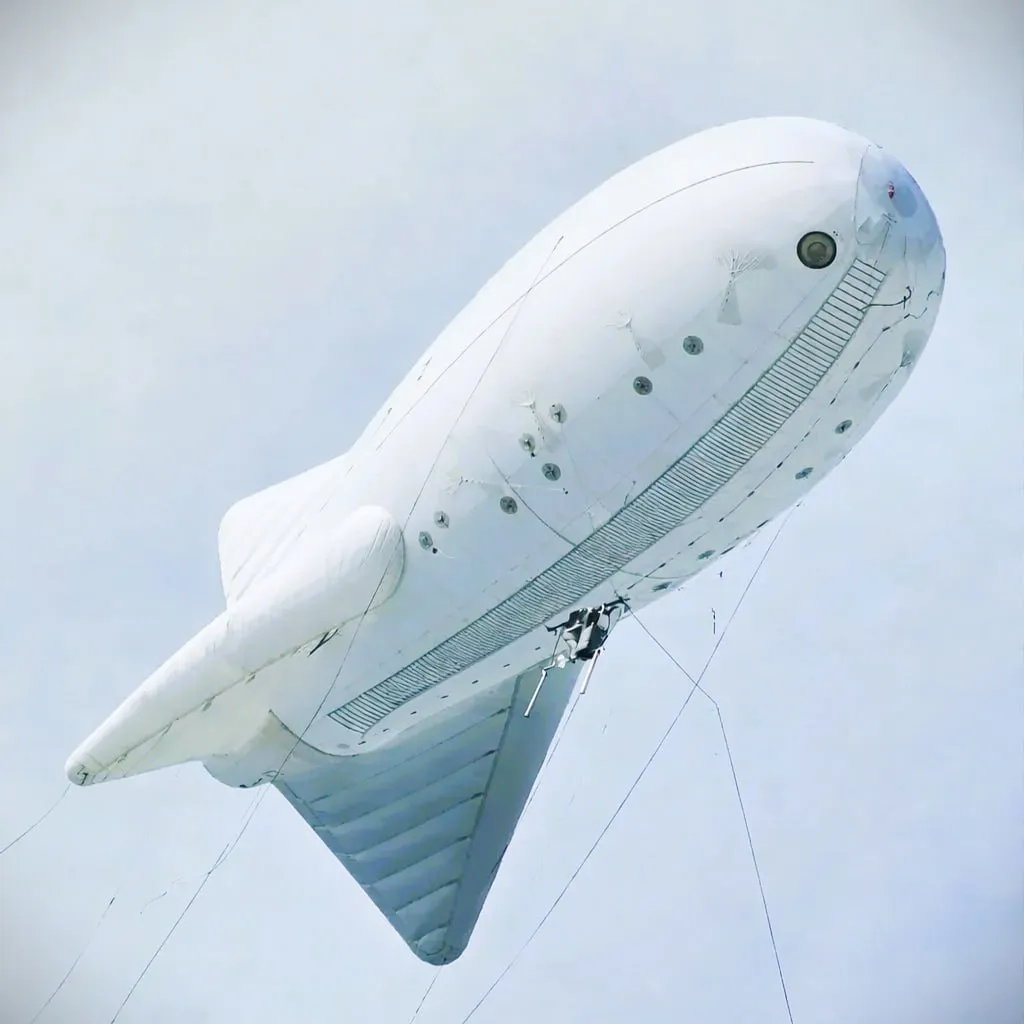
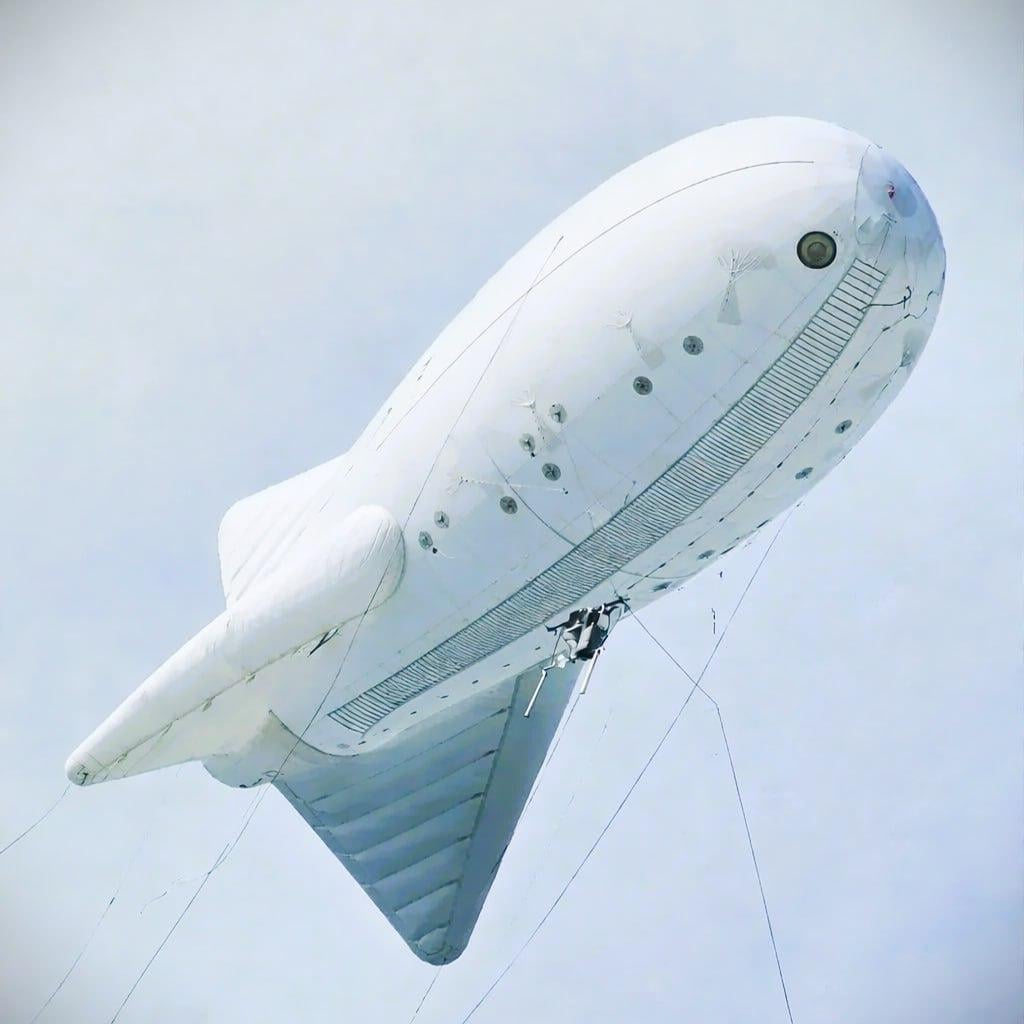
The Russian holding company “Rosel,” a subsidiary of the state corporation “Rostec,” has developed a mobile communications balloon.
According to the developers, lifting the radio module into the air reduces the impact of terrain and improves signal quality.
This is reported by Russian propaganda media.
The aircraft solves the problem of communication in areas with poor coverage. Unlike mobile base stations, lifting the radio module into the air means that terrain has virtually no effect on communication quality. It is reported that the first unit has undergone test operations on communication networks.
The balloon rises several hundred meters above the ground, secured to a support structure—specifically, a vehicle platform to which it is attached by cables.
The radio module installed on the aircraft, equipped with an omnidirectional antenna, provides mobile communication within a 10-kilometer radius at a speed of 30 Mbps.
The Rosel airship has a envelope volume of 240 cubic meters and can lift a payload of up to 45 kg to a height of 300 m. The device can operate at altitude for up to one month. The radio module is powered via a composite cable-rope.
The Russians believe that the aerostat can quickly resolve communication issues in remote, sparsely populated, and hard-to-reach areas. This includes, in particular, the work sites of mining companies, emergency zones, and water bodies.
According to experts from the "Military" portal, in addition to civilian use, such aerostats can also be used for military purposes—specifically for relaying signals from drones or maintaining communication between units of the Russian Armed Forces.
As a reminder, the Kremlin commented on the need to block Telegram.
Russian military personnel in the zone of the so-called "special military operation" began recording video appeals to Putin demanding that Telegram not be restricted.