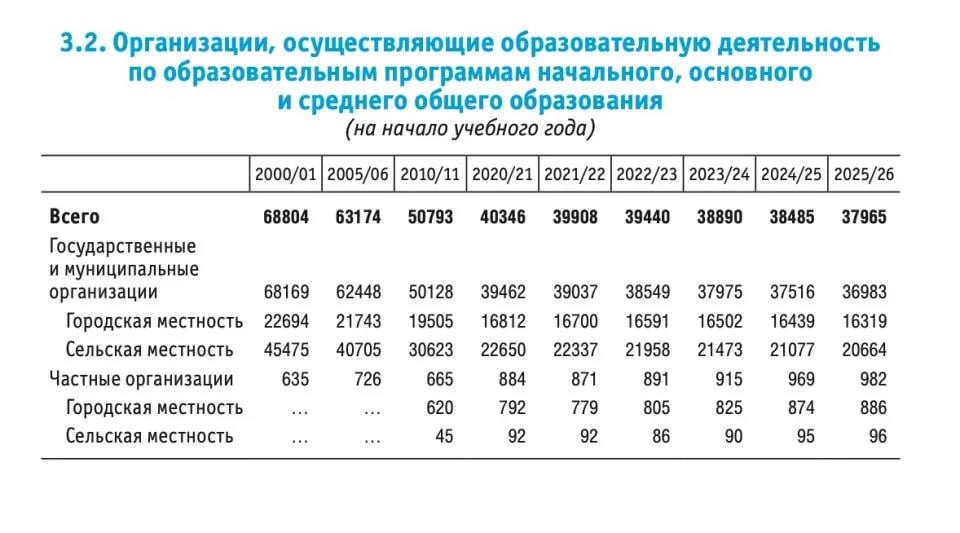
The past 25 years have been a period of unprecedented decline in the number of schools in Russia’s modern history. Since 2000, the number of elementary, middle, and high schools in the country has nearly halved—by 45%—according to statistics from the Institute for Statistical Research and the Economics of Knowledge at the Higher School of Economics.
Of the 68,800 schools Russia had at the start of the 21st century, only 37,900 remained by the 2025–26 school year. The largest wave of closures occurred between 2000 and 2010—during that period, the number of schools fell by 18,000, or 26%. In the 2010s, another 10,000 schools were closed, and since the early 2020s, an additional 2,300.
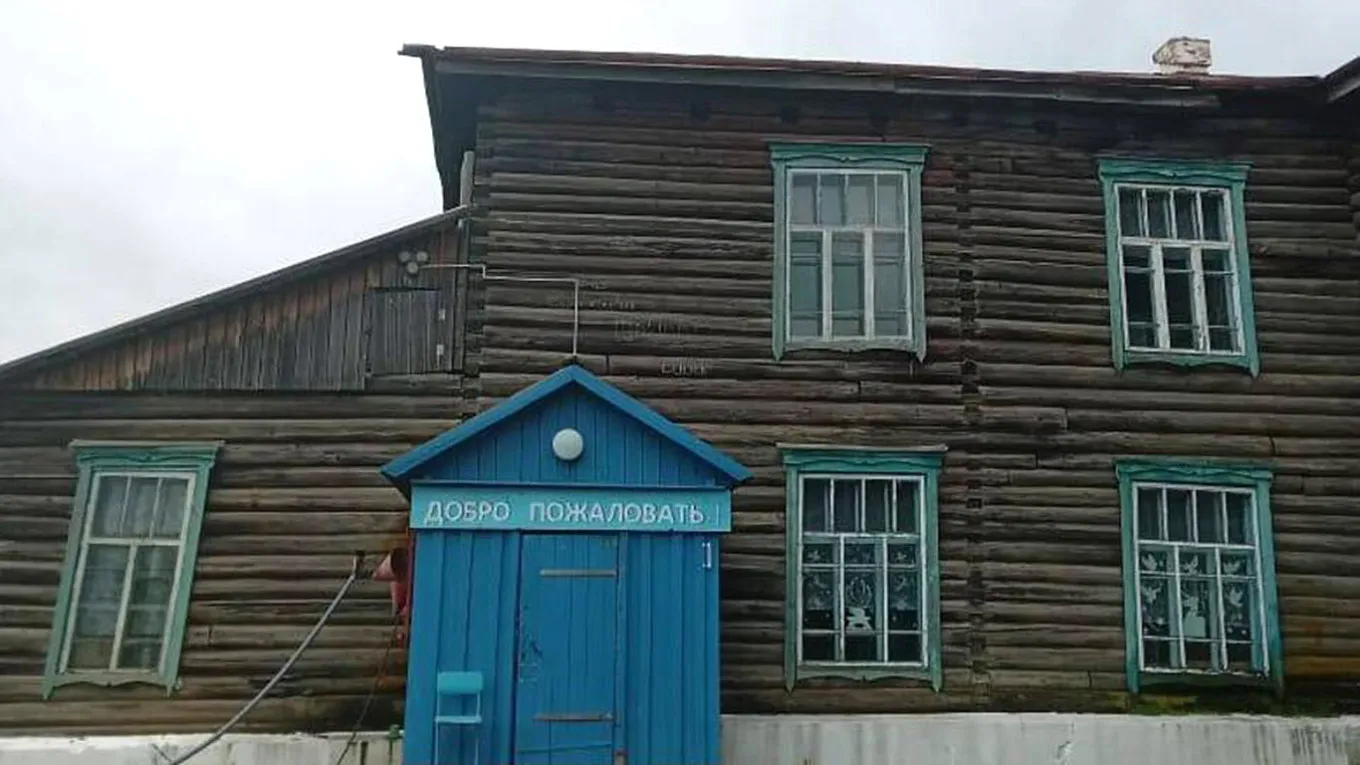
Public schools in rural areas, which are facing population outflow and declining birth rates, suffered the greatest losses. Over 25 years, their number decreased by 55%, or 25,000. At the same time, the number of schools in cities has decreased by more than a quarter: from 20,700 in 2000 to 16,300 at the start of the 2025–26 school year.
The number of private schools has nearly doubled during this period—from 635 in 2000 to 982 in 2025. However, their share remains insignificant—only 2.5% of the total number of educational institutions.
The number of schoolchildren in Russia has also declined, though to a much lesser extent than the number of schools. While there were 20.5 million students in the country in 2000, that number fell to 17.7 million in 2025—a 14% decrease. At the same time, over the past 15 years, the number of schoolchildren has increased by 4 million due to the influx of migrants.
Despite school closures, the physical condition of many of the remaining schools often fails to meet basic standards. As of 2024, 3,900 general education institutions in Russia lacked sewage systems, 3,400 lacked running water, and 3,500 lacked central heating.
In some regions, more than a third or even half of the schools lack basic amenities. For example, in Tyva, 68% of schools lack central heating, and half lack sewer systems. In Dagestan and Yakutia, 41% of schools operated without a sewage system. On average across Russia, about a quarter of schools require major repairs, and approximately 500 are in a state of disrepair.
This is reported by Russian propaganda media.
Due to a shortage of teachers, 40,000 students were sent to teach in Russian schools.
As a reminder,consumer sentimentin Russiaisrapidly deteriorating, confidence in the economy is declining, and anxiety is growing over a possible new wave of mobilization. This was reported by the Foreign Intelligence Service of Ukraine.