
Hunga Tonga eruption may have contributed to methane destruction in the stratosphere
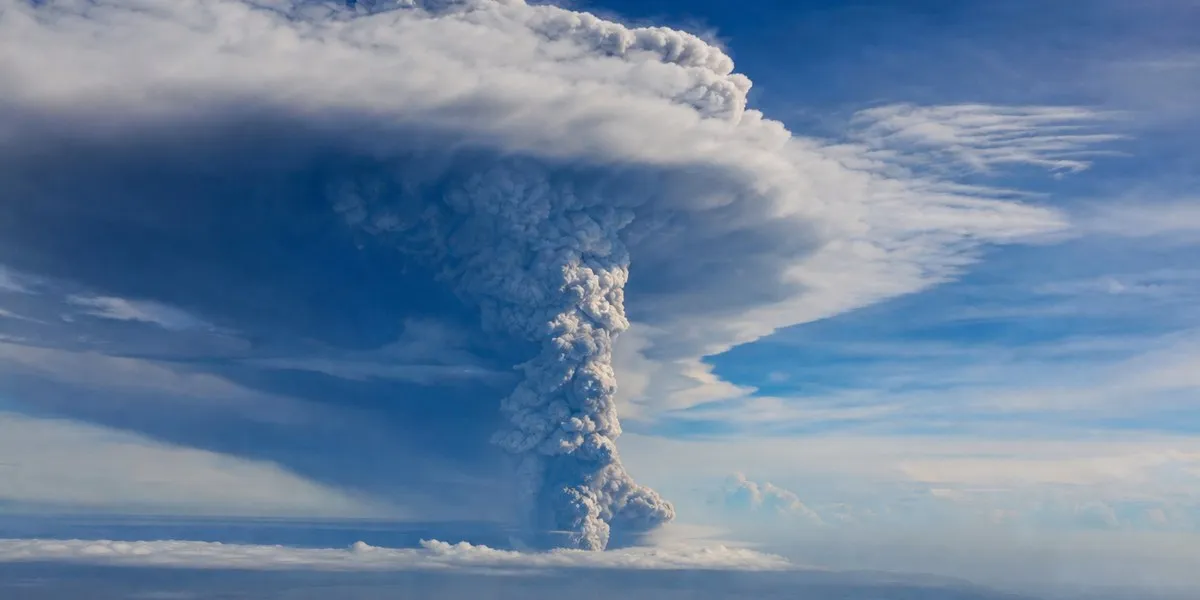
The powerful eruption of the underwater volcano Hunga Tonga-Hunga Ha'apai in the southern Pacific Ocean in January 2022 may have contributed to the destruction of some of the methane that the volcano released into the atmosphere. A group of researchers established this through satellite observations of the volcanic plume, ScienceDaily reports.
Scientists detected record-high concentrations of formaldehyde in the cloud, a substance that forms briefly during the atmospheric breakdown of methane. The plume was tracked for ten days as far as South America. Since formaldehyde exists for only a few hours, the researchers concluded that methane in the cloud was being destroyed continuously for more than a week.
Salt, ash and sunlight
According to the study authors' calculations, the volcano released about 300 gigagrams of methane during the eruption. At the same time, the volcanic plume removed approximately 900 megagrams of methane per day. The researchers link this process to a mixture of volcanic ash, salty seawater and sunlight.
More current news is available on the UA.News Telegram channel Telegram.
During the underwater eruption, a large amount of seawater rose along with the ash, and part of this mixture reached the stratosphere. Scientists suggest that sunlight triggered reactions in aerosol particles that produced highly reactive chlorine. Its atoms reacted with methane molecules and contributed to their breakdown.
Satellite observations
The analysis used the TROPOMI instrument aboard the European Space Agency's Sentinel-5P satellite. Measuring formaldehyde in the stratospheric volcanic plume required additional adjustments: the researchers accounted for the unusual altitude of the signal and the effect of high sulfur dioxide concentrations. This made it possible to confirm that the unusually strong formaldehyde signal was real.
The authors believe the findings may require refinements to estimates of the global methane balance, as the impact of atmospheric dust on the destruction of this gas had not previously been fully taken into account. Methane is an important contributor to global warming, but it remains in the atmosphere for much less time than some carbon dioxide. The study was published in Nature Communications.


