
Robin Hood's 1,200-year-old oak tree has died in Sherwood Forest
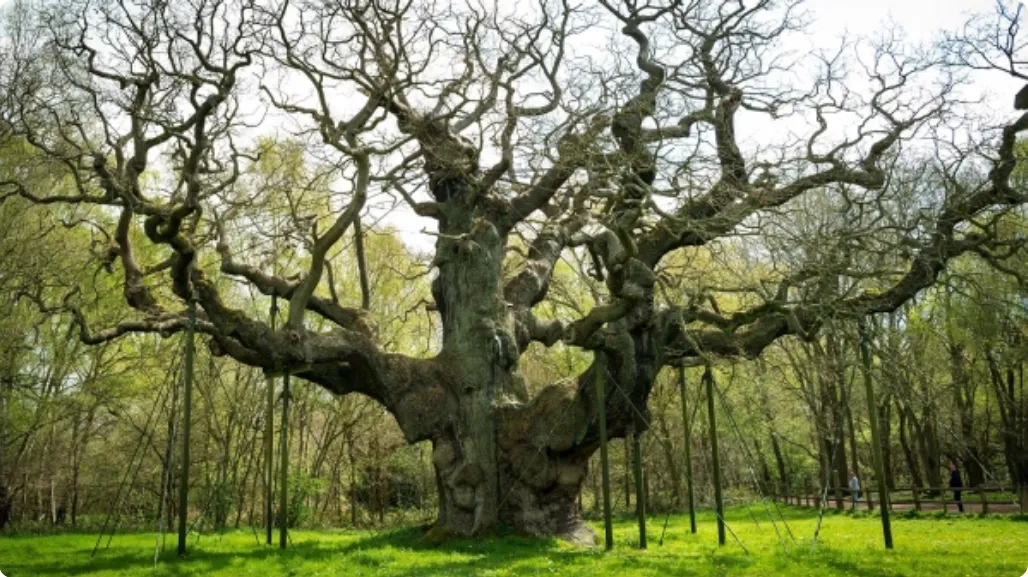
In Sherwood Forest in Great Britain, the famous Major Oak—which, according to folklore, served as a hideout for Robin Hood—has likely died.
According to the Royal Society for the Protection of Birds (RSPB), which manages the area, the tree failed to sprout leaves in the spring of 2026—the first time this has happened in its nearly 1,200-year history.
Experts and environmentalists note that a combination of factors led to the demise of one of Nottinghamshire’s most famous tourist attractions:
Climate change: The recent rapid deterioration of the giant tree’s condition coincided with five abnormally hot and dry summers. The most severe test came in July 2022, when the country recorded a record-breaking 40 °C for the first time. Last June, conservationists even used special irrigation equipment to prevent the roots from drying out.
Human Impact: The long-standing influx of millions of tourists has caused excessive soil compaction around the trunk. This has critically blocked the flow of rainwater, oxygen, and nutrients to the oak’s root system.
Although the tree has been declared dead, there are no plans to cut it down. The RSPB has confirmed that the legendary oak will remain standing in its place in Sherwood Forest, as its trunk and branches will continue to serve as a natural habitat for numerous species of insects, birds, mosses, and other plants.
Source: BBC.
In Britain, charges have been filed against two men suspected of destroying a 200-year-old sycamore tree in northern England, which became particularly famous thanks to a film based on the legend of Robin Hood.


