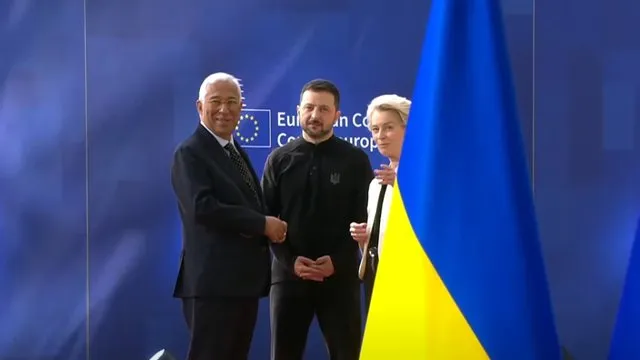
A statement released by the European Council notes that the trilateral meeting took place on the eve of an informal summit of EU leaders and served as a follow-up to agreements on financial support for Ukraine. Following the European Council’s December decision on a €90 billion loan program, EU co-legislators finalized the mechanism for its launch on April 23.
The document emphasizes that these funds are intended to enable Ukraine to cover urgent budgetary and defense needs amid the ongoing war. The leaders stressed the importance of implementing the program as quickly as possible and expect the first disbursements as early as the second quarter, while calling on other countries to join in meeting Ukraine’s financial needs.
Special attention was given to the 20th package of sanctions against Russia. As noted in the statement, it is aimed at reducing Russia’s energy revenues, restricting the banking sector, and combating shadow supply schemes. Leaders emphasized that pressure on Moscow must be intensified to force it to engage in genuine peace negotiations.
The EU also noted Ukraine’s progress toward EU accession. “They called for the immediate opening of negotiation clusters,” the statement reads. The adoption by the Ukrainian parliament of legislation necessary to unlock further funding under European support mechanisms was also positively assessed.
The parties also confirmed continued assistance to Ukraine in restoring its energy infrastructure, especially ahead of the winter season, when the risks of new attacks remain high. The statement specifically mentioned the issue of nuclear safety in Europe in the context of the approaching anniversary of the Chernobyl disaster and called on Russia to cease attacks on Ukrainian nuclear facilities.
The final point addressed the return of Ukrainian children illegally taken by Russia. Leaders welcomed the preparation of a high-level international meeting in Brussels on May 11, which is intended to be part of a broader coalition to bring deported children home.
On April 23, EU countries approved the 20th package of sanctions against Russia, which imposes restrictions on 46 vessels of the “shadow fleet” and 60 entities supporting the Russian military-industrial complex. The new measures include stricter export restrictions on dual-use goods and sanctions against 20 credit and financial institutions.