
The USS Abraham Lincoln is turning off its radars to survive
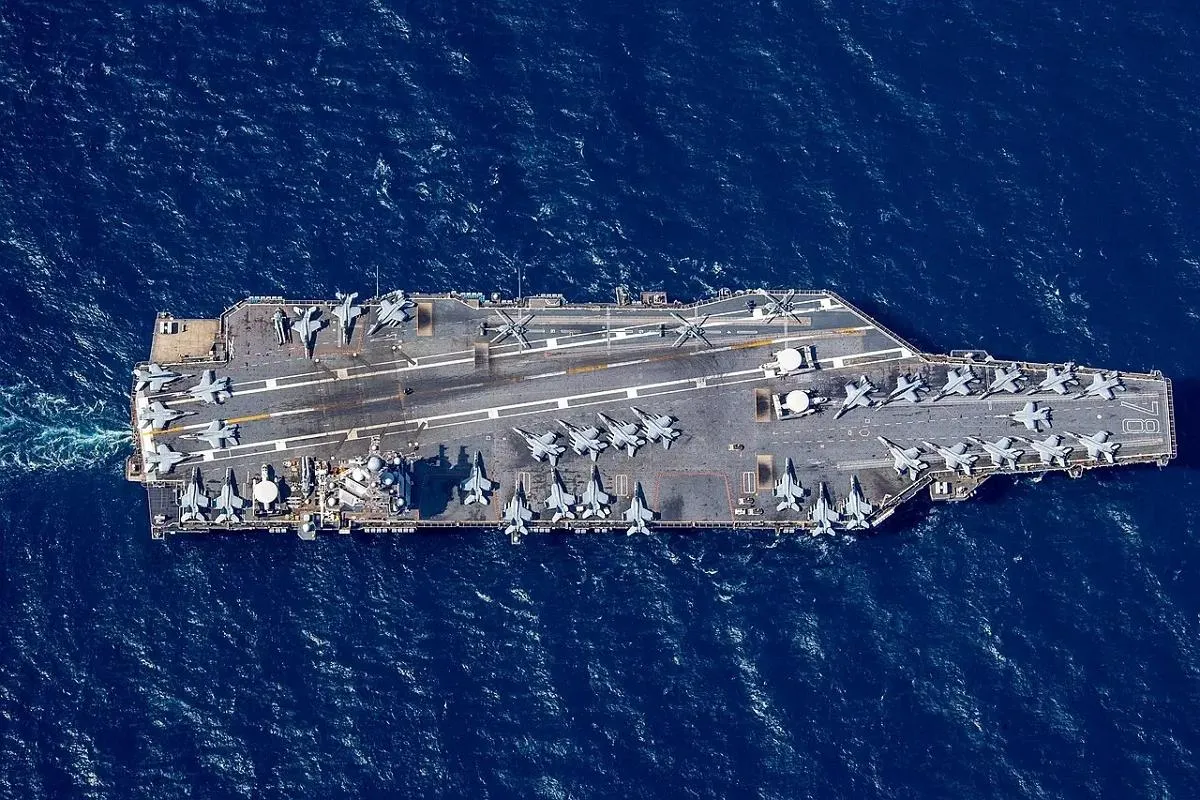
The American aircraft carrier USS Abraham Lincoln switches to complete radio silence during combat operations to avoid revealing its location. At this point, the ship effectively becomes “blind,” and destroyers, helicopters, and a network of passive sensors take on the primary role in detecting submarines, according to Wionews.
During combat operations, the nuclear-powered aircraft carrier USS Abraham Lincoln can operate in a special mode called EMCON—a protocol for maximum radio silence. Simply put, the ship shuts down some of its active systems so that the enemy cannot detect it in the ocean.
In this mode, the aircraft carrier effectively ceases to “glow” to the enemy, but at the same time significantly limits its own ability to detect targets. Active sonars are turned off, and the strike group switches to passive surveillance. That is why the fleet’s primary “ears” are the escort ships—Arleigh Burke-class destroyers and cruisers. They form a large protective perimeter around the aircraft carrier and listen to the ocean using highly sensitive acoustic systems.
These ships can detect submarines not by their signals, but by the noise of their engines, propellers, or other sounds the submarine makes underwater.
To do this, they use special towed sonar arrays—long cables with sensors that trail several kilometers behind the ship. These are what help pick up even faint signals in the challenging conditions of the ocean. MH-60R Seahawk helicopters play a distinct role in this system. They can deploy dozens of hydroacoustic buoys into the water, creating a network of underwater sensors around the carrier strike group.
Each buoy “listens” to the water and transmits information to the military. The systems then analyze this data and filter out extraneous noise—waves, civilian vessels, or natural ocean sounds. If a torpedo attack threat arises, the fleet deploys special decoys. For example, the SLQ-25A Nixie system mimics the ship’s noise and distracts the torpedo from the real target.
Although an aircraft carrier in EMCON mode appears almost “blind,” it actually remains the center of a vast surveillance network. In such a system, every ship, helicopter, and even buoy operates as part of a single mechanism.
This is precisely what allows the U.S. Navy to remain a threat even when the aircraft carrier itself is trying to “disappear” as much as possible from the enemy.
Taiwan publicly reaffirmed its sovereignty and declared that it does not submit to China, following statements by Donald Trump, who opposed supporting the island’s independence. Tensions surrounding Taiwan have risen again amid high-level contacts between the U.S. and China.
Iranian Foreign Minister Abbas Araghchi stated that Tehran does not trust the United States and is ready to negotiate with Washington only if the talks are genuinely serious.
Iranian authorities have begun granting permission to select Chinese vessels to pass through the strategically important Strait of Hormuz.
Traffic through the Strait of Hormuz has once again come to a near standstill.


