
Elections to the State Duma have begun in Russia amid reports of pressure on observers and election fraud
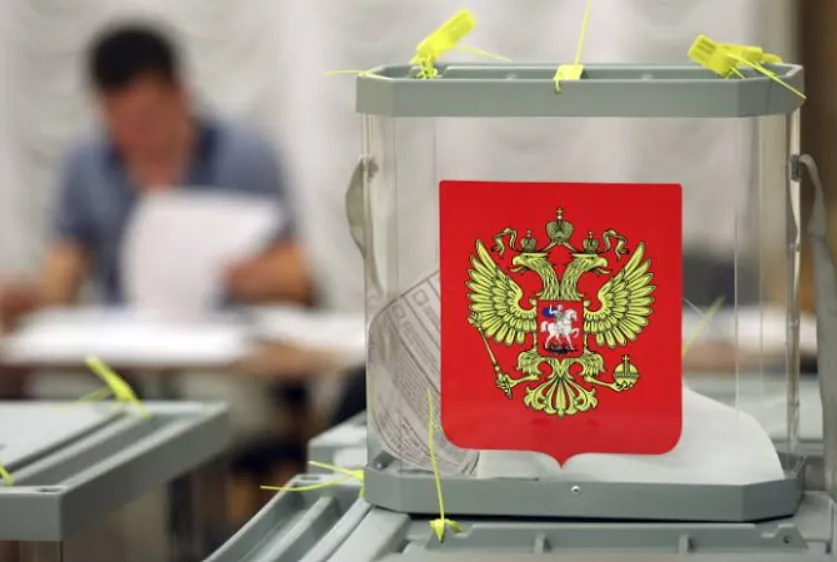
In Russia, three days of voting in the State Duma elections began on September 18. It will continue through September 20. At the same time, even before the main voting began, independent Russian media outlets and representatives of opposition forces reported pressure on election observers, coercion of public sector employees, and possible violations during the organization of the vote.
On the eve of the vote, Ella Pamfilova, chair of Russia’s Central Election Commission, warned of potential problems with mobile communications and data transmission.
“There may be some, let’s say, unintentional disruptions in mobile communications and data transmission. For us, this is not a reason to cancel the vote,” she said.
According to the Russian Central Election Commission, elections to the State Duma will take place on September 18, 19, and 20, 2026.
According to “Important Stories,” in the Altai Krai, election commissions may have added residents to the lists for home voting without their requests.
Local activists reportedly called the addresses on the lists. Some residents confirmed that they had not submitted applications for home voting and did not expect election commission members to visit them.
Representatives of the Communist Party of the Russian Federation (CPRF) also claimed that voters may have been coerced into registering for remote electronic voting. According to official data, more than 250,000 people in the Altai Krai applied for remote electronic voting, which accounts for nearly 15% of the region’s total electorate.
Separately, Russian media reported on pressure being exerted on public sector employees.
In particular, reports have come in from the Altai Krai, as well as the Novosibirsk, Sverdlovsk, Belgorod, and Samara regions, regarding demands to submit detailed reports on voting for “United Russia.”
Representatives of the “Yabloko” party also reported instances of pressure.
In Kazan, candidate Sofia Fedorova stated that attempts were made to evict party members from their office. According to her, on September 16, after a meeting with supporters, the electricity was cut off at the premises, and the landlord demanded that they vacate the office.
In the Sverdlovsk region, five “Yabloko” candidates were removed from the election. Meanwhile, in the Tambov region, police reportedly began calling observers from this party and proposing meetings.
In the Voronezh region, according to “Verstka,” approximately 400 observers from the Communist Party of the Russian Federation (CPRF) were barred from the elections. The official reason given was “deficiencies in the documentation.”
A separate incident occurred in the Rostov region. Representatives of the “Yabloko” party reported the detention of observer Boris Myklyukov.
According to the party, he was taken from polling station No. 58 in the village of Yuzhny, Azov District, by two men in civilian clothing wearing balaclavas and one police officer in uniform. Miklyukov was then taken to Rostov-on-Don.
The situation in the regions of Russia bordering Ukraine is particularly noteworthy.
The Russian Central Election Commission allowed early voting to take place there, which in some districts began even before the main three days of voting.
In the Belgorod Oblast, according to reports from Russian and independent media, ballot stuffing may have occurred during absentee voting on the first day of early voting. These claims currently come from media reports and statements by opposition figures and require separate official confirmation.
Thus, the elections to the State Duma of the Russian Federation began on September 18 amid numerous reports of possible violations, pressure on observers, and administrative influence on voters.
This has been reported by Russian and international media.
Russia is preparing to hold illegal “elections” to the State Duma in the temporarily occupied territories of Ukraine. Voting is scheduled for September 18–20, 2026.
Through its Foreign Intelligence Service, Russia has launched a new propaganda campaign to create the illusion of legitimacy for the September “elections” to the State Duma. A statement from the SVR claims that the EU, PACE, and Western intelligence agencies are allegedly preparing destabilization efforts, cyberattacks, and provocations, as well as enlisting the Russian opposition to discredit the vote.




