
Scientists have learned to control the growth of blood vessels using magnets
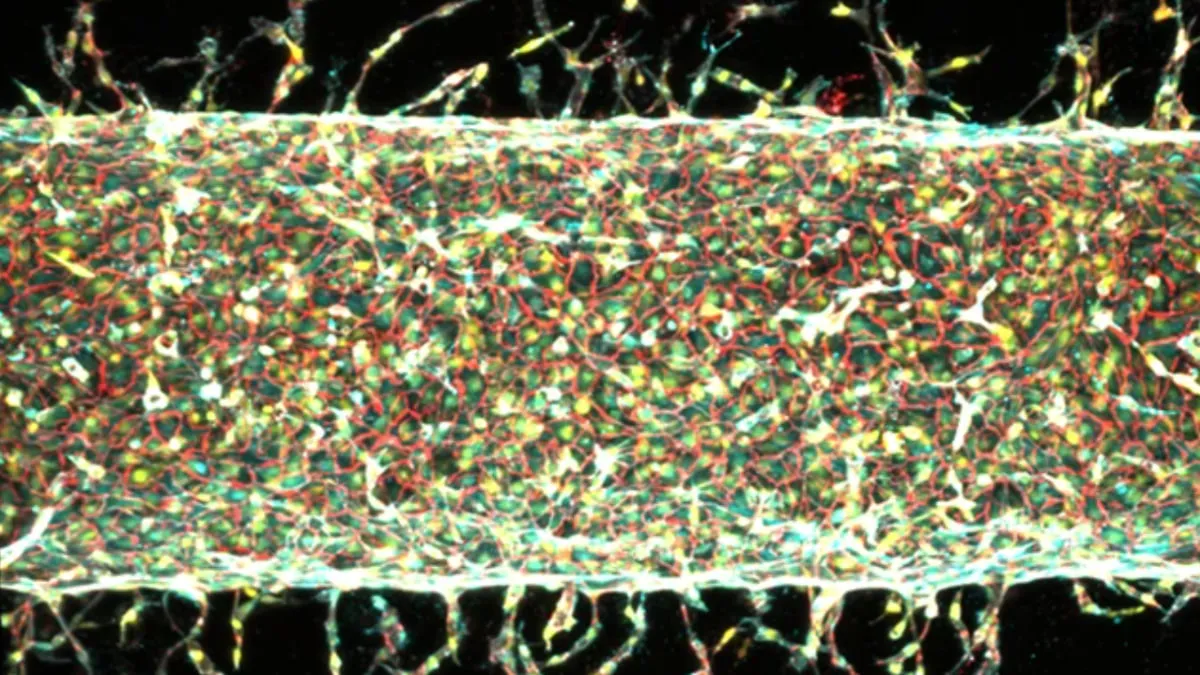
Researchers at the Massachusetts Institute of Technology (MIT) have developed a method for growing blood vessels in the lab using magnets. The technology allows for more precise control over the direction and structure of their growth.
Scientists hope that this new approach will help in the creation of artificial tissues and fully functional organs that could be used for transplants in the future.
The study’s findings were published in the journal Proceedings of the National Academy of Sciences (PNAS).
One of the main challenges in growing artificial organs is forming a network of blood vessels. These vessels supply tissues with oxygen and nutrients. It is particularly difficult to replicate capillaries—the body’s tiniest blood vessels, which can be as small as 0.005 millimeters in diameter, about 34 times thinner than a human hair. Blood cells pass through these capillaries one at a time.
Researchers have proposed a new method based on the use of magnetic forces. These forces allow blood vessel cells to be gently stretched and guided, forming a network of the desired shape.
“Healthy tissues depend on well-organized networks of blood vessels, but current methods do not allow for the creation of such networks within artificially grown tissues,” explained MIT mechanical engineer Ritu Raman.
“The ability to program blood vessel growth using physical signals could enable the reproducible and scalable production of artificial tissues that can be implanted into the body to restore function after serious illnesses or injuries,” she added.
For the experiment, the researchers used a small chip containing lab-grown endothelial cells—the cells that line the inner surface of blood vessels. The cells were placed in a collagen gel, and a miniature magnet was positioned inside the chip.
Using several external magnets, the researchers controlled its position in three dimensions. By varying the strength of the magnetic field, they were able to determine exactly how the new blood vessels would grow.
The method builds on technology that the same team had previously used to create artificial muscles and nerve tissue.
During the experiments, the researchers also discovered that varying the strength of the magnetic field allows them to control not only the direction of blood vessel growth but also their number and length. Although the technology is still in the prototype stage, the authors describe the initial results as promising.
“The main conclusion is that rhythmically stretching a blood vessel back and forth appears to increase the number of new capillaries that form,” Raman said.
According to her, mechanical forces play an important role in the functioning of the human body, so this new approach opens up the possibility of controlling blood vessel formation.
“This means that we now know how to create more or fewer blood vessels, make them shorter or longer, or direct their growth in the desired direction,” the researcher noted.
The process of forming new blood vessels is called angiogenesis. Currently, blood vessels can be grown from individual cells in Petri dishes or printed using 3D printers. However, these methods do not provide sufficiently precise control over exactly where and how the vascular network will form.
“We can try to direct the growth of blood vessels using chemical signals, such as growth factors, but it’s impossible to do so with great precision. That’s why we need other signals that we can control to create tissues with properly organized blood vessels,” Raman noted.
Separately, the researchers investigated which biological mechanism is responsible for this process. To do this, they repeated the experiment on cells in which the PIEZO1 gene had been knocked out. This gene regulates the function of ion channels that respond to mechanical pressure and control the exchange of substances between the cell and its environment.
It turned out that without this gene, significantly fewer new blood vessels formed. This suggests that the activation of these ion channels is a necessary condition for capillary growth.
The next stage of the research will involve testing how effectively blood circulates through the arteries, veins, and capillaries created using the chip. After that, the team plans to grow fully functional tissues and organs around them, starting with muscle tissue.
Source: Science Alert.
Previously, archaeologists discovered that the kings of Urartu used bronze bowls for propaganda purposes.
As a reminder, gold jewelry dating back to before the Bronze Age Catastrophe was found in Cyprus.
Near Halych, archaeologists have discovered unique medieval artifacts.


