
A Korea Herald columnist called for reform of South Korea's election commission
The problems plaguing South Korea’s National Election Commission should serve as an opportunity to strengthen its accountability and transparency, but not to establish direct political control. Wang Seong-taek, an adjunct professor at Sogang University, expressed this view in a column for the Korea Herald.
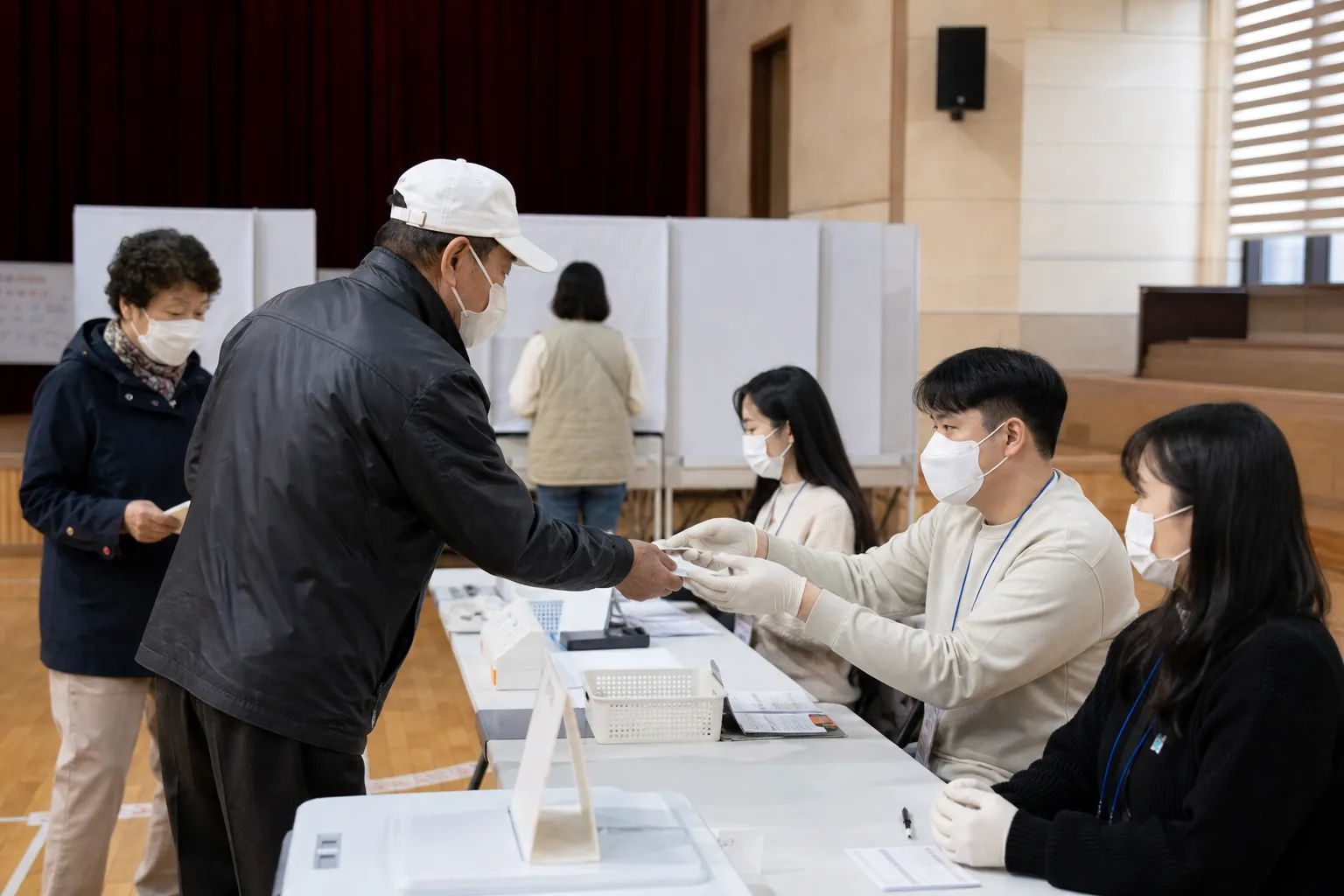
The author noted that during the local elections in June, some polling stations ran out of ballots. As a result, voters had to wait a long time, and in some cases, this prevented them from voting at the scheduled time. There were also problems with the release of data on voter turnout and vote-counting results.
According to Wang Song-thek, administrative errors should not be equated with claims of systematic fraud. Following the April 2020 parliamentary elections in South Korea, allegations circulated regarding alleged interference by Chinese hackers in the election commission’s computer system, the use of forged ballots, and the falsification of early voting results. The columnist writes that no convincing evidence was provided to support these claims, and the Supreme Court dismissed lawsuits seeking to overturn the election results based on allegations of systematic fraud.
For more breaking news, follow the UA.News Telegram channel.
According to the author, audits of the commission’s information systems—conducted with the participation of the National Intelligence Service and the Korea Internet & Security Agency—found no evidence of intrusion by the DPRK or any other external entity. He also noted that large-scale election manipulation is complicated by the system itself: there are over 14,000 polling stations and about 250 vote-counting centers operating in the country, and the vote-counting machines do not have an external internet connection. The final verification, he said, requires human involvement.
Wang Song-thak cautioned against abolishing the election commission or placing it under direct political control. He recalled the fraud in the presidential election of March 15, 1960, which, according to his account, led to the April Revolution and the fall of the Syngman Rhee government. In the columnist’s view, the commission’s political independence should be preserved, while at the same time strengthening audits, external oversight, and transparency mechanisms regarding its budget, personnel policies, administrative operations, and election organization.




