
Scientists in Israel have created an inexpensive lab-grown steak with a realistic meat-like texture
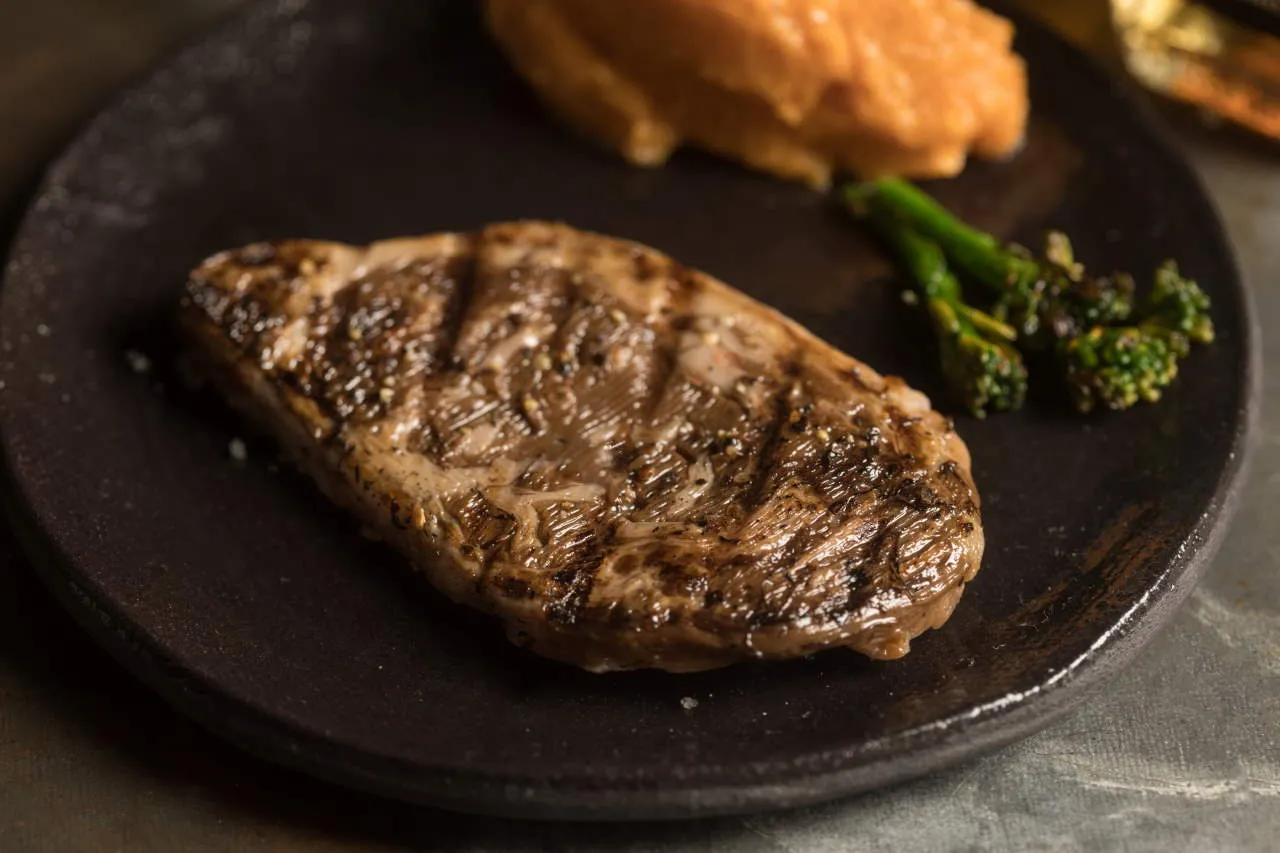
Researchers at the Hebrew University of Jerusalem have developed an innovative method for growing lab-grown meat from living cells.
The new technology allows for the creation of fully structured steaks that are virtually indistinguishable from real beef in terms of density and texture.
At the same time, scientists have managed to solve the industry’s main problem—the excessively high cost of producing such products.
For a long time, the extreme cost of growth factors remained the main economic barrier in the lab-grown meat market. These specific proteins typically account for over 95% of all cell cultivation costs.
Israeli scientists have found a revolutionary solution: instead of dissolving the expensive components in a liquid culture medium, they attached them directly to a porous scaffold.
This approach allowed them to reduce the use of the most expensive substances by a factor of ten.
The basis for the future steak is a special matrix obtained by direct-freezing plant cellulose. The microscopic tunnels in this scaffold precisely mimic the natural structure of animal muscle tissue.
Cow stem cells successfully attached to the cellulose fibers, began to actively multiply, and spontaneously organized themselves into parallel rows.
After several weeks of continuous cultivation, the bioengineered construct acquired a density and elasticity fully comparable to that of a raw beef steak.
As a result of the experiment, the researchers obtained an exact analogue of sirloin—a large and fairly dense piece of muscle tissue from the lumbar region.
Unlike the overly tender tenderloin, the muscles in this area are actively involved in the animal’s movement, so the finished product has pronounced firmness and a fine meat texture. It is sirloin that is traditionally used to prepare most signature steaks in restaurants.
Further culinary tests fully confirmed the high potential of the Israeli development.
During frying, the lab-grown meat perfectly retained its original shape and acquired a characteristic appetizing brown hue thanks to the Maillard reaction.
Mechanical tests revealed that the density of the artificial product was as close as possible to that of traditional pan-seared meat, although laboratory analogues are usually significantly softer than natural ones.
The study results were published in the scientific journal Current Research in Food Science.
Scientists from the U.S. have proposed a space shield against solar storms
Scientists have created cow feed that reduces methane emissions by 90%




