
Scientists have figured out how brown tree snakes were able to take over the island of Guam
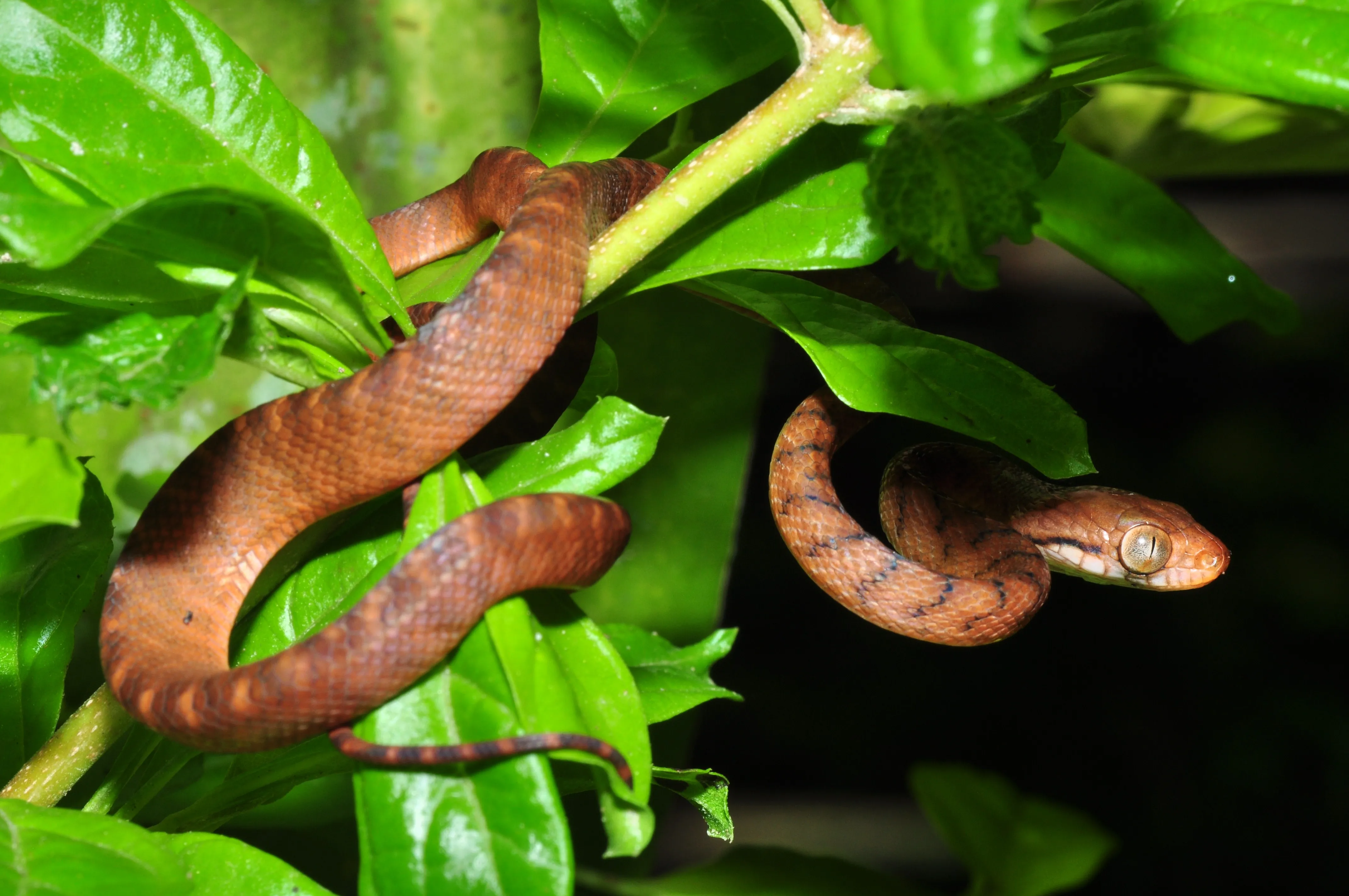
Scientists have explained why brown tree snakes, which accidentally ended up on the island of Guam after World War II, not only survived but also established one of the most successful invasive populations in the world. The study’s findings were published in the journal *Science Advances*.
It is believed that brown tree snakes (Boiga irregularis), which are native to Australia and the southern Pacific, arrived on Guam aboard military transport planes. Since then, they have radically altered the local ecosystem.
According to the researchers, the snakes have wiped out nine of the 11 native animal species and regularly cause power outages by short-circuiting high-voltage power lines. While there were previously no snakes on the island at all, their density now reaches about 2,000 individuals per square kilometer, one of the highest rates in the world.
For a long time, scientists were unable to explain how a population descended from just a few individuals managed to avoid a genetic “bottleneck”—a phenomenon that typically reduces a species’ chances of survival and adaptation.
A team of researchers from the University at Buffalo and the U.S. Geological Survey (USGS) analyzed the snakes’ genomes using long-read DNA sequencing technology. This revealed more than 19,000 structural variants—significant changes in the DNA that had gone unnoticed using traditional analytical methods.
Scientists suggest that it is precisely these structural genetic variations that provided snakes with sufficient diversity to adapt successfully and spread rapidly, despite having few ancestors.
The study also showed that a significant portion of the genetic changes is associated with genes responsible for immunity and the sense of smell. The latter is key to the survival of brown tree snakes, as it helps them find prey and navigate their environment.

In addition, the researchers discovered a possible link between olfactory genes and the unusual behavior of snakes on Guam. Unlike in their natural range, where they can hunt other snakes, instances of cannibalism are rare on the island. The researchers suggest that a keen sense of smell helps individuals recognize relatives even under conditions of high inbreeding.
The authors note that the discovery provides new insight into how small populations can successfully adapt despite severe genetic constraints. At the same time, they plan to compare the genomes of the snakes from Guam with those of their relatives from Australia and other Pacific islands to determine whether the identified genetic characteristics arose before the island was colonized or developed after the invasion began.
Source: Focus.
As a reminder, scientists were able to study the brain of an ancient snake that lived during the Cretaceous period for the first time in history. To do this, they examined an exceptionally well-preserved fossil of the ancient reptile.
In Romania, on the Transfăgărășan Highway, a bear broke into a parked car, presumably in search of food. The incident was filmed by bystanders who were driving by.


