
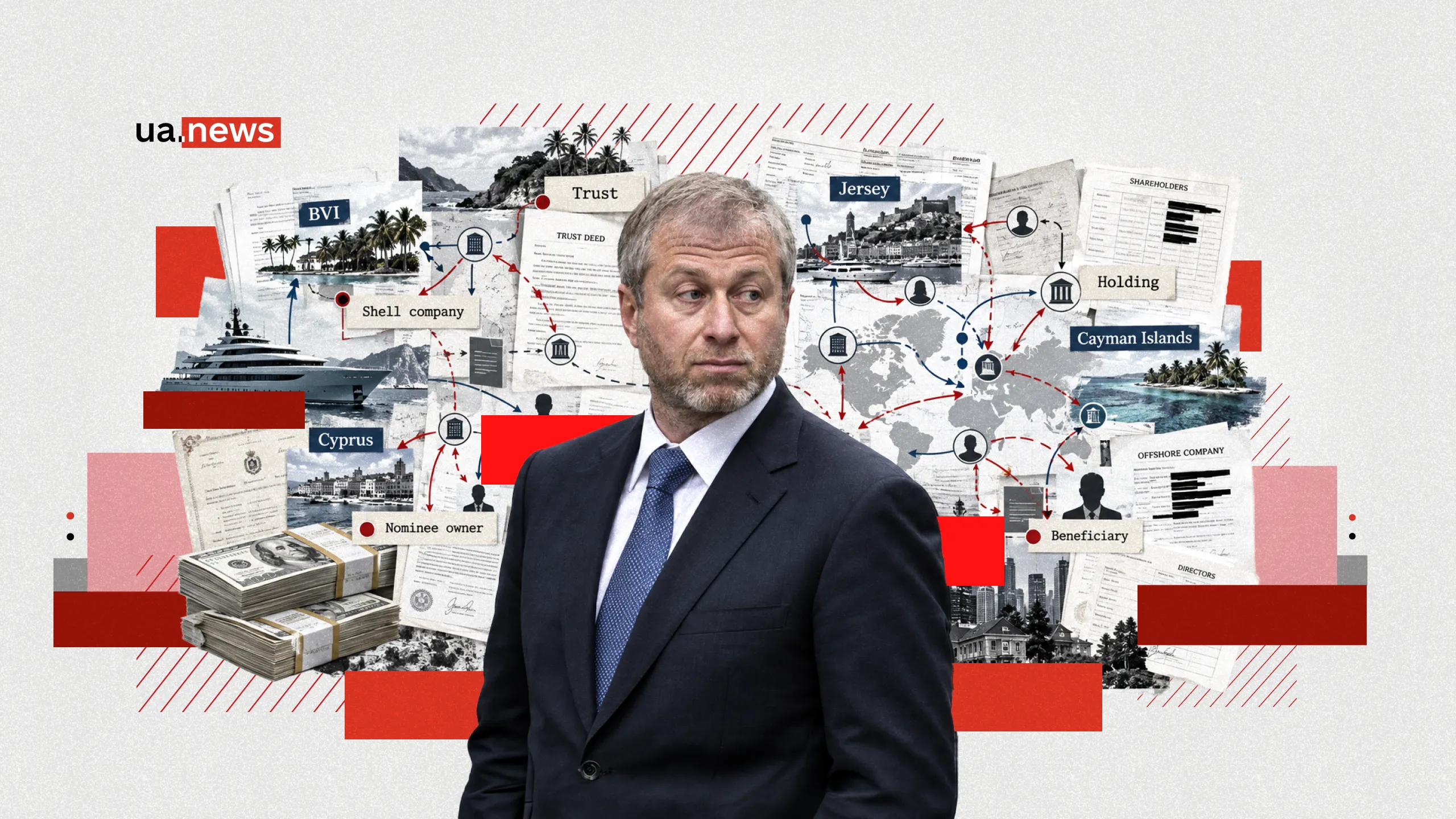
Roman Abramovich and his financial advisors may have concealed the true structure of the Russian billionaire’s assets for years through the use of offshore companies, backdated documents, and changes to corporate filings. An analysis of a leak of hundreds of thousands of documents revealed how billions of dollars could have been hidden—and tax liabilities reduced—through a network of companies in Cyprus and the British Virgin Islands.
This is not the first story linking the former owner of Chelsea Football Club to opaque financial structures. Back in 2023, the United Kingdom imposed sanctions on Cypriot financial intermediaries whom its government accused of helping Abramovich and another Russian oligarch, Alisher Usmanov, hide their wealth.
Now, new revelations have refocused attention on how professional consultants, corporate registries, and international financial centers may have helped Russian capital evade regulatory scrutiny.
UA.News reports on what journalists uncovered in Abramovich’s financial history, how offshore mechanisms work, which other Russian billionaires have used complex ownership structures, and what role lawyers, accountants, trusts, and intermediary companies play in preserving their wealth.
What the investigation into Abramovich revealed
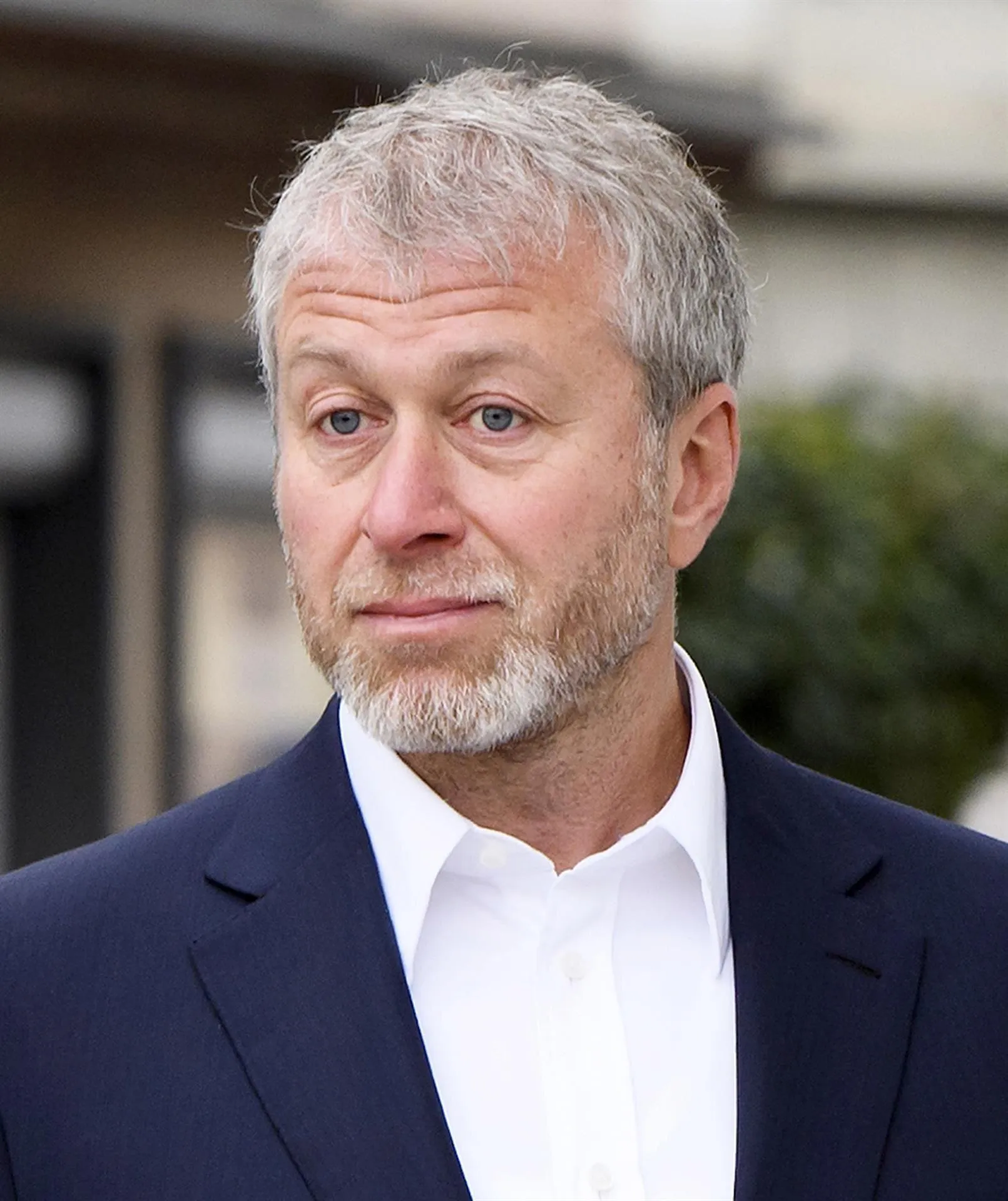
The investigation by The Bureau of Investigative Journalism, conducted in collaboration with BBC Panorama, The Guardian, and other media outlets, is based on documents from the Cyprus Confidential leak. According to the journalists, they uncovered more than a thousand corporate documents that may have been backdated between 1999 and 2013.
These include contracts, payment orders, correspondence, and other documents intended to confirm a specific sequence of financial transactions. However, as the authors of the investigation claim, some of these documents were created years after the dates specified in them. This practice could have altered the documented history of asset ownership and created the impression that the transfer of money or property took place earlier than it actually did.
According to the journalists’ estimates, this scheme helped conceal at least $10 billion in assets and avoid significant tax payments. This is an estimate of the scale of assets linked to the entities investigated, not a claim that all of this money was stolen, confiscated, or disappeared from bank accounts.
One of the central episodes involved the Cypriot company Kravin Investments. In May 2003, it received approximately $3 billion, of which about $2 billion remained at its disposal. The funds were held in an account or lent to other companies and, as a result, could potentially generate income subject to taxation in Cyprus.
In 2005, financial advisors began discussing changes to accounting records for previous years. Correspondence reviewed by journalists referred to the need to amend Kravin’s financial statements for 2003–2004. Subsequently, documents emerged that portrayed the company not as the owner of the funds, but as an entity that allegedly held and invested them on behalf of another company—Kelvedon Worldwide, registered in the British Virgin Islands.
According to the investigators’ findings, some of the documents were dated 2003, although they were actually created at least two years later. As a result, in the updated financial documentation, approximately $2 billion was no longer listed as assets belonging to Kravin itself. At the same time, the basis for levying the corresponding taxes on these funds may have disappeared.
It is important to understand that this does not necessarily mean the money physically disappeared. Journalists describe, first and foremost, a change in the documentary record of the assets: the funds may have remained within the financial network, but the financial statements no longer showed them as they had before. It is precisely this discrepancy between the actual movement of money and the paper trail of its ownership that is key to understanding the case.
The reports also mention Amiscan Investments—a company through which information about Abramovich’s luxury properties passed. In 2005, the documents listed assets worth approximately $650 million: real estate in the United Kingdom and France, helicopters, airplanes, yachts, and cars.
Subsequently, these assets ceased to appear in the company’s financial statements. According to the journalists, retroactively dated transactions created the impression that the assets had been transferred to a shareholder in the British Virgin Islands as early as the beginning of 2003.
Who Helped Abramovich Manage His Offshore Network
The investigation focused not only on the companies but also on the people who kept them running. Among them was Yevgeny Tenenbaum, Abramovich’s longtime associate who ran London-based Millhouse Capital UK, as well as lawyers, accountants, and consultants involved in managing the oligarch’s financial structures.
Journalists paid particular attention to the Cypriot division of Deloitte and the company Meritservus, which was established after a portion of the business was spun off from Deloitte Cyprus. According to the investigation, employees of these entities were involved in preparing backdated documents, and Deloitte subsequently audited and approved the financial statements of a number of companies.
The report also mentions Demetris Ioannides—the former head of Deloitte Cyprus, who later became the head of Meritservus. Journalists identify him as one of the key financial intermediaries in Abramovich’s network. In the correspondence they examined, Ioannides discussed altering financial statements and preparing documents related to companies linked to the oligarch.
One specific instance involves a payment of nearly $100 million. According to the investigators, consulting agreements—which may have been backdated—were used to justify the transfer of funds to Abramovich. An intermediary company allegedly received money for consulting services and then transferred nearly the entire amount to Abramovich as a commission for agency services. According to the journalists, the documents were created after the relevant stock transactions had already taken place.
Abramovich’s representatives denied tax evasion and misleading Cypriot authorities. According to them, the oligarch relied on professional advice from Deloitte Cyprus and other consultants. Tenenbaum also denied any wrongdoing. Deloitte Cyprus stated that it operates in accordance with applicable law, and that the age of the documents prevents it from commenting on specific details.
Nevertheless, the investigation raises a broader question: where does legal tax planning end and document manipulation begin—manipulation that may conceal ownership, actual transactions, or obligations to the state?
What Happened to the £760 Million Before Sanctions Were Imposed

In April 2023, the British government imposed sanctions against Demetris Ioannides and Cypriot lawyer Christodoulos Vassiliades. British authorities accused them of helping Russian oligarchs hide assets through complex financial structures.
According to an official statement from the British government, Demetris Ioannides created opaque offshore structures that Roman Abramovich used to hide assets worth over £760 million. This refers to the period leading up to the imposition of British sanctions against the Russian businessman in March 2022.
In the same statement, British authorities described the activities of Christodoulos Vassiliades related to Alisher Usmanov’s financial structures. Both lawyers were sanctioned for their role in facilitating the operations of networks of companies linked to Russian oligarchs.
Separately, a new journalistic investigation into Abramovich’s financial structures mentions approximately $2 billion that ceased to appear in the financial statements of the Cypriot company Kravin Investments following changes to documents from previous years.
The authors of the investigation also estimated the total value of the assets involved in the financial transactions they examined to be at least $10 billion.
Alisher Usmanov: Offshore Trusts, Real Estate, and Financial Intermediaries
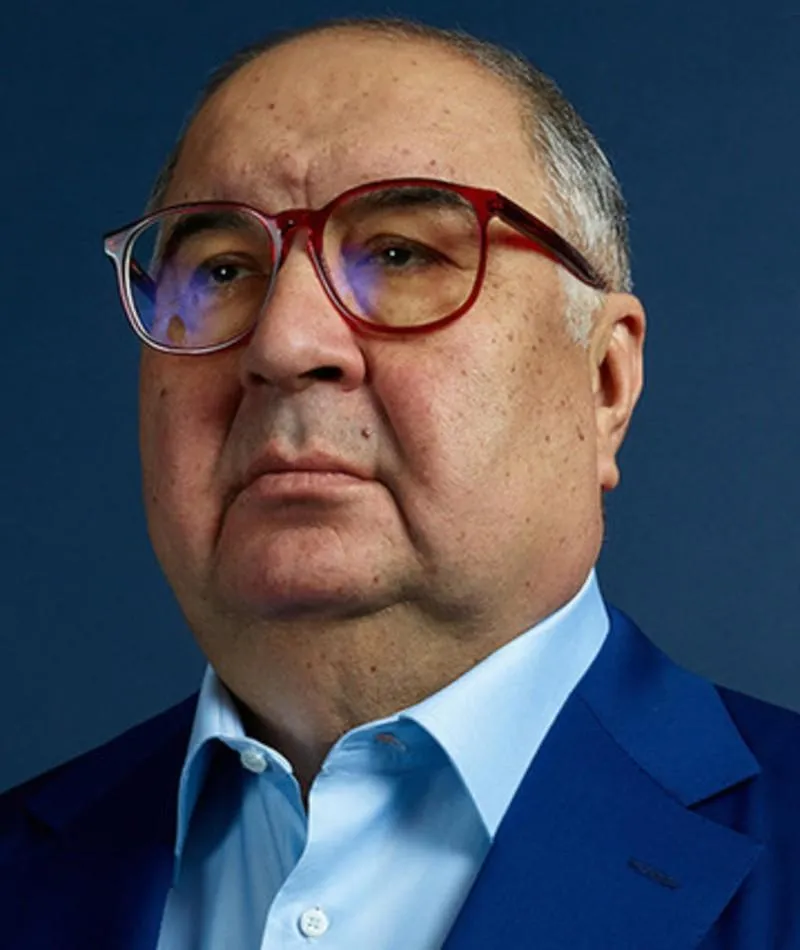
Alisher Usmanov is a Russian billionaire who owned assets in the metallurgy, mining, telecommunications, and other industries. In February 2022, the United Kingdom imposed sanctions against him, including an asset freeze and a travel ban. In April 2023, the British government expanded the sanctions to include individuals and companies linked to Usmanov’s financial transactions.
One of the key figures in this case was the Cypriot lawyer Christodoulos Vassiliades. According to the British government, he was at the center of a network of trusts and offshore companies linked to Usmanov and the Sutton Place estate in Surrey. Vassiliades was subject to British sanctions on April 12, 2023.
On the same day, the United Kingdom imposed restrictions on companies linked to Usmanov’s financial network, including USM, Curzon Square Limited, and Hanley Limited. British authorities stated that this measure is intended to extend the sanctions to assets linked to the billionaire, including the London mansion Beechwood House, valued at approximately £90 million.
Another property of interest to British authorities is Sutton Place—a historic estate in Surrey. The connection between Usmanov, the real estate, and a network of offshore companies was highlighted in the government’s sanctions announcement. The use of trusts and companies in such structures means that establishing ownership rights requires examining not only registration documents but also the relationships between legal owners and the individuals who control the assets.
In this case, not only did the businessman’s own assets play an important role, but so did the professional intermediaries who ensured the functioning of the corporate structures. The British government explained the sanctions against Vassiliades by citing his role in Usmanov’s financial network.
At the same time, the inclusion of a company on the sanctions list does not mean that its property automatically becomes state property: restrictions on transactions involving the assets are applied in accordance with British sanctions legislation.
Suleiman Kerimov: Heritage Trust and assets worth over $1 billion

Suleiman Kerimov is a Russian billionaire who previously served as a member of the Federation Council of the Russian Federation. In April 2018, the U.S. Department of the Treasury imposed sanctions against him. In June 2022, U.S. authorities announced the freezing of assets held by the Heritage Trust, which were valued at over $1 billion at the time.
According to a June 30, 2022, statement from the U.S. Department of the Treasury, Kerimov had a property interest in the Heritage Trust—a trust registered in the U.S. state of Delaware. The decision by the U.S. Office of Foreign Assets Control (OFAC) extended to the trust the restrictions that apply to the property of a sanctioned individual. As a result, the trust’s assets were frozen and became inaccessible for transactions prohibited by U.S. law.
A U.S. investigation found that a network of relatives, advisors, and legal entities with opaque ownership structures was used to invest funds in the United States. According to the U.S. Department of the Treasury, this system made it difficult to establish a link between Kerimov and the relevant investments.
The Heritage Trust case demonstrated that sanctions restrictions may apply not only to accounts opened directly in the name of a sanctioned individual but also to the assets of legal entities in which that individual has a financial interest. To this end, U.S. authorities investigated the ownership structure and the links between the trust and Kerimov.
The Amadea Superyacht: Confiscation Proceedings
Another case involving Kerimov concerns the superyacht Amadea, valued at approximately $300 million. In April 2022, a Fijian court authorized the detention of the vessel at the request of the United States. U.S. authorities claimed that the yacht was in fact owned by Kerimov, even though the legal ownership structure was set up through other companies.
In October 2022, the U.S. Department of Justice filed a civil action seeking the forfeiture of the Amadea. In the complaint, the U.S. side stated that the vessel was linked to a sanctioned individual, and that the costs of its maintenance and operation were paid through structures that, according to the investigation, concealed the actual owner.
U.S. authorities also alleged that, after sanctions were imposed, payments for the yacht’s maintenance were made through intermediaries and companies registered in various jurisdictions. These transactions became part of the evidence in the forfeiture case.
The Amadea case differs from the Heritage Trust freeze: the former involves a legal proceeding to seize specific property, while the latter involves the freezing of the trust’s assets in accordance with U.S. sanctions legislation.
The Rotenberg Brothers: Corporate Restructuring Following the 2014 Sanctions

Arkady and Boris Rotenberg are Russian businessmen who were subject to U.S. sanctions in 2014 following Russia’s annexation of Crimea. Arkady Rotenberg was also subject to European Union sanctions in 2014, while Boris Rotenberg was added to the EU sanctions list following Russia’s full-scale invasion of Ukraine in 2022.
In June 2023, an international consortium of journalists from OCCRP and the Russian publication “Vazhnye Istorii” published an investigation titled “The Rotenberg Files.” The investigation was based on a leak of more than 50,000 documents and emails from Evocorp, the company that managed the Rotenbergs’ assets and business affairs. The documents covered the period from 2013 to 2020.
Based on an analysis of the correspondence, journalists determined that after sanctions were imposed, entities linked to the Rotenbergs carried out corporate restructuring, transferred assets between companies, and used trusted intermediaries. Russian managers, Western lawyers, bankers, business consultants, and corporate service providers were involved in these operations.
Journalists identified Maxim Viktorov—a Russian businessman and owner of Evocorp—as one of the key figures in this system. According to the investigation, Viktorov and his team coordinated the management of the Rotenbergs’ international assets and enlisted specialists in various countries to resolve legal, banking, and corporate issues that arose after the sanctions were imposed.
One specific instance involved Helsinki Halli—a large multifunctional arena in Finland, also known as Hartwall Arena. In the leak, journalists found a memorandum outlining a corporate restructuring plan aimed at preserving the Rotenbergs’ stake in this asset despite the sanctions.
Correspondence following the imposition of sanctions discussed the preparation of documents and changes to the ownership structure. The materials indicate that corporate decisions were viewed as a way to cope with restrictions that complicated the management of international assets.
Real Estate in Spain and Offshore Companies
Another focus of the investigation is real estate in Europe, specifically a villa on the Spanish coast linked to Boris Rotenberg. According to OCCRP, documents indicated the use of offshore companies and trusted individuals in the property’s ownership structure.
Journalists examined corporate documents, property registries, and correspondence discussing changes in ownership and company management. In some cases, the properties were registered in the names of individuals who were not the known ultimate beneficial owners of the relevant assets. The documents also mentioned companies in the British Virgin Islands and entities linked to Cyprus.
A separate investigation described the use of closed-end mutual funds in Russia. These entities have a special legal status and do not publicly disclose the full list of their shareholders in the manner typical of open corporate registries. Documents that journalists linked to a July 2017 meeting of the Central Bank of Russia mentioned 13 such funds associated with the Rotenbergs or their assets.
The investigation also described the involvement of financial institutions and law firms in resolving issues related to frozen accounts and banking services. However, the mere fact that an institution is mentioned in the correspondence does not mean it was found guilty of violating sanctions. OCCRP gave those implicated the opportunity to comment on the published findings, and some of the parties denied any wrongdoing.
Why Sanctions Are Not Enough to Control Oligarchs’ Assets
The stories of Roman Abramovich, Alisher Usmanov, Suleiman Kerimov, and the Rotenberg brothers demonstrate that identifying and freezing the assets of Russian oligarchs is significantly more difficult than adding their names to sanctions lists. Real estate, investments, corporate rights, and bank accounts can be registered under various companies, trusts, and affiliated individuals across multiple countries. Therefore, identifying the beneficial owner requires analyzing an entire network of legal and financial connections.
Professional intermediaries—lawyers, corporate consultants, trustees, and financial specialists—play a key role in these structures. They handle company registration, trust administration, and the management of property transactions. At the same time, mere participation in the creation or maintenance of such structures does not prove a violation of the law: liability depends on specific actions and available evidence.
Differences in the laws of various countries create additional challenges. The freezing of assets in one jurisdiction does not always automatically extend to related companies and assets abroad.
This may require separate investigations, international requests, and court orders. Similarly, an asset freeze, which restricts the ability to dispose of assets, is not the same as confiscation, which requires separate legal grounds.




