
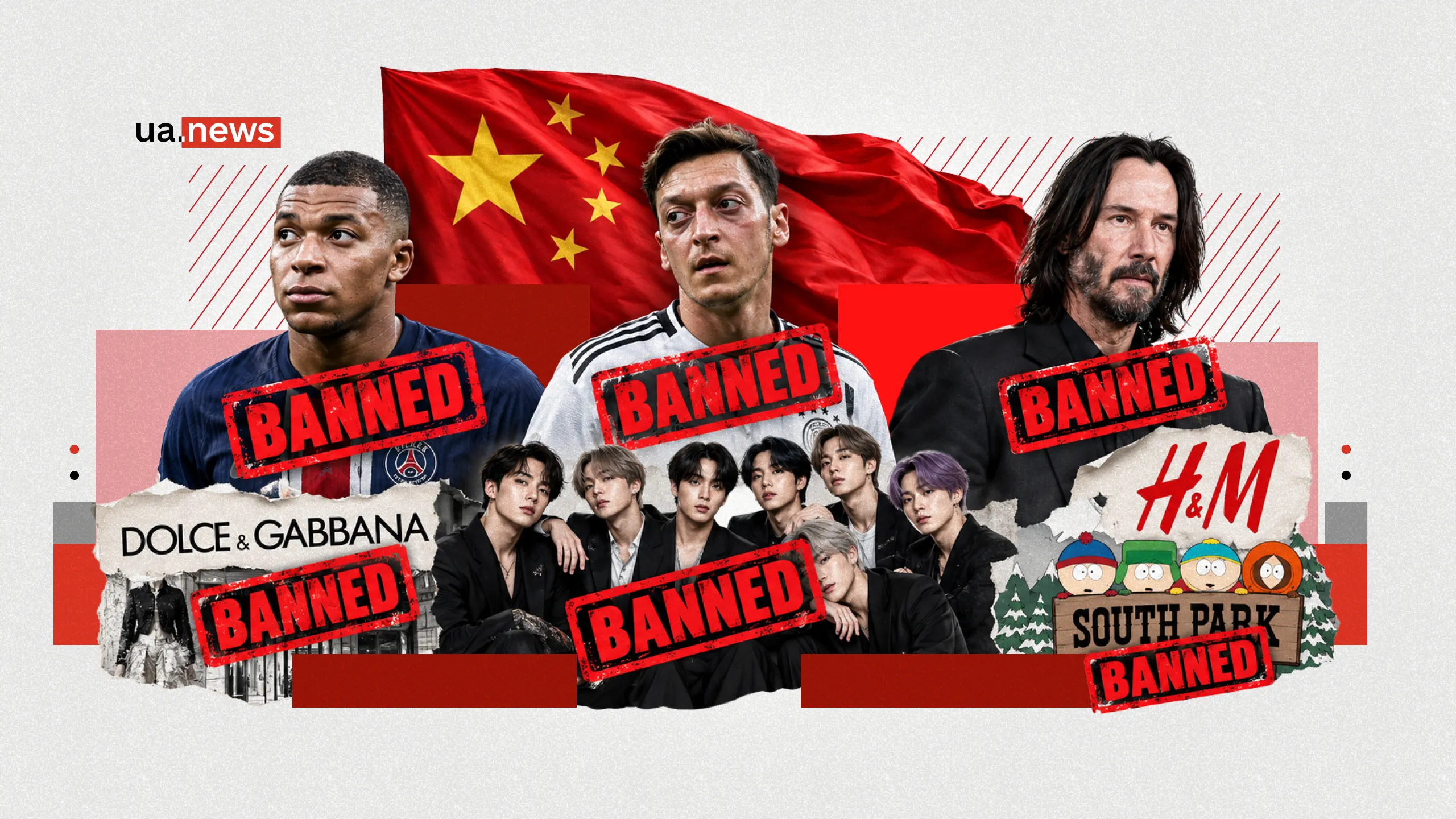
In late October 2026, two scandals involving international celebrities and popular brands erupted simultaneously in China. French soccer player Kylian Mbappé lost his Chinese endorsement deals over a joke about Mao Zedong, while the Japanese company Sanrio, owner of Hello Kitty, ended its partnership with a TV series following criticism from Chinese state media.
These are far from the first instances in which statements by famous people, advertising campaigns, or movie plots have sparked a sharp reaction in China. Previously, similar controversies have led to the cancellation of sports broadcasts, the removal of Hollywood movies from streaming platforms, the removal of international brands’ products from online stores, and the termination of multimillion-dollar contracts.
The reasons could range from political statements to simple jokes or cultural insults that the Chinese audience deemed unacceptable.
UA.News highlights the ten most high-profile cases in which international athletes, actors, musicians, and major companies have faced Chinese censorship or boycotts.
Kylian Mbappé: The Mao Zedong Meme and Lost Contracts
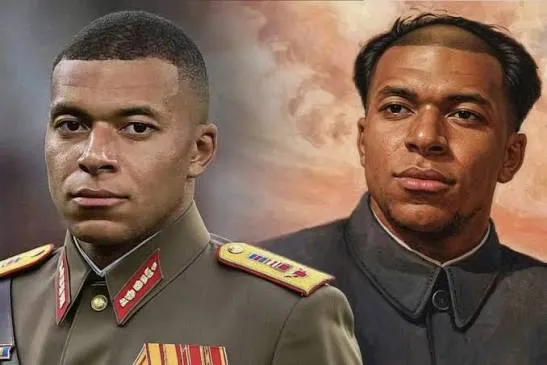
On October 26, 2026, an excerpt from Kylian Mbappé’s interview with the French project The Bridge went viral on social media. The Real Madrid forward mentioned internet memes featuring himself and cited as one of the funniest an image in which his face had been superimposed onto a portrait of a man he called a “Chinese dictator.” He was referring to Mao Zedong, the founder of the People’s Republic of China. The joke itself originated from soccer memes in which Mbappé was ironically portrayed as an overly influential figure at the club.
Chinese social media reacted with outrage. As early as October 27, beverage manufacturer Dongpeng and dairy company Mengniu announced they were ending their partnerships with the soccer player. Other partners also began removing advertising materials featuring him. For Mbappé, who had previously appeared on Chinese billboards and in large-scale campaigns, this meant losing a portion of the commercial market.
The scandal also affected soccer. The Chinese state-owned media group CMG suspended broadcasts of Spain’s La Liga; the platforms Weibo and Xiaohongshu restricted the ability to follow the athlete’s accounts. At the same time, the original joke itself was hardly mentioned in the Chinese media landscape: state media mostly referred to “inappropriate remarks” without mentioning Mao.
Mbappé apologized, calling the comment “thoughtless,” and Real Madrid separately expressed regret for offending Chinese fans. China’s Ministry of Foreign Affairs stated that it takes the apology seriously.
Hello Kitty: Why Sanrio Pulled Out of a Japanese TV Series

On October 29, it was reported that Japan’s Sanrio, owner of Hello Kitty, My Melody, and other popular characters, had ended its collaboration with the spy series “VIVANT.” To promote the series, the company had released merchandise featuring Sanrio characters dressed as the TV show’s characters.
The issue arose because of the second season of “VIVANT.” In one episode, representatives of a fictional Chinese intelligence agency torture Japanese agents. Chinese state media, including CCTV and the Global Times, criticized this depiction, accusing the series of discrediting China. Following this, Sanrio’s Chinese division issued an apology and canceled future joint projects and promotional activities.
The company explained the decision by stating that certain elements of the collaboration were inconsistent with its corporate philosophy. Representatives of the TBS television network emphasized that the series is a work of fiction and is not directed against any country.
Mesut Özil: Criticism of Uyghur Policy and His Disappearance from Soccer
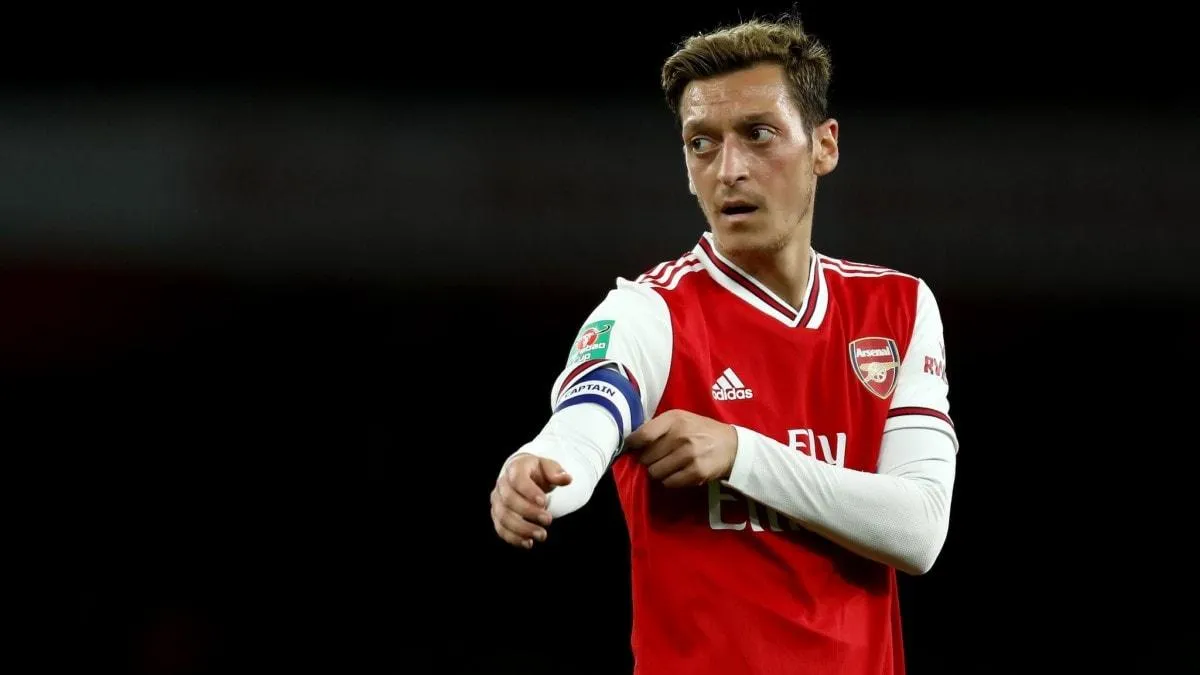
In December 2019, the midfielder for London’s Arsenal Mesut Özil published a statement in support of the Uyghurs—a predominantly Muslim people living, in particular, in the Xinjiang Uyghur Autonomous Region. The soccer player condemned the persecution of the Uyghurs and criticized Muslim countries for their lack of response.
Chinese authorities denied allegations of human rights violations, and state media called Özil’s remarks false.
On December 15, the state-run television channel CCTV removed the Arsenal vs. Manchester City match from its broadcast schedule, replacing it with another game. According to the BBC, the Chinese Football Association also condemned the player, stating that he had offended the feelings of local fans. Arsenal distanced itself from its player’s statements and emphasized the club’s apolitical stance.
Soon, the issue extended beyond television. The Chinese company NetEase, publisher of the soccer simulation game Pro Evolution Soccer, removed Özil from three Chinese versions of the game, including PES 2020 Mobile. Representatives of the publisher explained that the athlete’s comments were contrary to the “spirit of sports.”
NBA: A Post About Hong Kong That Cost the League Its Chinese Broadcast Rights
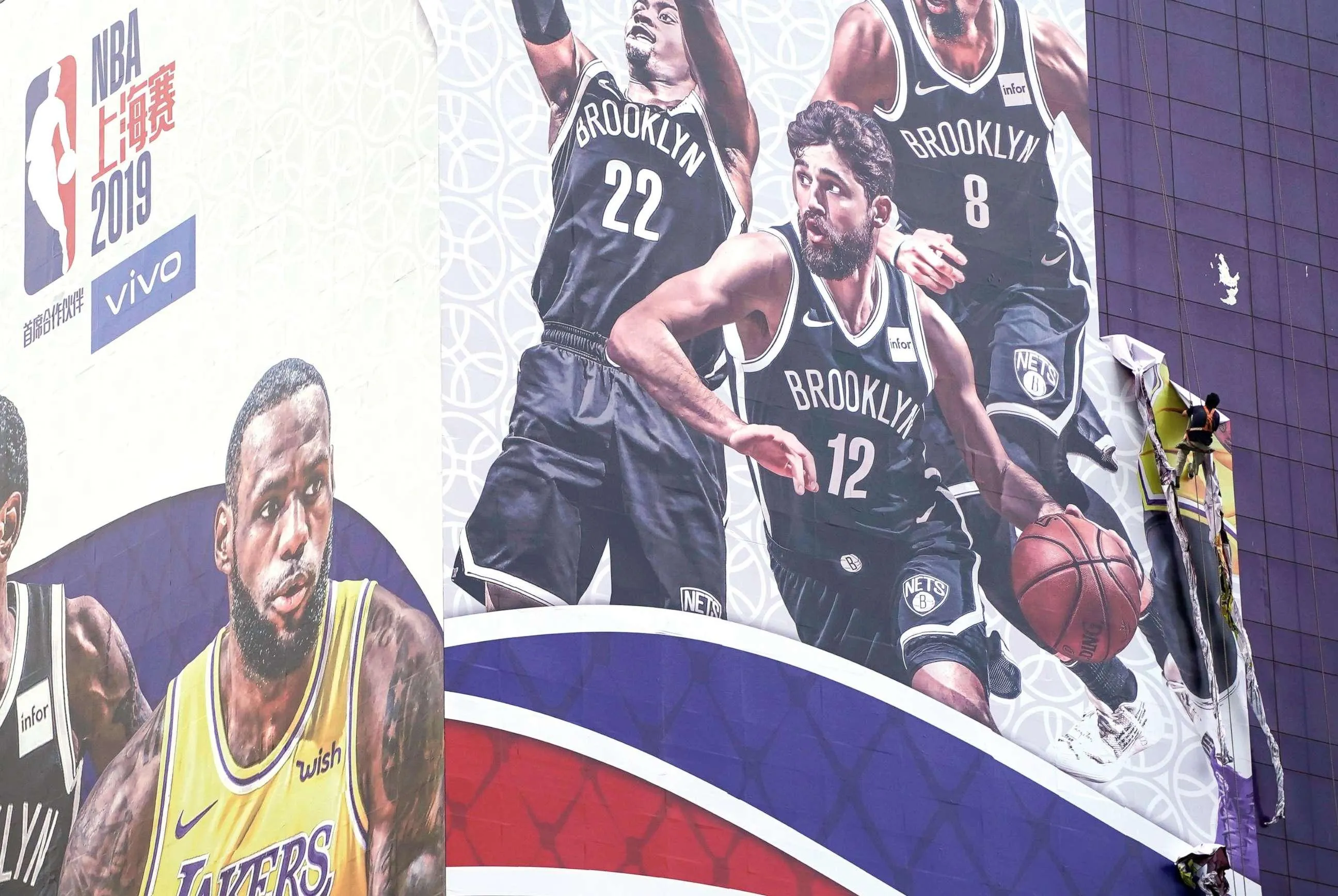
In October 2019, Houston Rockets general manager Daryl Morey posted an image on Twitter in support of the pro-democracy protests in Hong Kong. He quickly deleted the post, but the scandal had already unfolded. The Chinese Basketball Association suspended its partnership with the club, state-run CCTV canceled NBA game broadcasts, and a number of sponsors and partners reviewed their agreements.
The controversy was particularly painful for the Houston Rockets. The team had a huge following in China thanks to former star Yao Ming. NBA Commissioner Adam Silver, for his part, defended the right of league representatives to express their own views, even as league leadership sought to restore relations with Chinese partners.
The crisis proved to be protracted. China’s CCTV did not broadcast NBA games for about a year and a half. Added to this were losses resulting from sponsorship and media restrictions.
Keanu Reeves: How Support for Tibet Led to Movies Being Removed from Streaming Platforms

In March 2022, movies starring Keanu Reeves began disappearing from Chinese video streaming services. The reason was the actor’s participation in a charity concert organized by Tibet House US—an organization associated with supporting Tibetan culture and the Dalai Lama. Beijing considers the issue of Tibet to be politically sensitive and accuses the Dalai Lama of separatism.
After news of the concert broke, Chinese users criticized Reeves. Soon after, Tencent Video and iQiyi removed films featuring him, including titles from the “Matrix” and “John Wick” series, as well as “Speed.” At least 19 of the actor’s films disappeared from Tencent Video; searching for his name on some services also stopped yielding the usual results.
These films were not related to the political situation in China. The restrictions targeted the actor’s body of work due to his participation in an overseas charity event. As a result, not only Reeves himself but also film studios and rights holders, whose films lost part of their audience, felt the consequences.
“South Park”: The animated series mocked censorship and disappeared from Chinese websites
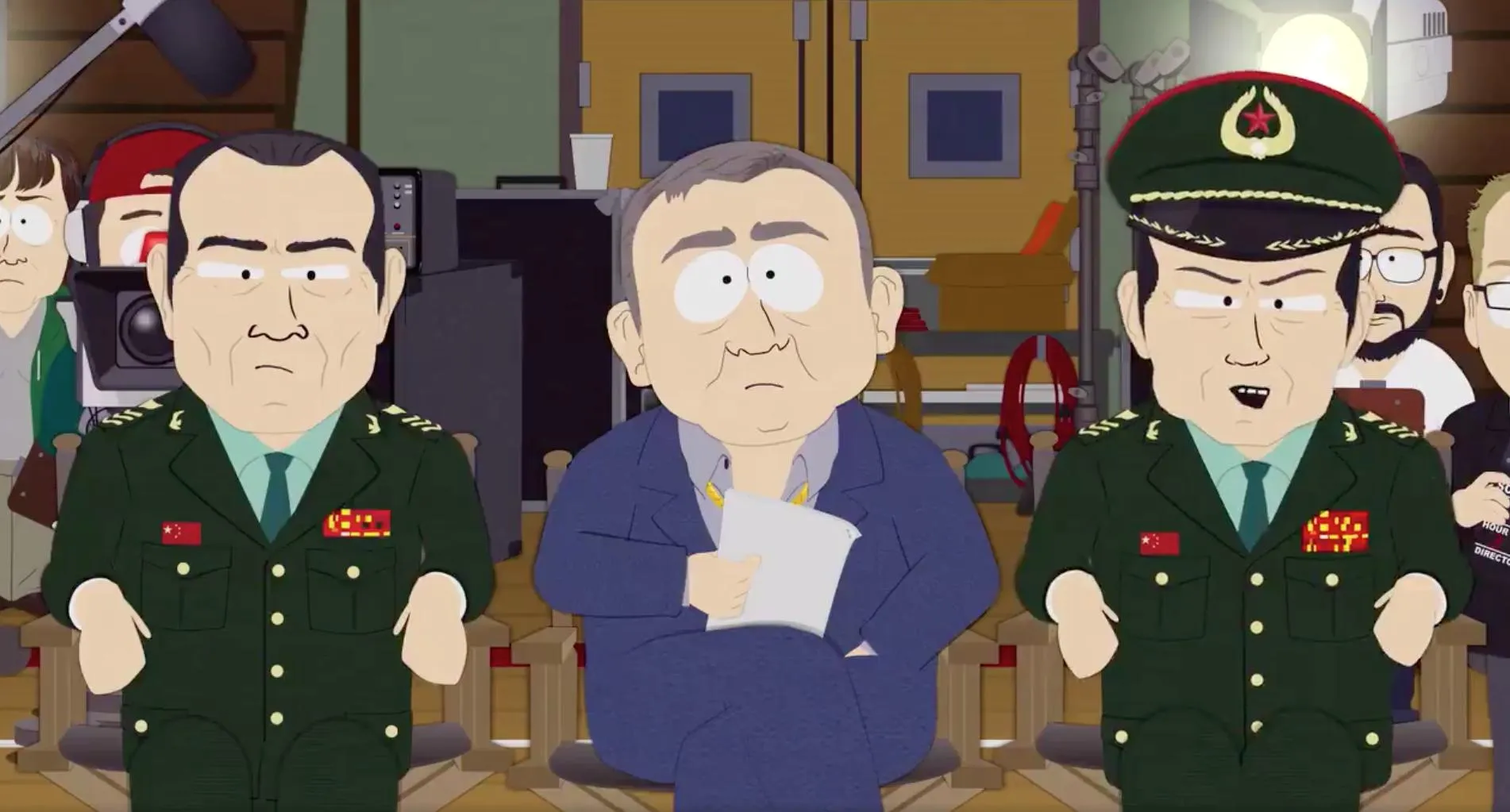
On October 2, 2019, an episode of the American animated series “South Park” titled “Band in China” was released. The creators mocked Hollywood studios that alter scripts and cut out unwanted scenes to gain access to the Chinese box office. In one storyline, the characters try to make money in China but run into restrictions, and Disney becomes one of the main targets of satire.
After the episode aired, clips, video segments, and mentions of “South Park” began disappearing from a number of Chinese websites. The show’s creators, Trey Parker and Matt Stone, responded with an ironic “apology” in which they mocked the willingness of large corporations to prioritize profits over freedom of expression.
The incident took on special significance: the series, which had criticized Hollywood’s accommodation of Chinese censors, itself faced restrictions on digital platforms.
BTS: A Speech on the Korean War and the Disappearance of Ads
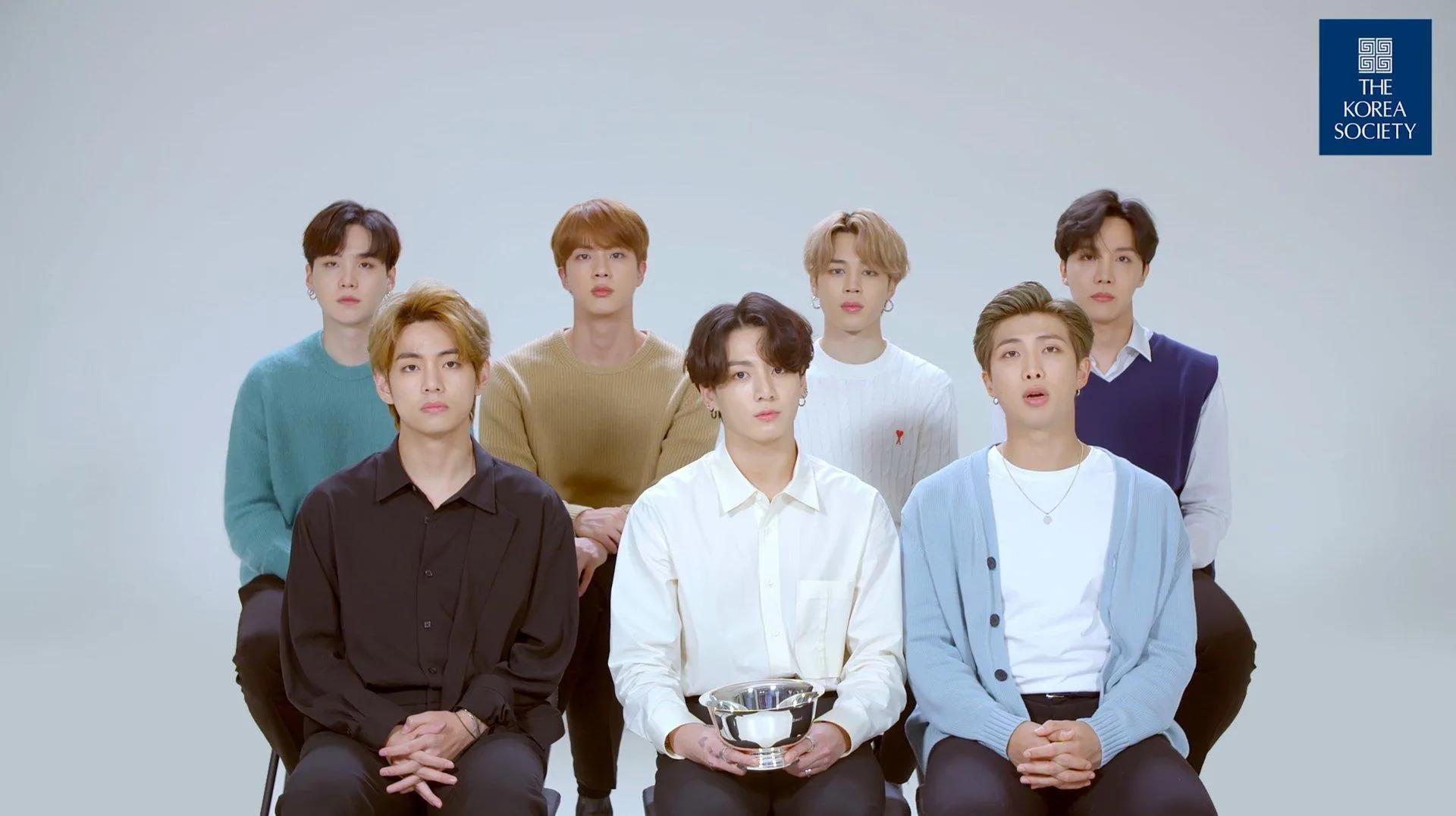
In October 2020, the South Korean band BTS received the Van Fleet Award for their contribution to the development of relations between South Korea and the United States. During his speech, the group’s leader, RM, mentioned the shared sacrifices of the two nations during the Korean War of 1950–1953.
Some Chinese users were outraged because the musician did not mention the Chinese soldiers who fought on North Korea’s side. Although RM did not directly criticize China, calls to boycott the group and its advertising partners spread across social media.
Soon after, Chinese online platforms stopped displaying certain BTS advertising campaigns from Samsung and Hyundai. As reported by Reuters, it was not entirely clear who was removing each piece of content—the brands themselves or the platform administrators. However, campaigns featuring global pop stars effectively came under fire due to differing interpretations of a historical event.
Dolce & Gabbana: an ad featuring chopsticks, a canceled fashion show, and a boycott
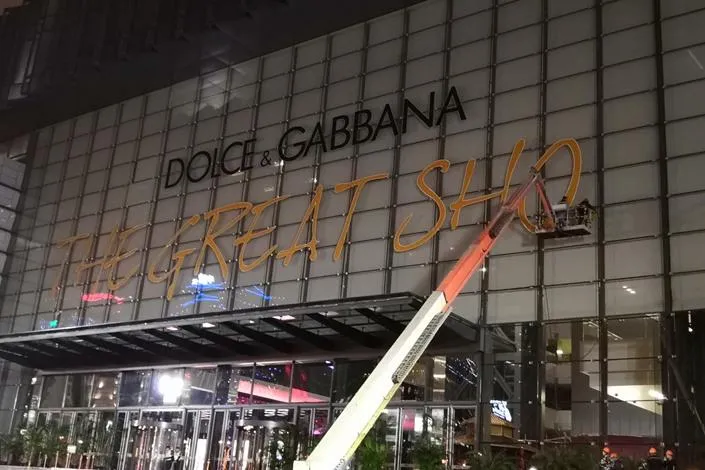
In November 2018, the Italian fashion house Dolce & Gabbana was preparing one of the largest fashion shows in its history. The event, titled “The Great Show,” was set to take place in Shanghai and was intended to be a major step toward strengthening the brand’s position in the Chinese market. The organizers planned to present over 300 looks, feature about 140 performers, and invite 1,400 guests, including Chinese celebrities, models, and influential figures in the fashion industry.
To promote the show, the company launched the “DG Loves China” advertising campaign. In short videos, a Chinese model dressed in Dolce & Gabbana tried to eat traditional Italian dishes—pizza, spaghetti, and cannoli—using chopsticks. A voiceover explained to her how to use the utensils correctly, while the model herself looked flustered.
The ad, which the brand intended as a lighthearted blend of Italian and Chinese cultures, sparked the opposite reaction. Social media users accused Dolce & Gabbana of treating the Chinese with condescension, using racial stereotypes, and portraying local culture as less developed. The tone of the comments, which many viewers perceived as mocking, sparked particular outrage.
The scandal intensified after screenshots of private messages allegedly sent by the fashion house’s co-founder, Stefano Gabbana, appeared online. The messages contained offensive remarks about China and its people. The designer denied authoring the comments and claimed that his Instagram account had been hacked. The company also issued a statement, but this did not stop the wave of criticism.
By November 21, the controversy had become one of the most popular topics on the Chinese social media platform Weibo. By midday, posts about the scandal had garnered over 120 million views. Well-known Chinese actors and singers, including Zhang Ziyi, Li Bingbing, and Wang Junkai, began to withdraw from collaborations with the brand.
Models who were scheduled to appear in the show also began withdrawing their participation. As a result, Dolce & Gabbana canceled “The Great Show” just a few hours before it was scheduled to begin. According to Vogue, the event was set to be the largest in the fashion house’s 33-year history, so its cancellation was a serious blow to the company.
The fallout quickly spread to the retail sector. The Chinese marketplaces Kaola and Secoo removed Dolce & Gabbana products from their catalogs. Reuters also reported that the brand’s products were no longer appearing in search results on major platforms such as Alibaba and JD.com. As a result, shoppers lost the ability to order a significant portion of the brand’s products through their usual online stores.
On November 23, the fashion house’s founders, Domenico Dolce and Stefano Gabbana, released a video statement offering an apology. The designers stated that they respect Chinese culture, acknowledged the mistakes in the advertising campaign, and promised to prevent similar situations in the future. At the end of the message, they even apologized in Chinese.
However, restoring their reputation proved to be much more difficult. According to a YouGov survey, the brand’s perception rating among Chinese consumers dropped from +3.3 to −11.4 points in just about a week.
H&M: Cotton from Xinjiang and the Disappearance from Online Stores

In March 2021, the Swedish company H&M found itself at the center of a large-scale boycott in China due to its stance on cotton production in the Xinjiang Uyghur Autonomous Region. The controversy stemmed from a statement the brand had released back in September 2020. In it, the company expressed concern over reports of forced labor involving Uyghurs and explained why it no longer sources cotton from that region.
The scandal erupted on March 24, 2021, when Chinese social media platforms began actively sharing H&M’s old statement. This happened a few days after the European Union, the United States, the United Kingdom, and Canada imposed sanctions on Chinese officials over human rights violations in Xinjiang. Beijing rejected the accusations, and government-affiliated organizations accused the Swedish brand of spreading false information.
The Communist Youth League of China joined the criticism, calling on consumers to boycott H&M products. Chinese state media also began publishing articles against the company. Well-known Chinese actor Huang Xuan announced the termination of his advertising contract with the brand, stating that he opposes the discrediting of his country.
The boycott quickly spread to the digital sphere. H&M products disappeared from major Chinese marketplaces such as Tmall, JD.com, and Pinduoduo. The brand’s stores stopped appearing on some mapping services, including Baidu Maps, and the company’s app was removed from local app stores. In effect, it became significantly more difficult for shoppers to locate H&M retail locations and order clothing through their usual online platforms.
The wave of criticism has also spread to other international companies. Nike, Adidas, Burberry, Uniqlo, and Hugo Boss—which had previously expressed concern about labor conditions in Xinjiang—have been targeted by the boycott. Chinese celebrities began turning down advertising contracts, and campaigns supporting local cotton gained traction on social media.
The economic impact on H&M was significant. In the quarter ending in May 2021, the company’s sales in China fell by 28% year-over-year, or by 23% in local currency. In late March, the company also announced the closure of approximately 20 stores in the country. It would be inaccurate to attribute the drop in sales entirely to the boycott, but the media campaign significantly complicated the brand’s operations in one of its largest markets.
H&M attempted to restore the trust of Chinese shoppers by emphasizing that its sourcing policy does not constitute a political stance. At the same time, the company continued to declare its commitment to international standards of responsible manufacturing.
Blizzard: Punishing a Player for Supporting Hong Kong
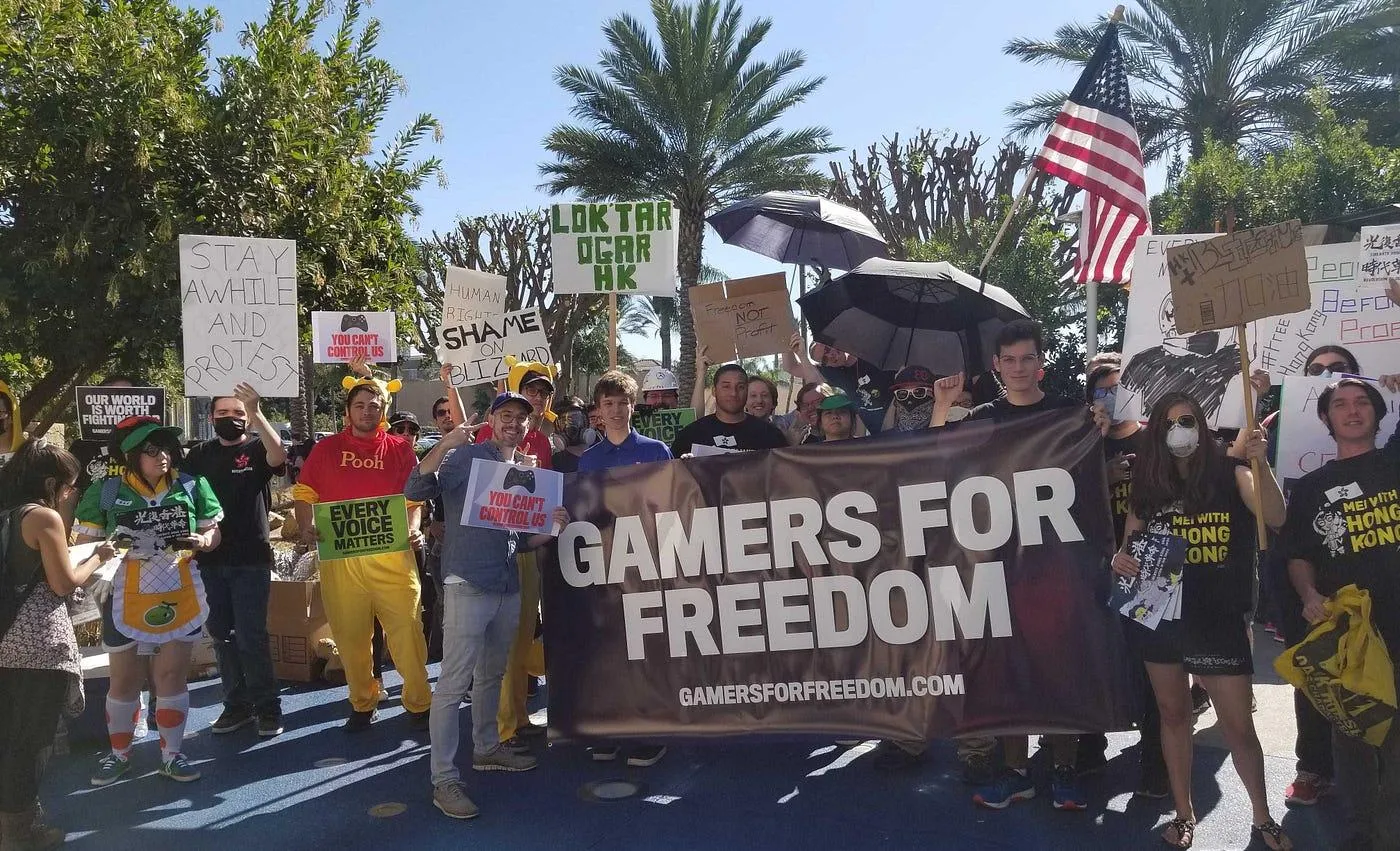
In October 2019, Hong Kong esports player Ng Wai-chung, known by the nickname blitzchung, appeared wearing a gas mask after a match at the Hearthstone Grandmasters tournament and shouted a slogan in support of the protests in Hong Kong. At the time, mass demonstrations against Beijing’s growing influence were taking place in the city.
The American company Blizzard Entertainment stated that the player had violated the rules of the official broadcast. Initially, he was suspended from competition for 12 months, stripped of his prize money, and the company terminated its collaboration with the two commentators who had interviewed him. The decision sparked an international outcry, calls to boycott Blizzard, and accusations that the company was sacrificing free speech for the sake of the Chinese market.
Blizzard later revised the sanctions: it reinstated the player’s prize money and reduced the suspension for him and the commentators to six months. Management emphasized that the decision was based on tournament rules, not China’s political stance. At the same time, the company acknowledged that it had acted too hastily.
How Chinese Censorship, Boycotts, and Commercial Pressure Work
All these stories are linked by the influence of the Chinese market, but the mechanisms of restriction differ. In the cases of Mbappé and Özil, state television pulled sports broadcasts. Keanu Reeves’ movies and episodes of “South Park” disappeared from digital platforms. Dolce & Gabbana and H&M faced, first and foremost, waves of consumer outrage, with celebrities and online retailers rallying in support. Blizzard itself punished the esports player, citing competition rules.
The first level of control is government regulation. China has an extensive internet filtering system known as the Great Firewall of China, and local platforms are required to remove prohibited content. In Freedom House’s 2026 report, the Chinese internet was once again classified as “not free,” with a score of 9 out of 100.
The second level involves decisions by major digital platforms and commercial partners. If an account is restricted, a film is removed from the catalog, and products disappear from marketplaces and maps, people may lose access to them even without a publicly announced nationwide ban. The third level is consumer nationalism: social media users demand apologies and call for boycotts of companies due to political or cultural disputes. Some of these campaigns are amplified by state-run media, but not all are initiated by government order.
Finally, there is self-censorship. Film studios, sports leagues, fashion brands, and game developers may alter their decisions in advance, fearing they will lose Chinese customers, advertisers, or market access. The Sanrio case shows that problems can arise not even from a brand’s own content, but from the plot of a TV series with which it is collaborating.
It is the combination of government regulations, audience reactions, and commercial interests that makes Chinese scandals so far-reaching. A soccer player’s comment, a musician’s speech, or a few seconds of advertising can turn into issues involving international contracts, access to digital platforms, and freedom of expression—far beyond China’s borders.




