
War in Iran could lead to widespread famine among vulnerable populations — UN
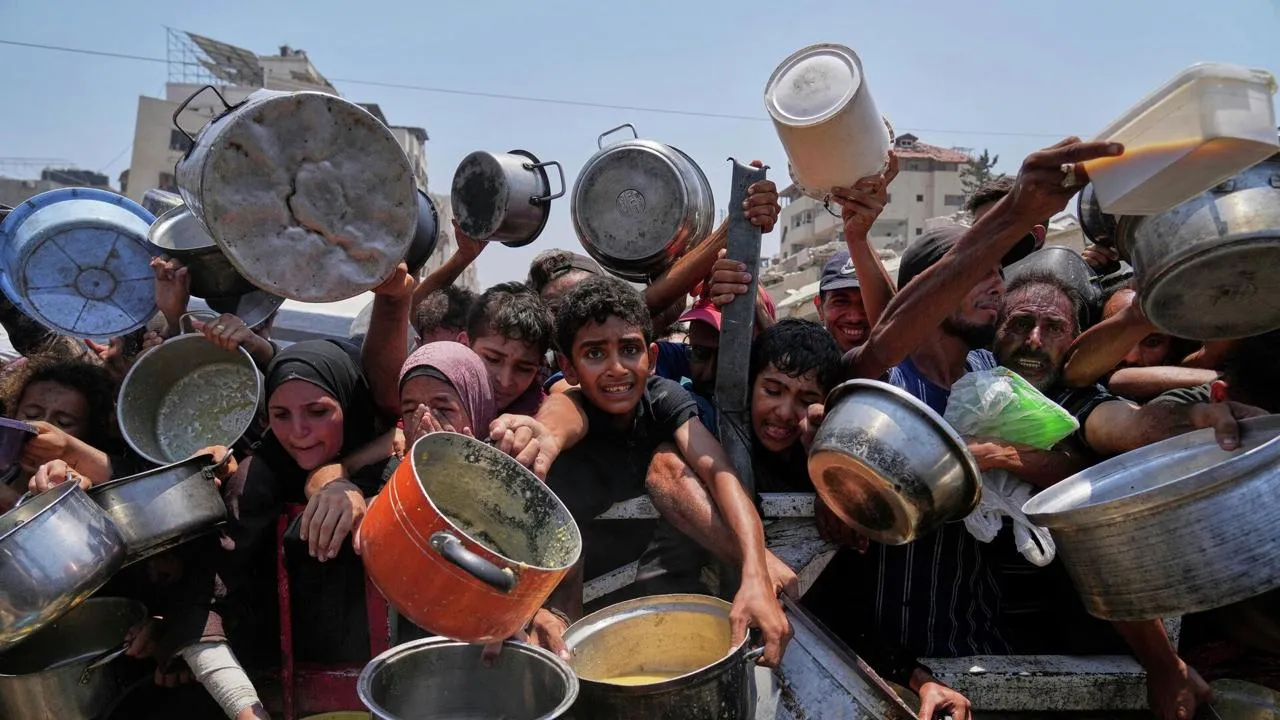
The consequences of the war in Iran threaten millions of the world’s most vulnerable people with crisis-level hunger or even worse, catastrophic consequences.
An official statement to this effect was made by Karl Skau, Acting Executive Director of the World Food Programme (WFP).
According to the official, the blockage of strategic sea lanes and a sharp reduction in funding from key global donors have pushed the international humanitarian mission to the brink of survival.
The sudden closure of the Strait of Hormuz has led to a sharp rise in fuel prices on global markets, significantly increasing the cost of the organization’s operations.
At the same time, the surge in energy prices has driven up food costs worldwide.
The situation is further exacerbated by the fact that the supply of critically important fertilizers from the Persian Gulf region, necessary for the planting season in poor countries, is currently completely disrupted.
Karl Skaug emphasized that in the poorest regions of the world, when food prices rise by 20–30%, people simply eat 20–30% less.
This devastating combination of factors is forcing the organization to make unprecedented and tough decisions.
“In many places, we are already taking food from the hungry to feed those who are starving,” the agency head stated.
Currently, the World Food Programme is entirely dependent on voluntary government donations and is now seeing a significant drop in funding from all sources. In particular, the organization’s largest donor—the United States—has drastically reduced its support.
Since the administration led by U.S. President Donald Trump took office, funding for international humanitarian programs has dropped significantly.
The current U.S. contribution stands at approximately $731 million, whereas previous figures exceeded $4 billion.
Back in March, the humanitarian organization officially warned that more than 45 million people would face acute food shortages if oil prices remained above $100 per barrel.
Today, the negative consequences of the fuel crisis are already being felt on the ground—in Sri Lanka, Somalia, and Afghanistan. However, even if the Strait of Hormuz is reopened in the near future, the impact of this military crisis will be felt for a very long time.
“Recovery will take time,” noted Carl Skau, adding: “We hope this conflict will end and the strait will reopen tomorrow. But it is clear that wealthy countries must step up to mitigate the impact on the most vulnerable.”
Unlike previous global challenges, such as the war in Ukraine or the COVID-19 pandemic, there was no rapid increase in contributions from the international community this time, and overall funding levels fell by 40% year-over-year.
Iran announced a missile strike on a U.S. base in Jordan housing F-35 and F-16 fighter jets
Iran announced the closure of the Strait of Hormuz; the U.S. responded


