
The Flight to Israel, the Missing Founder, and $334 Million in Frozen Bitcoin: The Rise and Fall of ZondaCrypto
What do we know about cryptocurrency? It is digital money that allows you to make transactions without the involvement of banks or governments. It offers anonymity, speed, and accessibility. The most popular way to buy cryptocurrency is through cryptocurrency exchanges. With their help, you can buy crypto, trade it, or sell coins, receiving funds in the currencies we’re used to.
However, cryptocurrency exchanges come with their own risks, the most serious of which is the freezing of funds. In such cases, users cannot access their assets for an indefinite period of time.
This situation occurred with the Zondacrypto exchange, which is the largest in Poland and one of the most popular in Central Europe. The exchange is accused of serious financial violations, political ties, and possible Russian influence. Moreover, this story has evolved from a financial issue into a full-blown mystery involving a fleeing CEO, a missing founder, murder suspicions, and a trail leading all the way to Dubai.
What happened to the Zondacrypto exchange? Why did it find itself at the center of a scandal? UA.NEWS has the answer.
What is known about the Zondacrypto exchange?
To understand the scale of what is happening, one must first understand what ZondaCrypto is and where it came from. It is an exchange with a twelve-year history that essentially grew before the eyes of the entire Polish market.
In 2014, entrepreneur Sylwester Suszek founded the BitBay platform in Poland. It was one of the first cryptocurrency exchanges in the country. Through BitBay, Polish users gained the ability to legally buy and sell Bitcoin and Litecoin for zlotys, euros, and dollars. Indeed, within the first few months, 3,000 users became their clients. This was a success, considering that 12 years ago, cryptocurrency was not nearly as widespread. Over time, the company became a regional leader in the cryptocurrency sector.

However, the first problems began as early as 2018. The Polish financial regulator placed BitBay on its watchlist. The reason was unauthorized payment services. Because of this, the exchange re-registered first in Malta and then in Estonia, officially explaining this by saying that Poland was not ready for crypto regulation. But few people at the time wondered what exactly was behind this move.
In 2020, journalists from the Polish TV channel TVN conducted an investigation. It alleged that among BitBay’s shareholders were individuals with criminal pasts involved in tax evasion schemes. The TV channel was offered one million zlotys to pull the investigation from the air, but this did not help, and threats began. The film caused a stir, but the business continued to grow.
In 2021, Sylwester Suszek sold the company to an American investor, and management passed to Przemysław Król. The exchange underwent a rebranding, first becoming Zonda and later ZondaCrypto. Under Król’s leadership, the exchange focused on aggressive marketing. It formed partnerships with well-known sports clubs such as Parma, Atalanta, Bologna, and AS Monaco, and Polish cyclist Katarzyna Niewiado became an ambassador for ZondaCrypto. The exchange also sponsored cycling races and hockey arenas in Davos. Kral spoke at forums in Monaco, where he taught the elite how to invest in cryptocurrency.
At the height of its popularity, ZondaCrypto served over a million users, about 75 percent of whom were based in Poland, offered trading in over 70 cryptocurrencies, and held licenses in Estonia, Italy, Canada, and Slovakia. The exchange’s turnover reached one billion zlotys per month, and its logo was on T-shirts across Europe. It was hard to imagine what would happen to the company a few years later.
How the exchange lost 99% of its Bitcoin reserves
In early April 2026, several Polish media outlets reported a sharp decline in the exchange’s Bitcoin reserves. According to money.pl and Wirtualna Polska, the average monthly Bitcoin balance in the exchange’s wallet dropped from 55.7 BTC in August 2024 to just 0.086 BTC as of April 1, 2026. This amounted to approximately 21,000 zlotys ($5,690).
Users panicked and began withdrawing funds from the exchange en masse (the number of withdrawal requests jumped from approximately 100,000 per year to 25,000 in a single day). However, many of them were left without access to their assets. This news caused panic among investors and led to the launch of an investigation by Polish law enforcement agencies.
However, Kral called all reports of bankruptcy “false,” accused the media of an organized attack on the exchange, and promised to fulfill all obligations to clients. As proof of his words, he publicly disclosed the address of a cold wallet containing 4,503 bitcoins worth over $334 million.
However, there is one catch. The keys to unlock the wallet remain with the exchange’s founder, Susek, who disappeared in March 2022 and has not been heard from since. Kral even recorded a video message urging Susek to hand over the wallet keys. However, according to Onet, investigators are leaning toward the theory that Sushek was murdered and believe that Kral may know about it.
The next alarming sign was that the entire supervisory board of BB Trade Estonia OÜ (the company managing ZondaCrypto) resigned. Veronika Togo, Guido Bühler, and Georgi Janiashvili, who were members of the board, stated that while attempting to assess the situation, they discovered significant problems that prevented them from properly fulfilling their duties.
After that, the problems snowballed like an avalanche from the mountains. The company descended into chaos. Most employees received layoff notices, and the corporate communication systems ceased to function. Debts to customers exceed 500 million zlotys and continue to grow. Investigators have already identified several hundred victims and are asking people to preserve any evidence, while the number of complaints filed with the stock exchange is rising daily.

The political dimension of the scandal and ties to Russia
The ZondaCrypto scandal has become a cornerstone issue in Poland’s political landscape as well. Prime Minister Donald Tusk stated that the company’s financial success was driven by Russian money linked to one of Russia’s most powerful mafia groups—the Bratva—and Russian intelligence agencies.
Moreover, he claimed that ZondaCrypto not only supports events in Poland but also actively “promotes specific political forces.” According to him, the company helped finance politicians from the Law and Justice party and representatives of the far-right Confederation. Tusk also noted that among the exchange’s financial beneficiaries are entities linked to Poland’s current president, Karol Nawrocki, who participated in the same CPAC conference. The opposition dismisses these allegations as political manipulation, but questions remain that require clarification.
Polish Prosecutor General Waldemar Żurek confirmed that there is a “Russian connection” in the case and stated that Polish President Karol Nawrocki had full information from the intelligence services.
Against this backdrop, the ruling coalition is attempting to legalize and regulate the crypto market through a new law, though it faces serious difficulties. Karol Nawrocki has already vetoed this bill twice. His office explains that the law grants the government overly broad powers, including the ability to block websites. Some independent experts also criticize certain provisions of this bill. However, the very fact that Poland remains without clear rules for the crypto market precisely during the biggest financial scandal in this sector seems strange. Soon, the Sejm will consider the bill for the third time, and there is a high probability that the president will veto it again.
How are the country’s Olympic Committee and the crypto exchange connected?
In October 2025, the Polish Olympic Committee announced an agreement that its president, Radosław Pieświec, called an “innovative partnership.” Zondacrypto became the general sponsor of the PKOl and the official crypto exchange of the Polish Olympic team for 2026–2028.
When the Olympians returned home with medals from Milan-Cortina 2026, instead of cash, they received crypto tokens via the sponsor’s app. However, the athletes were unable to exchange them for real banknotes. For example, three-time Olympic medalist Kacper Tomasiak was left without 550,000 zlotys.
Piesiewicz reacted as if the scandal did not exist. He stated that he had no grounds to terminate the contract, since breaching the agreement would result in penalties that the committee could not afford. And then it turned out that Piesiewicz himself had invested his own funds in Zondacrypto.
Sports Minister Jakub Rutnicki stated that Piesiewicz “compromised the Polish Olympic Committee” and “exploited the sacred image of an athlete to promote Zondacrypto,” and called on him to resign.
What role did Dubai play in the Zondacrypto story?
One of Poland’s most influential newspapers, Rzeczpospolita, conducted an investigation revealing a scheme for money laundering and circumventing sanctions. It turned out that even before his disappearance in 2022, Sylwester Suszek had transferred the company’s shares to three entities registered in the United Arab Emirates. Two of them had a registered address in Burj Khalifa.
All three companies in Dubai were established using the “nominee agent” mechanism. This is a scheme frequently used by Russian oligarchs to invest illicit funds and circumvent U.S. and EU sanctions. The formal owner of the shares was a UAE citizen who “lent” his citizenship without having actual access to the bank accounts.
Behind the companies in Dubai were Sushek’s structures in Luxembourg—one invested in real estate, while the other operated in the stock market. Incidentally, RMF24 notes that connections to Dubai are a popular way to discreetly move large sums of money.

Kral’s Flight to Israel
After Sylwester Suszek disappeared in 2022, Przemysław Kral became the public face of the exchange. However, almost immediately after the financial scandal involving the exchange, he decided to flee.
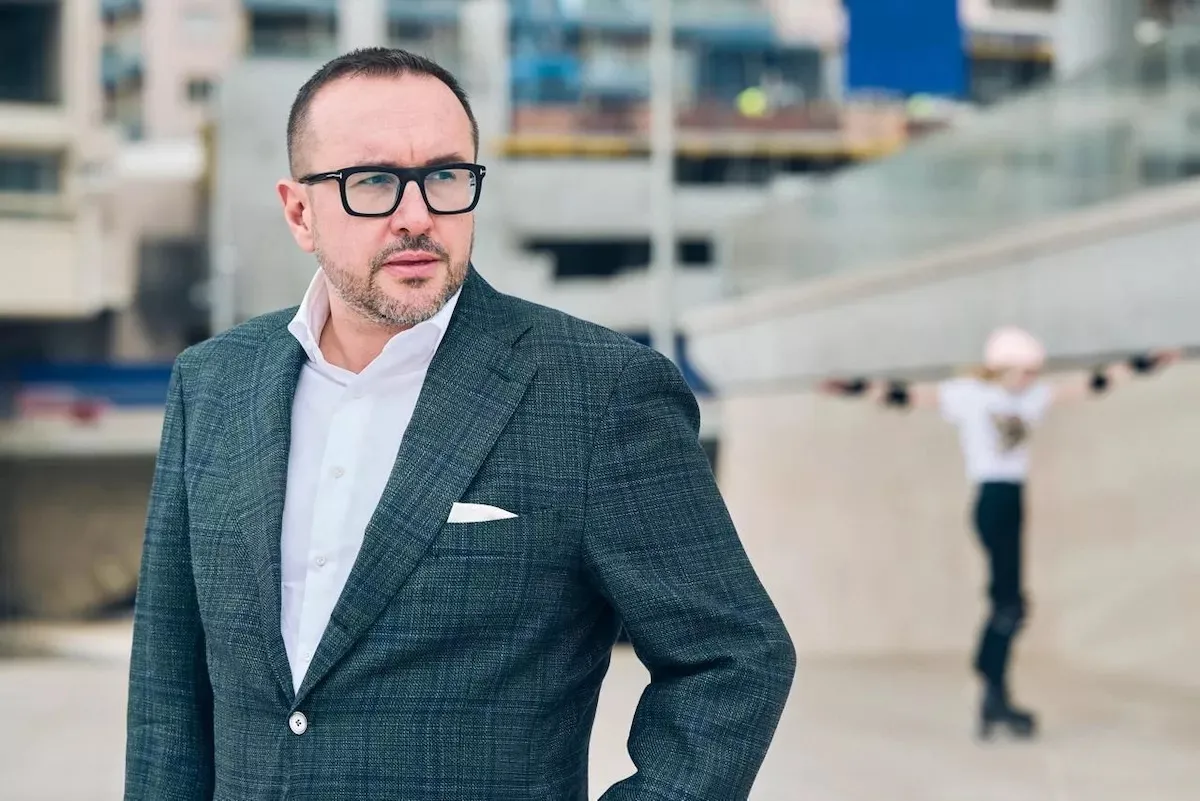
According to Wirtualna Polska, Kral has held an Israeli passport since last year. As reported by Onet, he moved to Israel, having previously lived in Monaco. Polish media note that Kral feared arrest, which is why he has not appeared in Poland for years.
Polish Deputy Minister of the Interior Czesław Mróczek commented cautiously on the situation regarding the extradition of Przemysław Kral, noting that Poland has no experience in extraditing individuals from Israel. Furthermore, it is known that Israel does not extradite its citizens.
Who will pay for someone else’s game?
From a successful and seemingly legitimate crypto exchange, Zondacrypto has turned into what is likely a fraudulent operation.
The founder has disappeared and is most likely dead. The company’s president is in hiding abroad with an Israeli passport in his pocket. Clients’ money has vanished somewhere between countries. And the keys to the Bitcoin wallet containing over a billion zlotys have still not been found.
Now the bill has been presented. It will be paid by 30,000 Poles.


