
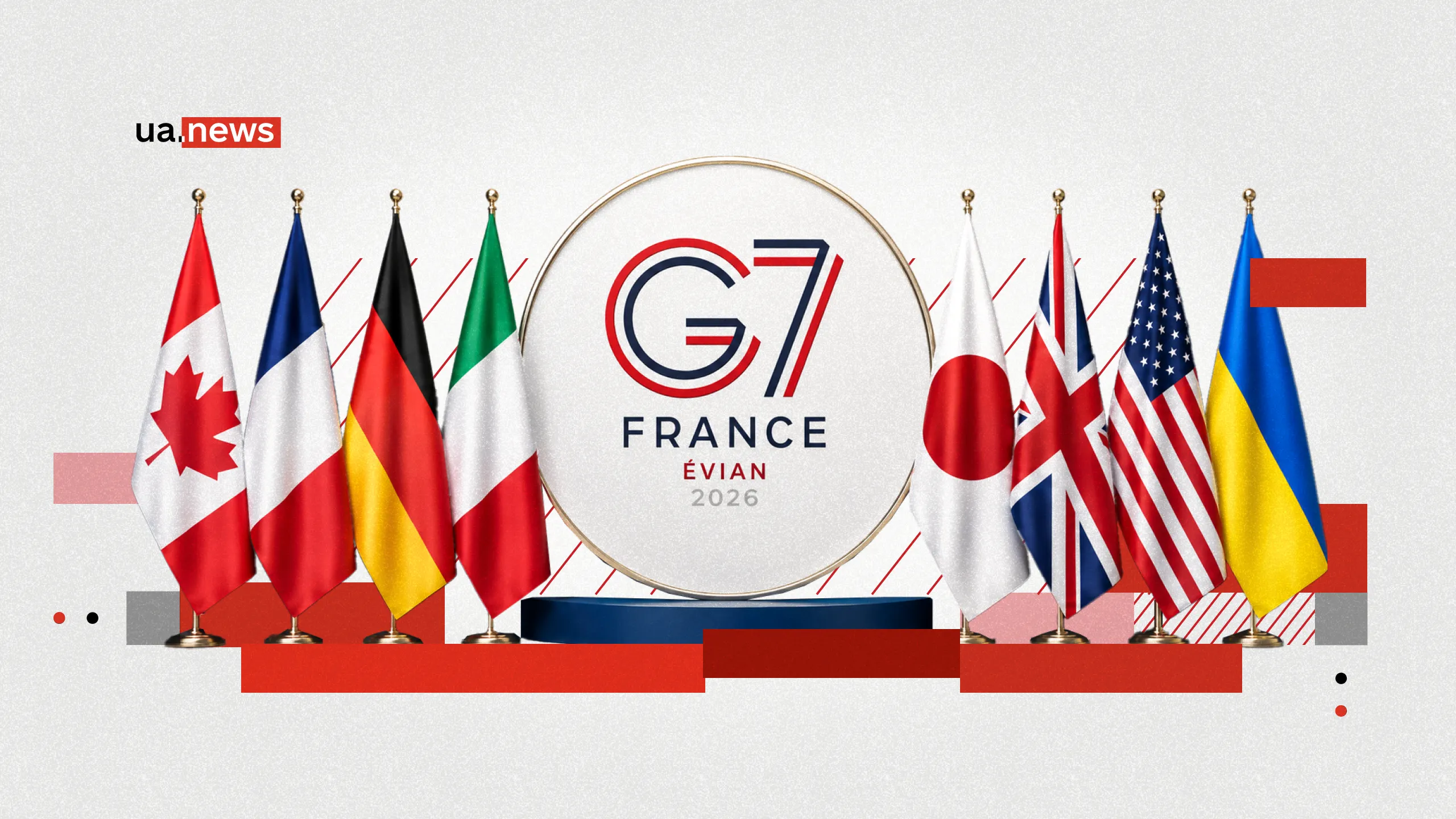
As of now (June 15–17), the G7 summit is taking place in Evian, France. Its agenda will be determined not so much by the official schedule as by one key question. It can be summed up briefly: Will Ukraine and its European allies succeed in getting Donald Trump to finally put the “spirit of Anchorage” behind him? That is, this refers to last year’s meeting between the U.S. president and Russian dictator Vladimir Putin in Alaska, where the parties allegedly agreed, among other things, that the withdrawal of Ukrainian forces from Donbas would be a condition for ending the war.
The irony of the moment lies in the fact that the leaders are set to discuss the prospects for peace against the backdrop of an extremely brutal show of force on both sides. On the night of June 15, Russia carried out yet another massive shelling of Ukraine, deliberately targeting Kyiv. Once again, dozens of people were killed and injured, and one of the “suicide drones,” in particular, struck the Assumption Cathedral of the Kyiv-Pechersk Lavra, damaging the historic shrine. Early on the morning of June 16, right in the middle of the summit, Ukrainian drones launched a retaliatory attack on an oil refinery in Moscow.
War speaks solely the language of explosions, and it is against this backdrop that Western leaders will attempt to map out the contours of a new order—or at least pretend to. What should Ukraine expect from this summit, and what outcome would Kyiv like to see? UA.News political analyst Mykyta Trachuk, together with experts, examined the issue.
The Main Battle Is for Trump’s Mind
The root of the discussions in Evian is not simply another round of talks about aid to Ukraine or anything of the sort. Especially since Ukraine is not the only topic of dialogue. This is an attempt to overturn the results of Trump’s Alaska agreements with Putin, which called for the withdrawal of Ukrainian troops from Donbas. For Kyiv and European capitals, it is of fundamental importance that this scenario not even theoretically be allowed to return to the negotiating table.
The Europeans arrived at the summit not merely with the intention of securing Trump’s support—they aim to make him a co-author of a new strategy. The “Euro-Troika” (the United Kingdom, France, and Germany) currently believes that the tide of the war has turned in Ukraine’s favor, and thus a window of opportunity has opened to renegotiate the terms of a potential peace agreement. Their proposal is in line with Kyiv’s position: a ceasefire along the front lines. The issue of Western peacekeepers may also be discussed, a move Moscow strongly opposes. This is an attempt to institutionalize the West’s presence in Ukraine, turning the line of contact not into a temporary boundary but effectively into a new “security border.”
In this context, the position of not only Washington but also other G7 members takes on particular significance. Japan, which holds the G7 presidency this year, has consistently supported sanctions pressure on Russia, but its own security interests in the Asia-Pacific region are forcing Tokyo to look ever more closely at how the West is shaping its long-term deterrence strategy. Canada and Italy, for their part, traditionally advocate diplomatic solutions, but at the same time are not prepared to stand on the sidelines if the key players—the U.S., the U.K., France, and Germany—form a united front. Thus, pressure on Trump will come not only from the European trio but also through a demonstration of broad consensus within the G7.
Meanwhile, Putin is playing a preemptive game. Just the other day, he once again made it clear that he is supposedly ready for negotiations with Ukraine and the West, but exclusively on the basis of the “Anchorage terms.” Putin is also ready to meet with the Ukrainian leader—but is pointedly inviting him to Moscow. And on June 14, two days before the summit, both Zelenskyy and Putin held phone calls with Trump almost simultaneously. Zelenskyy’s comments suggested that he was trying to convince Trump of the futility of continuing to rely on old approaches and the need to increase pressure on Russia. In contrast, Ushakov, an aide to the Russian autocrat, put forward the argument that Trump had promised to influence the Europeans and Kyiv—apparently in favor of implementing the “Alaska terms.” As they say, opinions were divided.
For the U.S. president, this situation involves a delicate balancing act between different paths forward. On the one hand, a complete break with the “spirit of Anchorage” would mean losing face in front of Putin and a potential escalation—something he has always sought to avoid. On the other hand, if the American leader ignores the arguments of the Europeans and Ukraine and sticks to his previous positions, it could cost him further setbacks, since neither Kyiv nor Europe is willing to accept the terms set by Washington and Moscow.
Congressional elections are approaching, and although foreign policy is rarely a decisive factor for American voters, the issue of “betraying allies” or “caving in to Russia” has the potential to mobilize opponents. Moreover, the military-industrial lobby in the U.S. has a vested interest in maintaining and increasing contracts, and will therefore also pressure the White House to continue supporting Kyiv.

Kyiv’s Three Demands
In this complex diplomatic game, Ukraine has a very specific list of requests for the summit participants. Politico has outlined three main areas on which Zelenskyy and his European “support group” will focus their efforts.
First—missiles. Ukraine is seeking to expedite deliveries of interceptors for the Patriot systems, as well as, possibly, long-range missiles. This issue has become particularly acute following yet another nighttime strike on Kyiv: the hit on the Lavra served as a painful reminder that Ukraine’s airspace remains insufficiently protected. At the same time, the current strikes against Russian logistics and successes in the “drone war” demonstrate that Ukraine is capable of effectively using Western weapons to deliver precise strikes deep into enemy territory.
Second—money. The EU has already covered Ukraine’s financial needs for the immediate future by approving a 90-billion-euro loan. But Kyiv needs at least another 20 billion. This is not just about direct military aid: these funds are needed to maintain macroeconomic stability, pay public sector salaries, rebuild damaged infrastructure, and so on. The issue of funding, as always, becomes a matter of survival.
Third—sanctions. Ukraine has long been pressing its allies to increase economic pressure on Moscow, but the results remain mixed (especially when it comes to Washington’s position). The EU is currently preparing its 21st (!) package of sanctions against Russia, but has refrained from imposing a key ban on the maritime transport of Russian oil tankers. This decision was deliberately postponed until the G7 summit, in the hope that the U.S. would support this move right here in Evian. According to two European officials, without American backing, the sanctions pressure remains incomplete and, therefore, less painful for the Kremlin. However, Trump is unlikely to be enthusiastic about the idea of yet another sanctions package.
The military context in which the summit is taking place also cannot be ignored. The attack on the Kyiv-Pechersk Lavra is not just another war crime against cultural heritage, but a message addressed directly to the G7 participants. Russia is demonstrating that it is ready to destroy even the holiest symbols of Orthodox culture and spirituality, and that for it, there are no “red lines.” This is a deliberate attempt at intimidation: in other words, “we will respond to any of your plans with an escalation that you will not dare to counter.”
At the same time, the Ukrainian attack on the Moscow oil refinery is a mirror response—albeit one that is far less extensive. Kyiv is demonstrating that war has a flip side, that Russian territory is not inviolable, and that no agreements in Anchorage or elsewhere can guarantee the safety of even the Russian capital. This is also a signal to Trump: Ukraine does not wish to be a passive bargaining chip; it has its own tools to influence the course of the conflict. And if Washington tries to force Kyiv into an unfavorable peace, the consequences could be unpredictable not only for Ukraine but also for the entire regional security architecture.
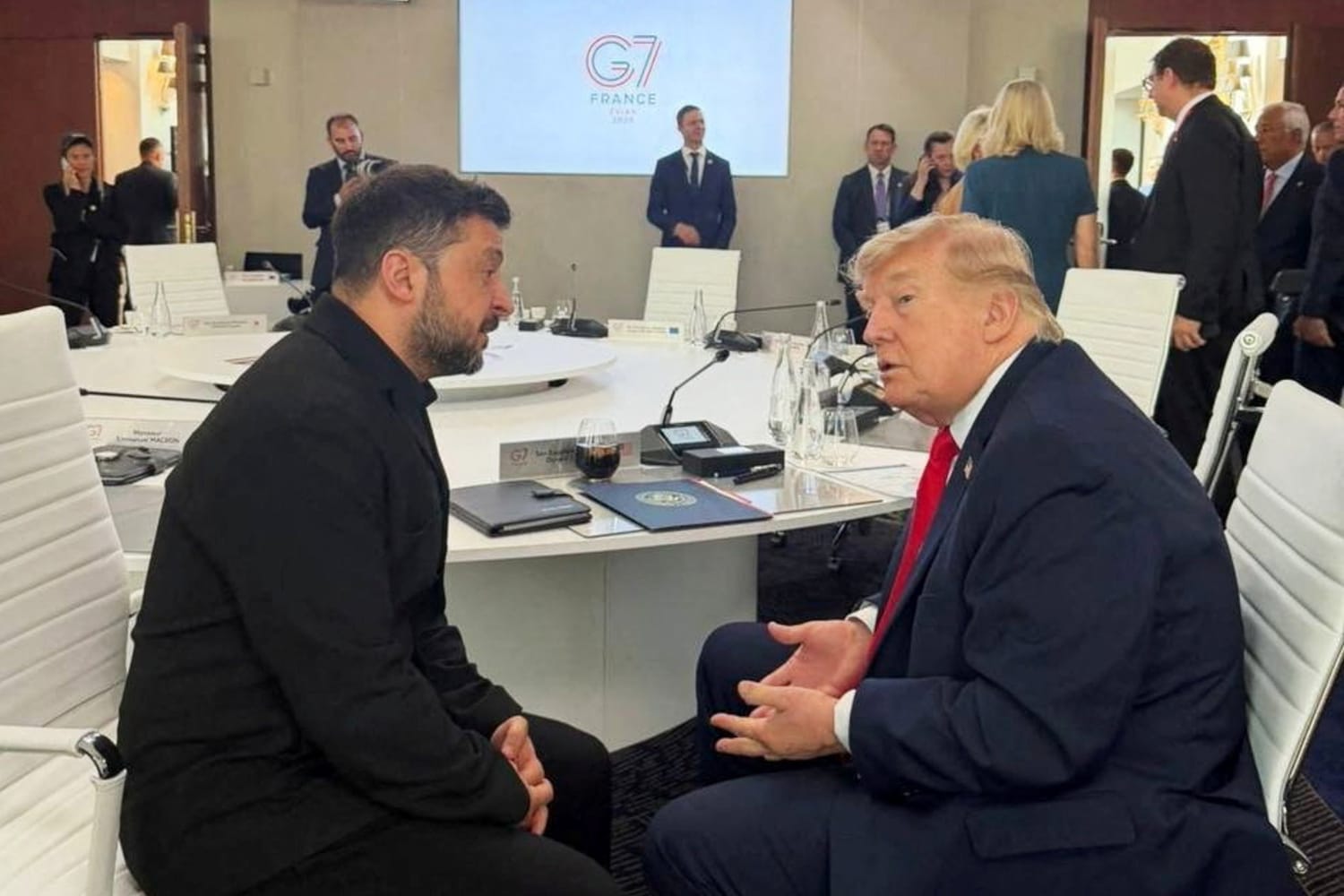
A separate point of intrigue is the face-to-face meeting between Trump and Zelenskyy. Officially, the White House stated that no such meeting was planned. But then the U.S. president himself confirmed that the meeting had already taken place—according to media reports, in the presence of French President Emmanuel Macron.
Be that as it may, the leaders will certainly meet again at a joint session, but whether anything more will come of it remains to be seen. It is precisely in one-on-one settings that the most complex issues are often resolved, and the absence of such a conversation could mean that it will be significantly harder to persuade Trump. At the same time, excessive publicity surrounding a potential meeting could backfire on Kyiv, as Trump does not like being cornered by expectations.
Expert Opinions
Political scientist and director of the Institute of World Policy, Yevhen Magda, comments on the G7 summit in France:
“What do we need to know when we talk about the G7 summit taking place on the shores of Lake Geneva? First, it is truly a gathering of the West’s most powerful players, and it is a gathering that will attract attention. Second, Ukraine will be represented there by Volodymyr Zelenskyy, but we shouldn’t forget that Ukraine isn’t the only topic on the agenda. I also didn’t quite understand why Zelenskyy wanted to invite Putin there, since he isn’t a G7 member. And, to be honest, I don’t quite understand this move on his part. However, the president obviously knows best… It’s clear that Donald Trump will be in a state of euphoria, since he’s currently dreaming of a peace deal with Iran. So let’s look at this with a sufficiently pragmatic eye. And one more point: the “G7” has no authority to adopt agreements that would be legally binding. Therefore, we should think clearly and rely first and foremost on ourselves, while supporting the Ukrainian Armed Forces. We have no other allies.”
Political scientist and director of the Ukrainian Institute of Politics Ruslan Bortnik believes that Ukraine and Russia are currently pursuing extremely antagonistic negotiating strategies.
“Russia insists on a return to the agreements reached in Anchorage. Moscow appeals to Washington’s need to keep its word. Ukraine, on the other hand, seeks to bring Europe into the negotiation process as a full-fledged participant and to base the settlement on the five conditions for peace, which now effectively constitute a joint Ukrainian-European position. At the same time, the Ukrainian side is attempting to disavow the Anchorage framework and rule it out as a potentially dangerous format for itself. The main focus of the next stage of negotiations will be shaped by the clash of two fundamentally different strategies: Russia’s attempt to preserve the Anchorage Agreement as the starting point for a settlement, and the Ukrainian-European effort to establish a new negotiating framework. The further course of events will depend on whether the U.S. attempts to maintain continuity with previous agreements with Russia or recognizes the need to revise the negotiating framework in light of the new joint position of Ukraine and Europe. The U.S. finds itself in a difficult position. On the one hand, Washington apparently reached some kind of agreement with Moscow in Anchorage. On the other hand, since the meeting in Anchorage, the political, military, and international situation has changed significantly. And these changes cannot be ignored either,” noted Ruslan Bortnik.

In summary, the summit in Evian is not just a meeting of leaders, but another crucial moment in the entire situation surrounding war and peace. If Zelenskyy and the Europeans manage to convince Trump to take a tougher stance toward Russia, this will pave the way for the implementation of the Ukrainian-European peace plan, which consists primarily of a ceasefire along the line of contact—a measure to which the Russian Federation is actively opposed. If, however, Trump remains captive to the “spirit of Anchorage,” Ukraine risks finding itself in a situation where Washington will at some point begin to pressure it into making concessions to the Kremlin.
It is telling that both sides of the conflict adopted the same tactic on the eve of the summit—a show of force. The strike on the Lavra was meant to remind the West that Russia will not hesitate to strike at the holiest of sites. The strike on the Moscow oil refinery was meant to show that Ukraine is capable of striking deep into Russian territory and inflicting painful damage. This is a war of nerves, in which diplomatic arguments are backed by military actions. Therefore, the coming days of tense discussions will show whether Kyiv and its allies have managed to turn the tide in their favor, or whether everything has remained exactly as it was.


