
Women in Uttarakhand fight forest fires without protective gear — Mongabay
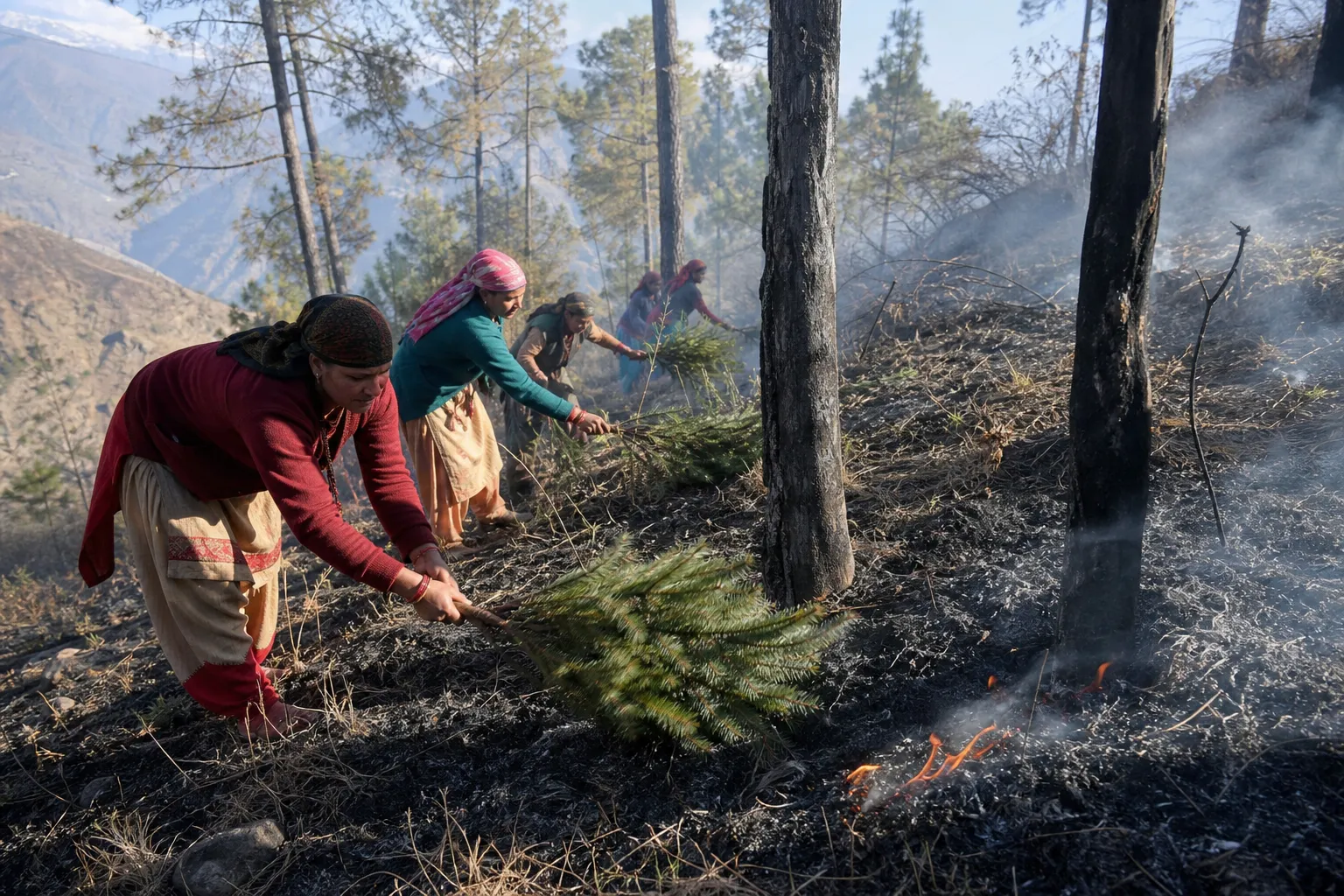
In the Indian state of Uttarakhand, women are increasingly the first to respond to forest fires in their communities. It is the most fire-prone state in India’s Western Himalayas, and the fire season is expanding: in addition to the usual roughly 12 weeks from mid-March, winter fires are also being recorded there. In the first four months of 2026, forest fire activity in the state also rose sharply, Mongabay reports.
Many men have left rural areas of Uttarakhand in search of work and other opportunities. Women often remain to farm, care for livestock, and collect firewood and fodder in the forests. As a result, they are often the first to spot fires and join efforts to extinguish them near villages.
Sickles and homemade brooms
Women extinguish small fires in groups using ordinary household sickles. They use them to cut green branches and make jhapa — homemade brooms used to beat down low flames. If the fire is higher, village women clear firebreaks by removing dry grass and branches, or direct the flames toward areas that have already burned.
According to Bhetuli village resident Asha Devi, 10 people may spend about an hour extinguishing a small fire, while large fires have to be contained all day. The work is often carried out without protective equipment. Women suffer burns to their hands, injuries from falling on rocky slopes, and thorn punctures. Widely used synthetic nylon saris, which catch fire easily, create an additional danger.
More current news is available on the UA.News Telegram channel Telegram.
Danger to villages and lack of support
Forest fires make it harder to graze livestock, deprive women of access to fodder and firewood, and threaten homes near forests. Village women keep watch at night because flames can spread to stores of dry hay near their homes. Forests cover about 71% of Uttarakhand’s territory and provide local residents with, among other things, water, firewood, and livestock fodder.
The forest department most often hires seasonal fire watchers from among men. Women are also involved in firefighting, but, according to the outlet, they rarely receive pay or equipment and are almost unrepresented in decision-making bodies. Forest ranger Binsar Manoj Sanwal acknowledged that the department is overburdened and underfunded.
In June 2024, six people died in the Binsar tragedy caused by a forest fire. One survivor, Bhuvan Bhoj, sustained severe injuries. As Mongabay reports, he has still not received the compensation of 10 lakh rupees, or 1 million rupees, announced by Uttarakhand’s chief minister. Meanwhile, in the village of Markhmanlei, women organized monitoring of shrub burning and said that there had been no major fires there for three years.


