
Dawn: Pakistan advised to focus auto policy on component production
In Pakistan, the proposed Automotive and Auto Parts Manufacturing Policy 2026–31 could shift the focus of state support for the automotive industry from the formal localization of vehicles to domestic value addition, exports, competition and technological modernization. As Dawn writes, the author of the article believes that the industry should primarily expand competitive production of automotive components rather than assemble a larger number of vehicle models.
Under the draft policy, manufacturers of passenger cars, jeeps and SUVs must export products worth 12% of the value of factory production by 2029–2030. For parts manufacturers, the export target is $700 million by 2030–2031. Total exports of vehicles and components in the final year of the program are projected at $1.58 billion, and at $4.59 billion over five years.
Value addition instead of localization
The draft stipulates that the minimum domestic value addition for conventional vehicles must reach 40% by 2030–2031. At the same time, the author notes that this indicator does not always reflect the technological level of production: simple parts, labor, utilities and overhead costs can provide part of the local value without the development of precision engineering, electronics, engines or power electronics.
Pakistan produces certain steel products for the automotive industry, but lacks sufficiently large-scale supply chains for automotive-grade steel, petrochemicals, engineering materials and electronics. Therefore, a significant share of the high-value components of modern vehicles is likely to remain imported.
More current news is available on the UA.News Telegram channel Telegram.
Scale for parts manufacturers
The author cites the small domestic market and the large number of brands and models as one of the obstacles to deeper localization. About 200,000 vehicles are sold in the country annually, distributed among numerous assembly plants and models. At such volumes, it is difficult for suppliers to recoup the costs of molds, dies, tooling, testing and equipment for specialized parts.
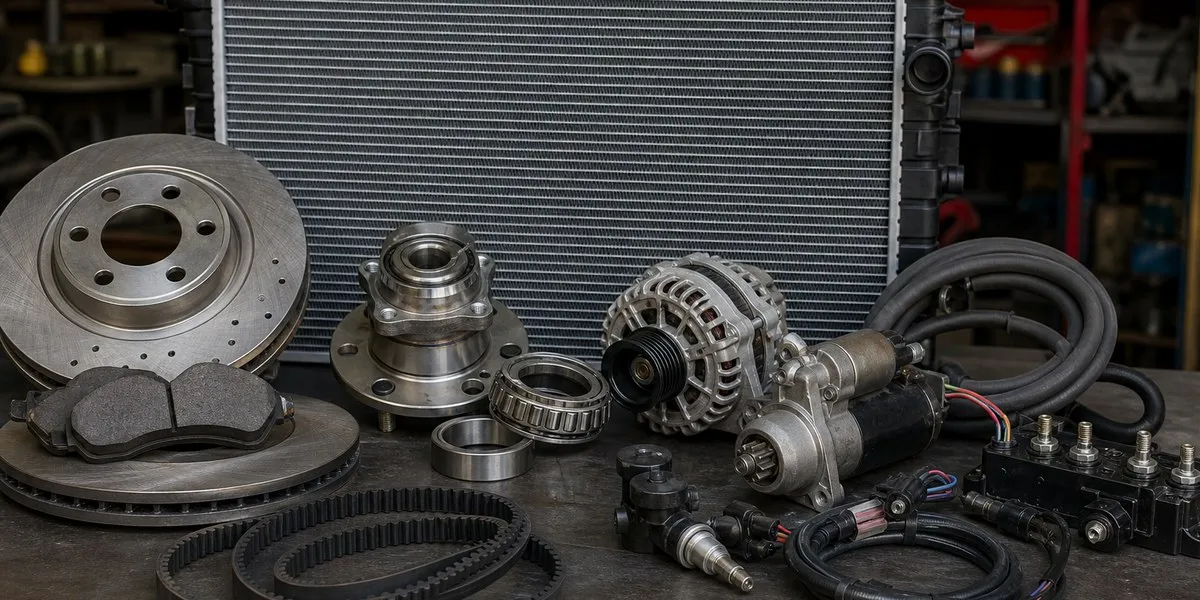
Meanwhile, the country has about 5 million passenger cars and light vehicles, as well as tractors, trucks and buses. A significant part of this fleet consists of vehicles with internal combustion engines that require filters, brake and suspension parts, bearings, belts, hoses, gaskets, electrical components, lamps and radiators. Such demand could provide parts manufacturers with the scale to enter first the domestic and then the international aftermarket.
The draft also provides for a gradual reduction of automotive tariffs and the abolition of regulatory and additional duties. In the author's view, competition should test whether local manufacturers can offer consumers vehicles and components comparable to imports in price and quality.


