
South African minister calls for developing local auto component production — Daily Maverick
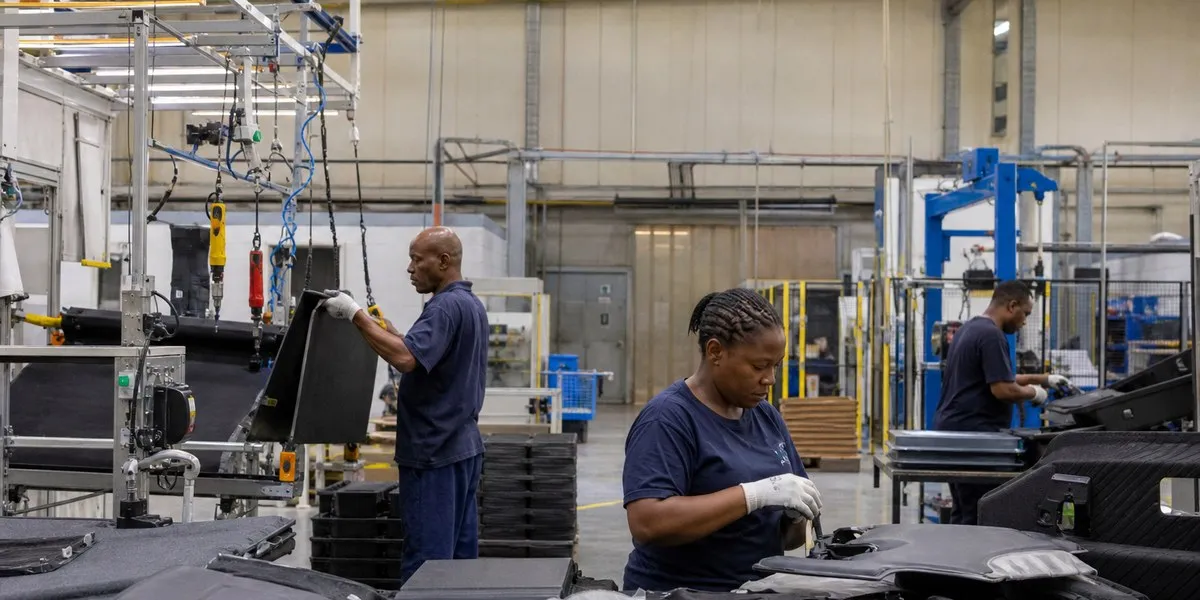
In Gqeberha, South Africa, Small Business Development Minister Stella Ndabeni called for creating reliable conditions for localizing production in the automotive industry, including guaranteeing uninterrupted electricity supply to businesses. She said this during a visit to automotive component supplier Acoustex in the Neave industrial park, Daily Maverick reports.
Decline in production and vehicle imports
According to Ndabeni, production of vehicles, parts, accessories and other transport equipment in South Africa fell by 2.5% in 2025 compared with 2024. At the same time, the automotive industry accounted for about 5.2% of the country’s GDP: 3.3% came from manufacturing, while another 1.9% came from motor-vehicle-related retail trade.
The minister emphasized that the Automotive Masterplan provides for increasing the share of local production from approximately 39% to 60%. She noted that the share of imported light vehicles in domestic sales reached 69.1% in 2025, compared with 62.7% in 2024.
Ndabeni said this was not about replacing all imported goods with local ones. According to her, the industry must determine which components and materials can realistically and competitively be produced in South Africa, as well as what technologies, equipment, certification, skills, working capital and long-term orders are needed for this.
More current news is available on the UA.News Telegram channel Telegram.
Problems facing the automotive component supplier
Acoustex manufactures luggage-compartment components for the Volkswagen Polo, which are exported to various countries, as well as seat covers for the Ford Ranger. The company’s commercial director, André Swartbooi, said power outages cause significant losses to production: stopping pressing equipment in the middle of a cycle results in defects and the loss of raw materials. The company had to install a generator.
Swartbooi also named the war between Iran and the United States as one of the factors behind rising raw-material costs for the company. After the Covid-19 pandemic, Acoustex faced reduced production and significant electricity debt to the Nelson Mandela Municipality. The company’s debt amounted to 8 million rand, half of which was written off under the city’s debt-relief program.
Position of the city authorities
Mayor Babalwa Lobishe said the city was working to support businesses so that major electricity consumers would not disrupt supply to other industrial zones. According to her, an analysis of outages in two industrial areas showed that the cause was some businesses’ failure to declare their actual electricity consumption. Eastern Cape Provincial Executive Council Member for Economic Development Nonkqubela Pieters noted that proper infrastructure is necessary to attract and retain investors.




