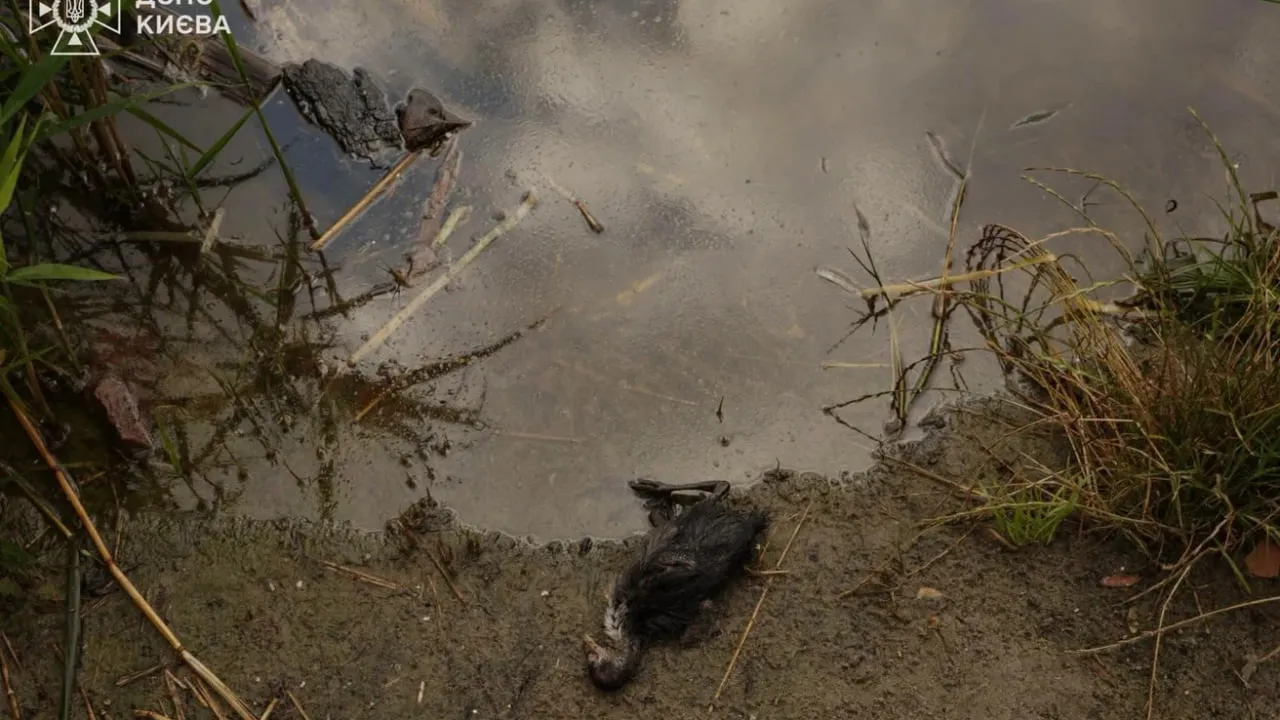
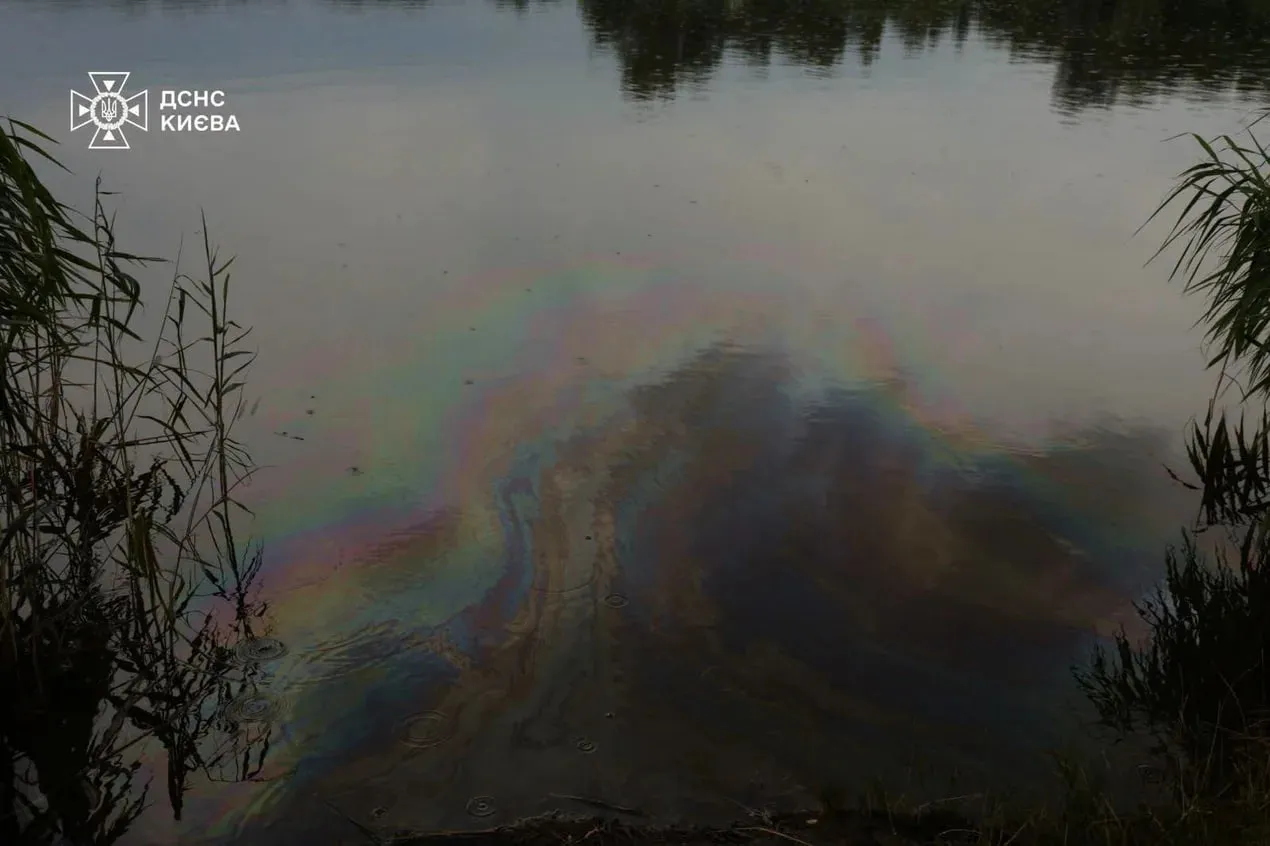
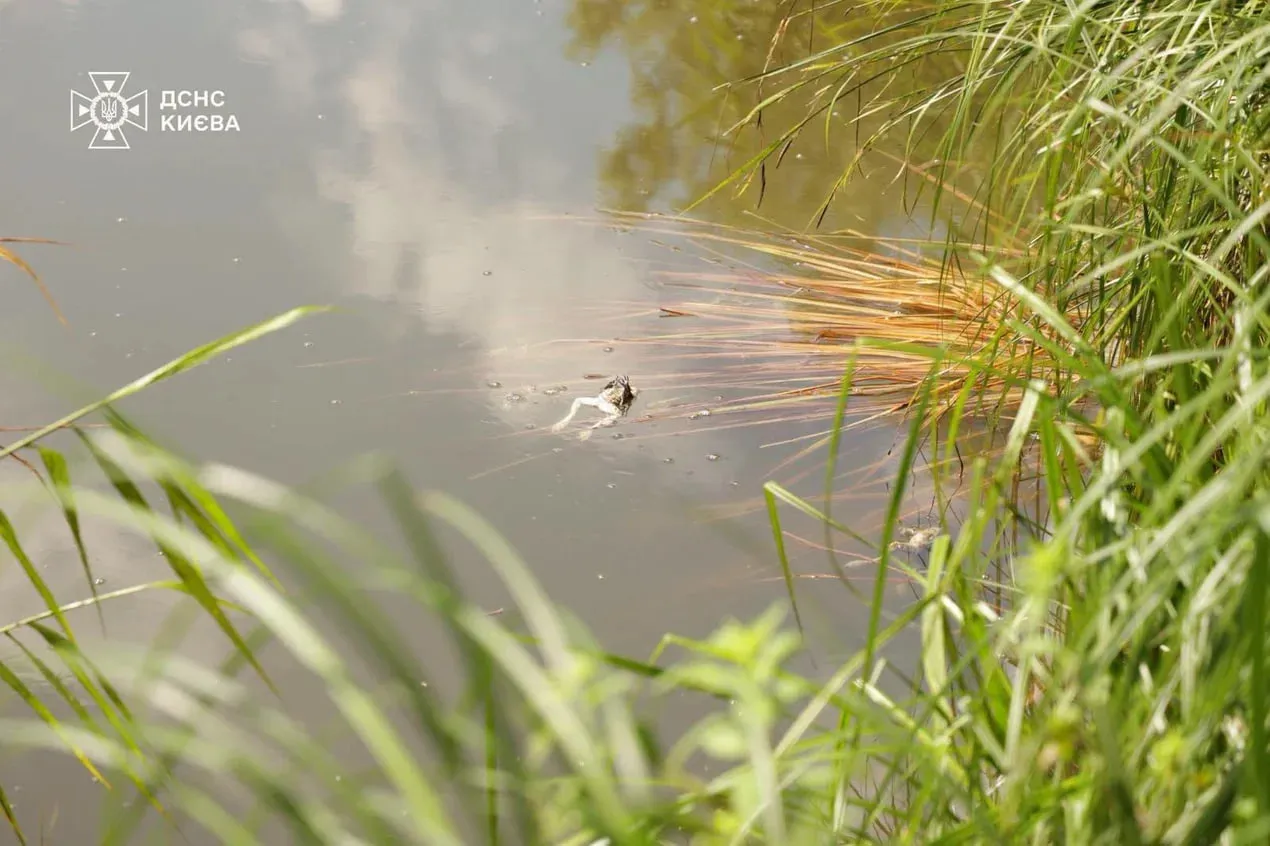
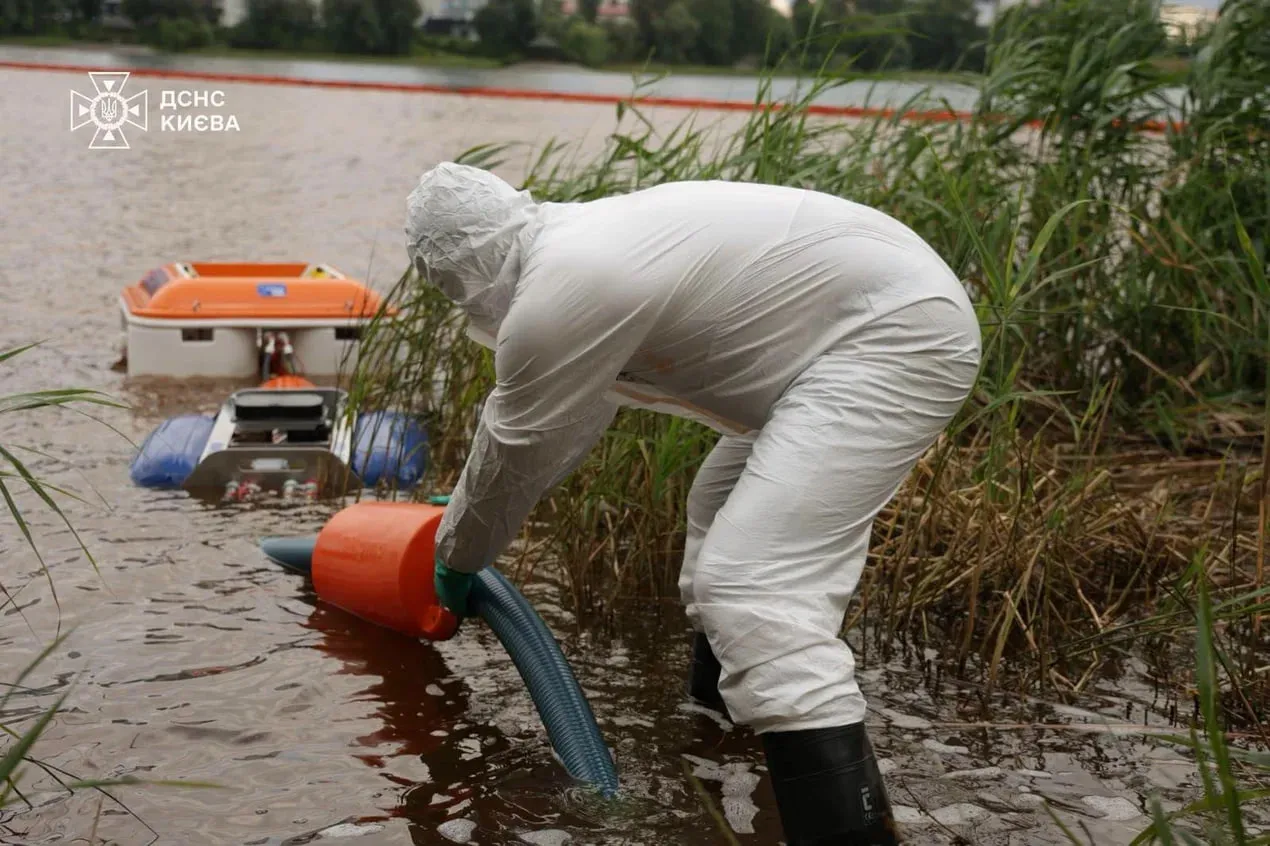
Rescue workers continue to clean up Lake Kyrylivske in Kyiv, where fuel spilled following a massive Russian attack on the night of July 2. The pollution has already led to the death of fish, birds, and insects, and experts are working to minimize the impact on the local ecosystem.
Seventeen pieces of equipment and 60 rescuers from the State Emergency Service are involved in the cleanup effort. The following have been installed on the lake:
4 lines of permanently buoyant booms—with a total length of 350 m;
12 lines of sorbent booms—with a total length of 720 m—which span the entire width of the lake, thereby containing the spread of pollutants;
9 skimmer systems have been deployed to collect petroleum products.
Twenty-five cubic meters of fuel and lubricants have already been pumped from the surface of the body of water. Despite this, their persistent odor is still noticeable in the area around the lake.
The pollution is also negatively affecting the lake’s ecosystem. State Emergency Service experts have documented the deaths of fish, birds, frogs, insects, and other animals that inhabited the lake and its shores.