
Thailand asks China for help with safety rules for small reactor — Bangkok Post
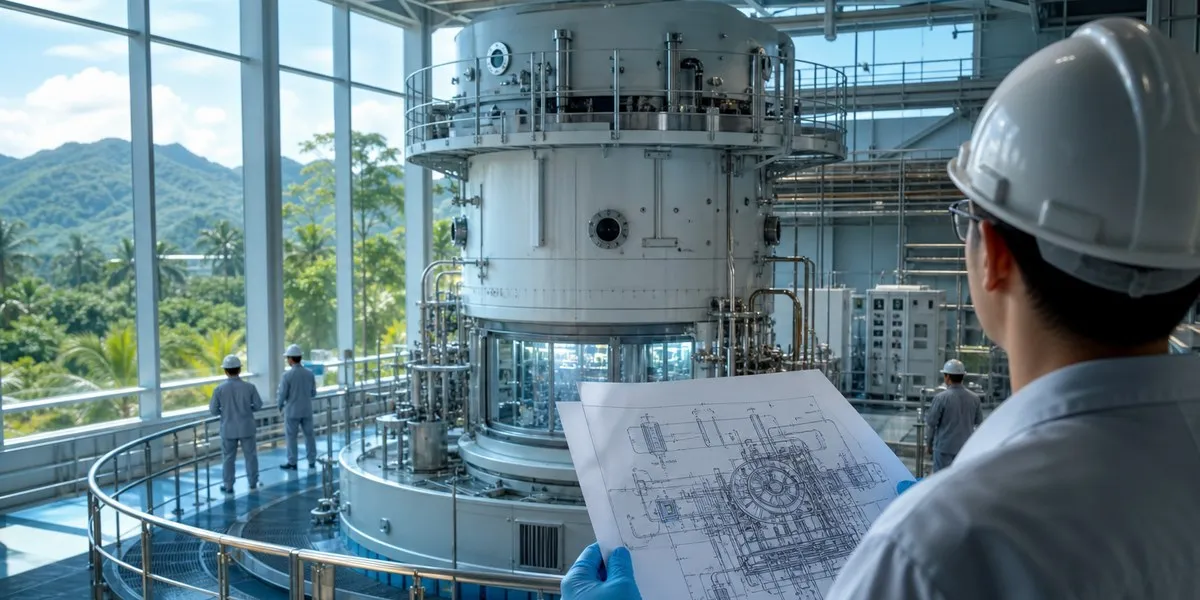
Thailand has turned to China for help in developing nuclear safety rules for its first small modular reactor, which is planned to be commissioned within the next decade. Bangkok Post reports.
Thailand's Office of Atoms for Peace expects to use China's experience, including its supply chain control system, before deploying the first SMR. The agency's secretary-general, Rungruang Kittiphati, said that China has a fully integrated nuclear sector covering all stages, from reactor design and uranium production to waste management and plant decommissioning.
Thailand's plans
The Electricity Generating Authority of Thailand (Egat) intends to build the country's first 300 MW small modular reactor. Its commercial operation is scheduled to begin in 2037 under Thailand's 2026 Power Development Plan.
More current news is available on the UA.News Telegram channel Telegram.
Thailand is also concluding agreements with international partners, including the United States, to study the project's technical feasibility and best practices. Authorities included SMRs in the energy plan to strengthen energy security, support the net-zero emissions target, and meet growing electricity demand from advanced industries and data centers.
Regulation and Chinese experience
Thai regulators are preparing a detailed licensing framework that is to take into account new cooling technologies and floating nuclear installations. The country plans to use the International Atomic Energy Agency's Generic Reactor Safety Review as its main safety assessment standard.
According to the publication, as of August, China operated 64 nuclear reactors, while another 56 were under construction or had received approval. In 2025, the country's nuclear generation amounted to 468 billion kilowatt-hours, or 4.82% of national electricity production. Chinese developments include the ACP100 on Hainan Island, the world's first land-based commercial SMR, which is expected to begin operating in early 2027.




