
Kimchi bacterium increased nanoplastic excretion in mice — ScienceDaily
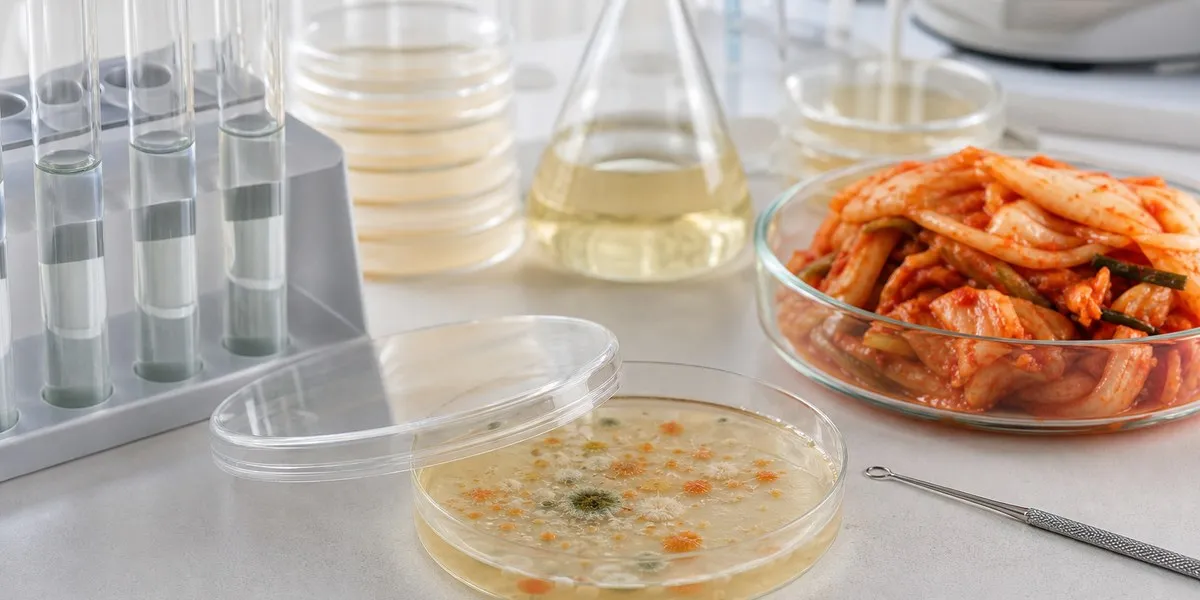
The lactic acid bacterium strain Leuconostoc mesenteroides CBA3656, isolated from kimchi, bound polystyrene nanoparticles under conditions simulating the intestinal environment. Germ-free mice that received this strain had more than twice as much nanoplastic detected in their feces as the control group without the probiotic. ScienceDaily reports.
Binding nanoparticles
The study was conducted by scientists at the World Institute of Kimchi. Nanoplastics are plastic particles smaller than 1 micrometer that form during the breakdown of larger plastic materials. Such particles can enter the body through food and drinking water.
Under standard laboratory conditions, the CBA3656 strain adsorbed 87% of polystyrene nanoparticles. By comparison, the figure for the reference strain Latilactobacillus sakei CBA3608 was 85%.
More current news is available on the UA.News Telegram channel Telegram.
In an environment simulating conditions in the human intestine, CBA3656 retained the ability to bind 57% of nanoplastics. At the same time, adsorption by the reference strain fell to 3%.
Experiment in mice
In an experiment involving germ-free mice, males and females that received CBA3656 had more than twice the amount of nanoplastics detected in their feces compared with the control group. The scientists suggest that the bacterium may bind particles in the intestine and promote their excretion.
The authors noted that biological methods for reducing nanoplastic accumulation in the gastrointestinal tract are still at an early stage of research. The results were published in the journal Bioresource Technology.


