
Stanford scientists grew human organoids in mice’s brains
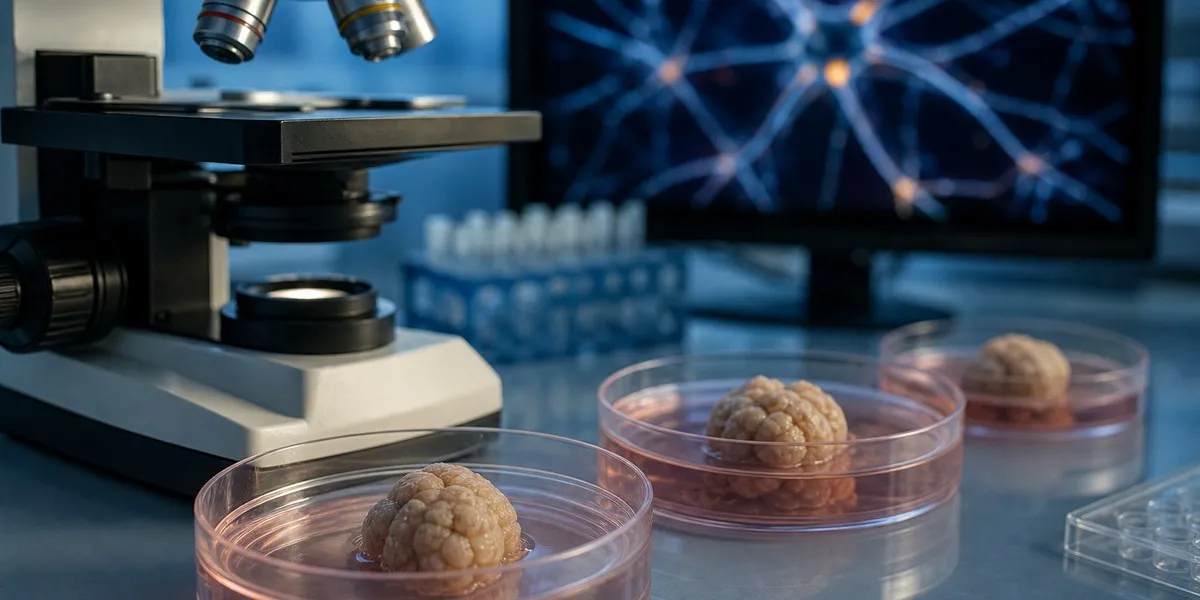
A group of scientists from Stanford University created neurochimeric mice in which large areas of their own brains were genetically eliminated, while human cerebral organoids were grown inside the animals. The study, published in the journal Nature, could expand opportunities for studying human brain development and its diseases.
Human cells in mice’s brains
Cerebral organoids are miniature three-dimensional brain-like structures grown from human stem cells. As STAT News reports, the brains of such animals were half human by volume. However, this does not mean that half of all neurons were human.
In the brains of three-month-old chimeric mice, the team identified types of human cells that are difficult to obtain when growing organoids in laboratory dishes.
More current news is available on the UA.News Telegram channel Telegram.
Neurons and ethical questions
Among the identified cells were pyramidal projection neurons, whose processes extended to the spinal cord in some animals. The scientists also found signs of specialized extremely large neurons associated with social cognition. Such cells occur only in mammals with large brains, including elephants, whales, primates, and humans.
Neurobiologists call this model important for a field that has a longstanding problem with access to human brain tissue for research. At the same time, neurochimeric models raise ethical questions that may become more complex as they are improved.


