
EPFL develops LogSync chip for adaptive brain stimulation — News-Medical
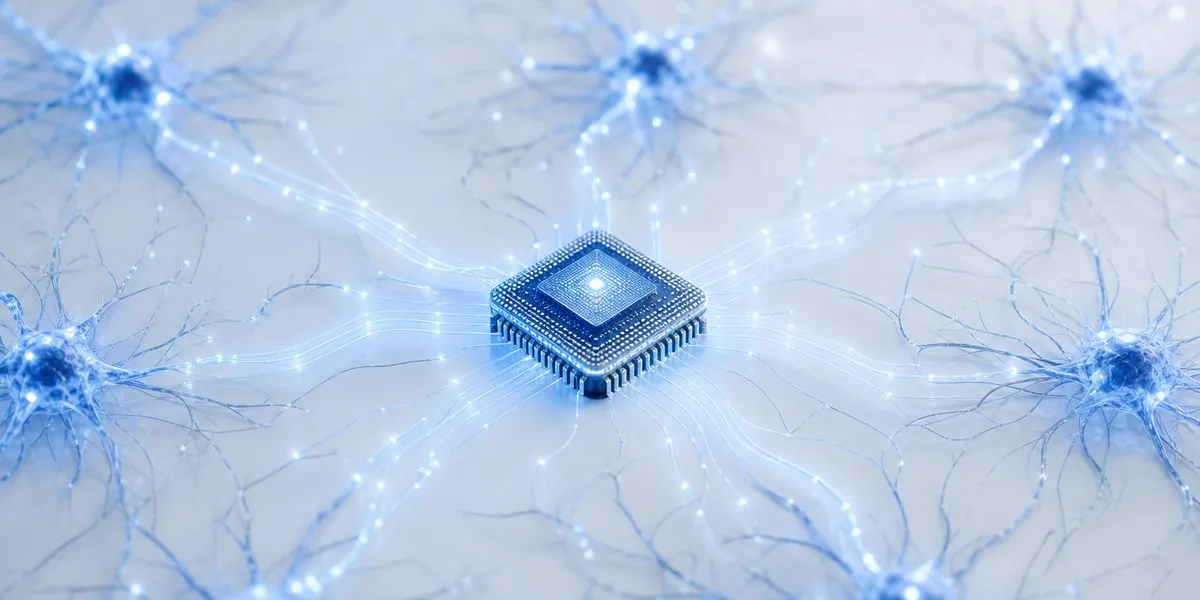
Researchers at the École Polytechnique Fédérale de Lausanne (EPFL) have developed the low-power implantable LogSync chip, which can analyze the synchrony of signals between different brain regions. The system records brain activity, determines the strength of oscillations and signal synchrony between regions, and then uses machine learning to recognize cognitive and emotional states.
News-Medical reports on the development. Unlike many existing deep brain stimulation systems that operate using preset parameters, LogSync is designed for an adaptive approach. It can generate stimulation triggers when the algorithm detects a specific state in brain network activity data.
Testing on existing recordings
The team tested the system on recordings of human brain activity collected in previous psychiatric studies. One dataset reflected changes in cognitive engagement during a mental task, while another reflected the emotional arousal of participants watching video clips. The algorithm was able to distinguish these states using neural recordings alone.
More current news is available on the UA.News Telegram channel Telegram.
In separate experiments on rats conducted at the University of Minnesota, the implant tracked ongoing brain oscillations and generated stimulation triggers at predetermined phases of brain activity.
Consumption of less than 200 microwatts
According to Magda Shoaran, head of EPFL's Integrated Neurotechnologies Laboratory, the algorithms and hardware were developed simultaneously with the implant's limited power consumption in mind. The system's power consumption is less than 200 microwatts. To simplify the calculations required for brain network analysis and real-time biomarker decoding, LogSync uses logarithmic computations.
The work was published in the IEEE Journal of Solid-State Circuits. Initial testing focused on psychiatric applications, particularly those related to mood disorders and anxiety disorders. The authors also point to the possibility of applying the approach in adaptive stimulation for movement disorders, non-invasive closed-loop stimulation, and focused ultrasound-based interfaces.




