
Viscous fluid made glioblastoma cells more mobile — ScienceDaily
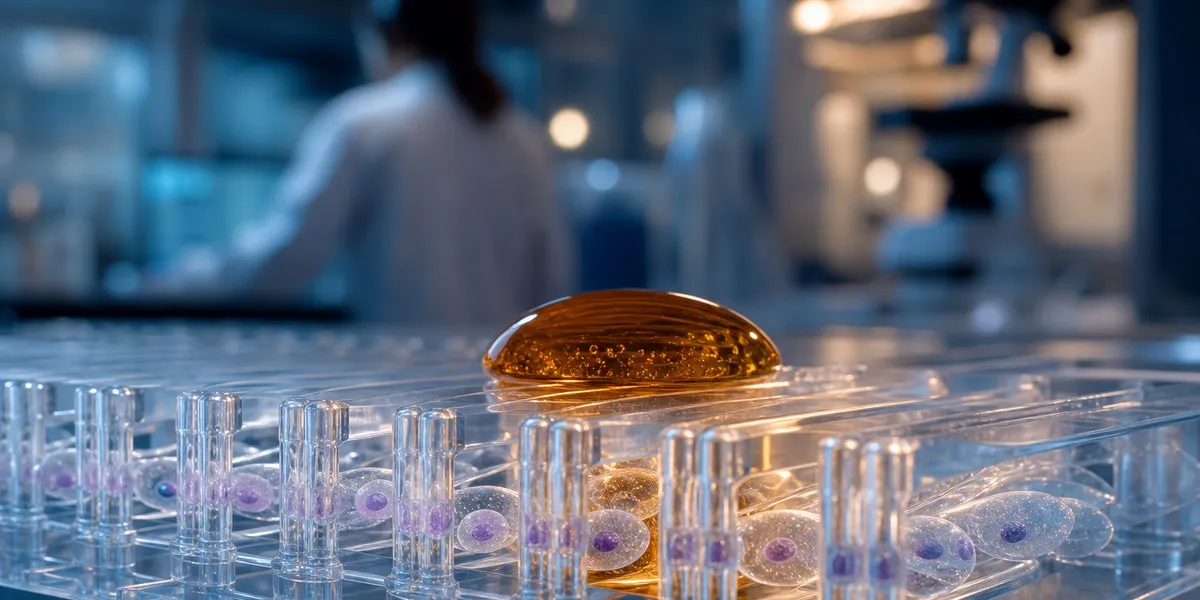
Scientists from Chongqing General Hospital and Chongqing University in China found that prolonged exposure to viscous fluid can make glioblastoma cells smaller, more flexible and better able to penetrate narrow spaces. The experiments were conducted on two human glioblastoma cell lines, U-251 and LN-229, ScienceDaily reports.
Environment at the tumor edge
Glioblastoma is one of the most dangerous forms of brain cancer. According to the researchers, fluid at the tumor periphery, where it advances into healthy tissue, is about eight times more viscous than the fluid near its central dead tissue. Scientists had assumed that such resistance would only slow the cells down, but the experiment showed a different result.
For the study, the team created an open microfluidic platform with a two-layer membrane, a removable lid and an array of microscopic pillars. The device makes it possible to control the start of cell migration and observe how the shape of their nuclei changes in a confined space. Unlike closed microfluidic systems, the platform allows cells to be continuously cultured for up to one month.
More current news is available on the UA.News Telegram channel Telegram.
Changes persisted after the experiment
Cells from both lines were grown for a month in a fluid with a viscosity of 7.1 cP, intended to reproduce conditions at the invasive edge of the tumor. Afterward, they moved faster and covered longer distances than control cells. Observations showed that the adapted cells became smaller and deformed more easily, allowing them to pass between the microscopic pillars.
An accumulation of the YAP protein, associated with sensing mechanical impact, was also recorded in their nuclei. At the same time, the molecular response of the two cell lines differed: in U-251, genes associated with cancer invasion were activated, including CD44, FN1 and MMP9. LN-229 cells became more mobile and flexible, but without significant persistent changes in gene expression.
Mechanical memory of cells
Protein analysis showed that some of the changes persisted even after the cells were returned to a medium with normal viscosity. The study authors view this as a manifestation of mechanical memory — the ability of cells to retain the effects of previous physical stress. The results, published in the journal Microsystems & Nanoengineering, require further verification of how laboratory observations correspond to processes in patients' tumors.




