
In South Korea, daily tasks become harder after age 75 — Korea Herald
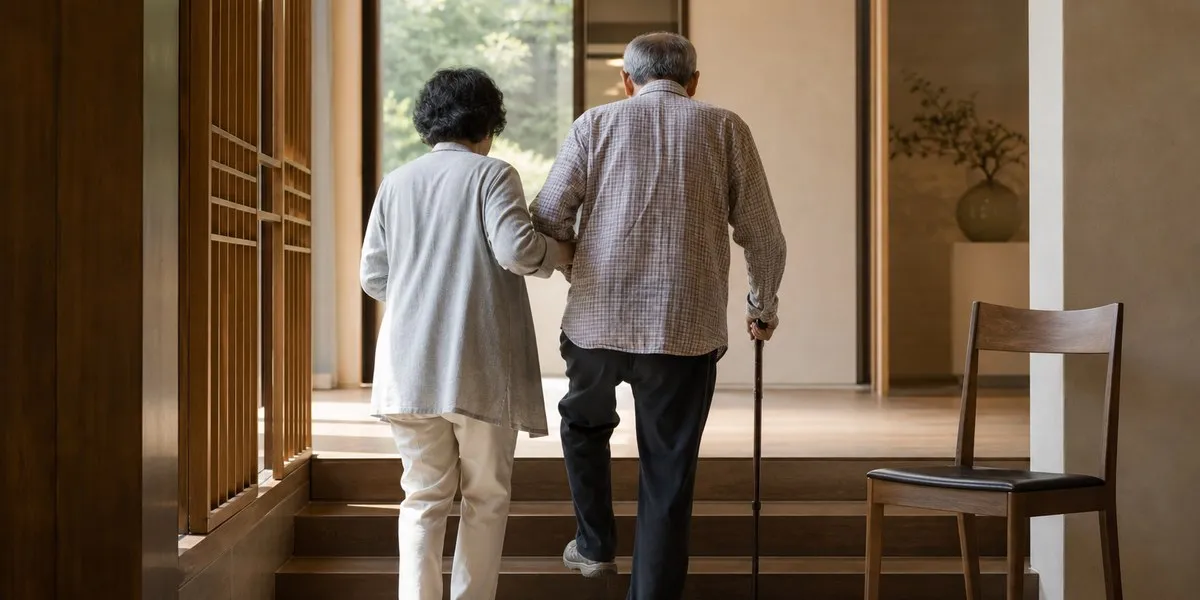
In South Korea, older people’s ability to perform everyday physical tasks deteriorates more noticeably after the age of 75. This is indicated by a report from the Korea Disease Control and Prevention Agency, Korea Herald reports.
The average score on the Life Functioning Scale-10, which assesses the ease of performing daily activities, was 92.6 out of 100 among those aged 65–69 and 89.7 among people aged 70–74. It fell to 83.8 among those aged 75–79 and to 70.6 among people aged 80 and older. A higher score means that a person finds it easier to perform daily tasks.
Survey data
The findings are based on the 2024 national health survey, which involved approximately 1,700 older people. Participants assessed the difficulty of 10 types of daily activities, including walking, climbing stairs, lifting objects and using public transport. Each activity was rated on a five-point scale, after which the result was converted to a 100-point system.
Among all respondents aged 65 and older, the average score was 85.9. The figure was 92.1 for men and 80.9 for women.
More current news is available on the UA.News Telegram channel Telegram.
Women reported limitations more often
The most difficult movements for people aged 65 and older were bending, squatting and kneeling. Serious difficulty or inability to perform these actions was reported by 35.6% of women and 8.5% of men.
Climbing one flight of stairs was difficult for 18.3% of women and 4.7% of men. Difficulties walking 400 meters were reported by 12.8% of women, compared with 3.3% of men, while problems getting up from a chair without armrests were reported by 11.2% of women and 3.3% of men.
In addition, 12.6% of women reported significant limitations when lifting an object weighing 5 kilograms, compared with 1.7% of men. The agency noted that women were about three times more likely than men to report lower-body movement limitations.




