
Face recognition develops differently in autistic children — ScienceDaily
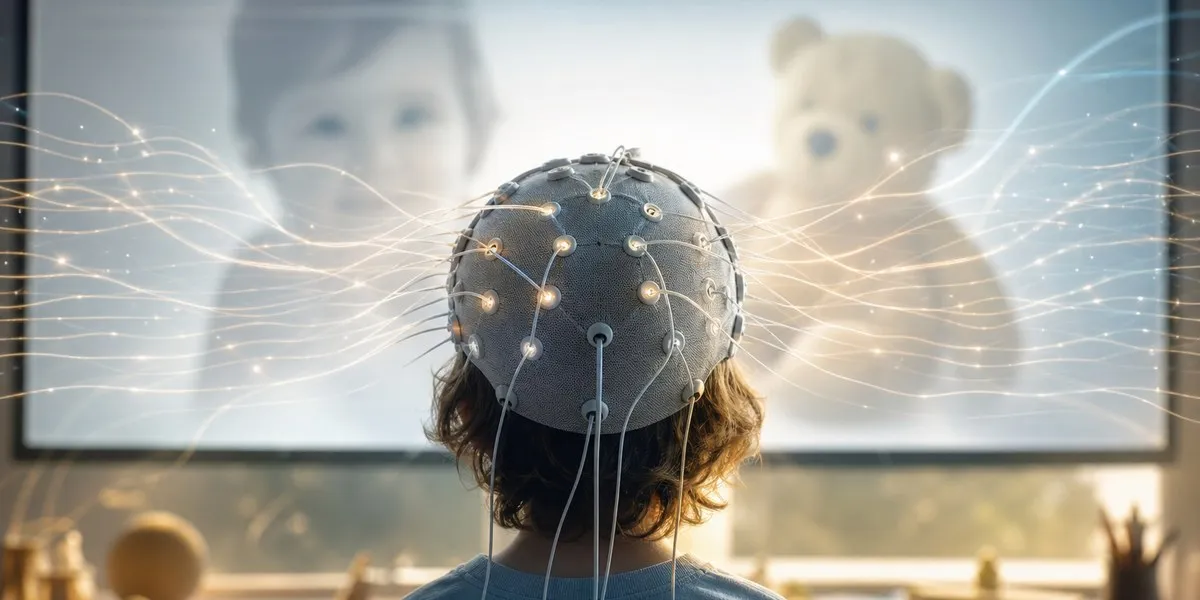
A new study has shown that brain activity associated with face perception in children with autism differs from that of neurotypical peers. In particular, with age these signals in neurotypical children become more specialized for face recognition, whereas the same pattern was not observed in autistic children, ScienceDaily reports.
Analysis of all EEG signals
The study was published in the journal Nature Mental Health. Researchers led by James McPartland used data from the Autism Biomarkers Consortium for Clinical Trials. They analyzed electroencephalography recordings from about 400 autistic children; the dataset also included neurotypical participants of different ages.
During the experiments, children viewed images of human faces and ordinary objects. Unlike previous studies, which often focused on a limited number of signal recording sites on the scalp, the authors processed signals from all 128 EEG electrodes. Using machine-learning methods, they tested whether the pattern of brain activity could determine which image a child was viewing.
More current news is available on the UA.News Telegram channel Telegram.
In neurotypical children, EEG recordings indicated viewing faces more accurately than in children with autism. In addition, the ability to determine from brain activity what exactly a child was viewing improved with age among neurotypical participants, but did not demonstrate similar age-related dynamics in the autistic group.
Differences may emerge earlier
The authors also found signs that differences in face perception may appear even before the N170 signal. This is a change in electrical activity that is usually recorded about 170 milliseconds after a person sees a face. Earlier studies mainly focused on N170, which may occur later in people with autism.
The scientists emphasize that the results are not yet ready for clinical use. At the same time, the identified patterns of brain activity could potentially help in the search for autism biomarkers and in identifying children who may benefit from individually tailored support. The researchers specifically note that autism is not always associated with difficulties requiring intervention.




