
Immune structures discovered in mouse skull bone marrow
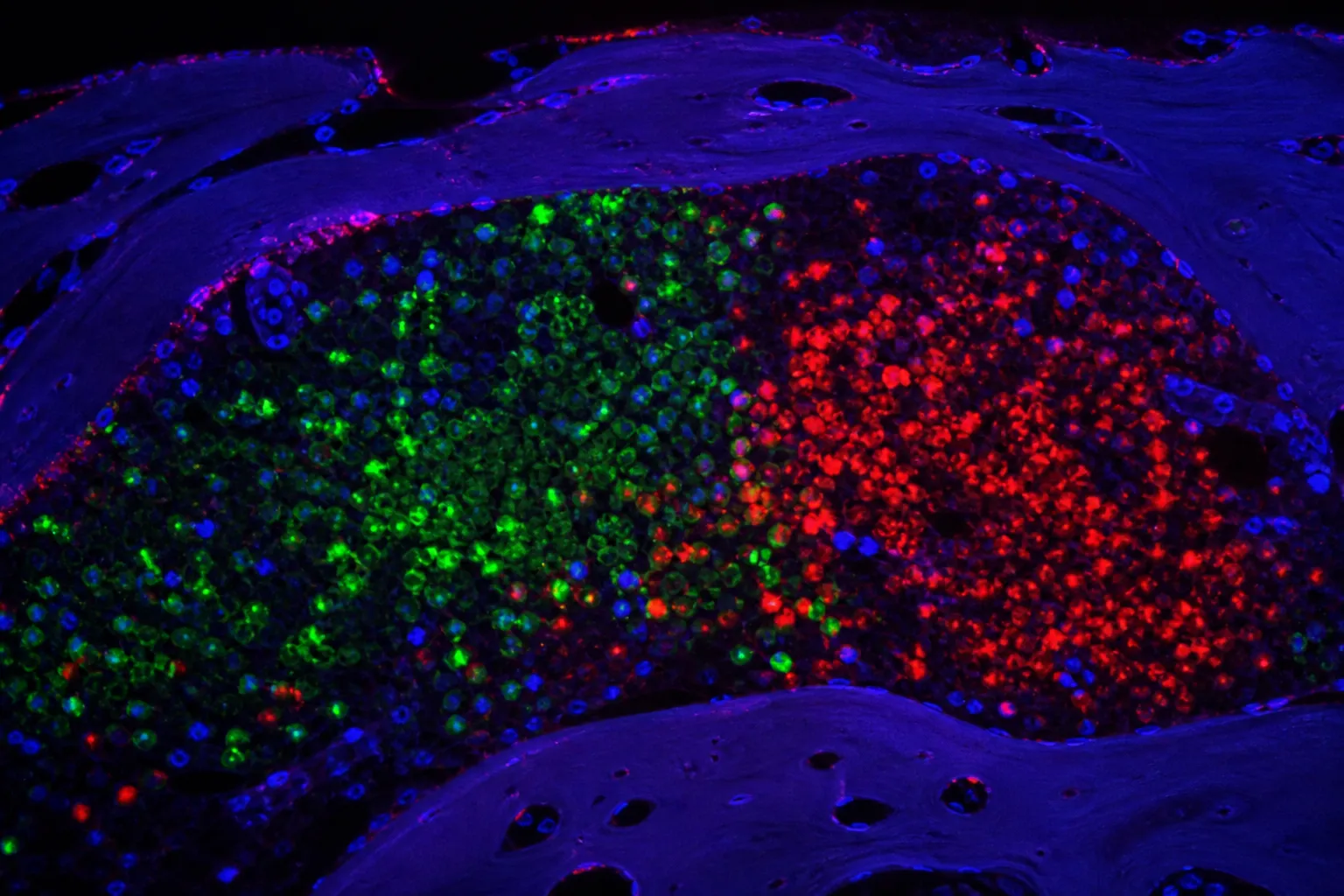
Researchers at Washington University School of Medicine in St. Louis have discovered previously unknown structures resembling lymph nodes in the skull bone marrow of mice. According to Deutsche Welle English, these structures responded locally to brain tumors earlier than distant lymph nodes in the neck.
The study results were published in the journal Nature. In experiments involving mice with glioblastoma, an aggressive brain cancer, impaired functioning of these structures was associated with faster tumor growth and shorter survival of the animals.
Structure of the immune formations
Scientists tracked the movement of proteins from the mice’s brains through microscopic channels in the skull to the bone marrow. There, they found organized clusters of B and T cells. The presence of immune cells in bone marrow was not unexpected, but their organization into structures resembling lymph nodes was a new finding in healthy bone marrow.
More current news is available on the UA.News Telegram channel Telegram.
The study’s senior author, Jonathan Kipnis, said that the skull should not be viewed merely as a protective shell for the brain, as it contains specialized immune environments capable of responding locally to changes in the brain. The proximity of these structures to the brain may provide a faster and more specialized immune response.
Limitations and further research
The researchers also tried to enhance the immune response by stimulating the skull bone marrow of mice with proteins that increase immune system activity. After this intervention, the animals rejected tumors more effectively and lived longer.
At the same time, the study does not yet prove the existence of such structures in humans or that they work similarly. Similar immune cells have been found in human skull bone marrow, but scientists have not yet established whether they form the same structures and function similarly. It is also necessary to determine whether these immune structures may play a role in other brain diseases, including Alzheimer’s and Parkinson’s diseases.




