
Scientists identify fluid outflow pathway from the back of the eye in mice — ScienceDaily
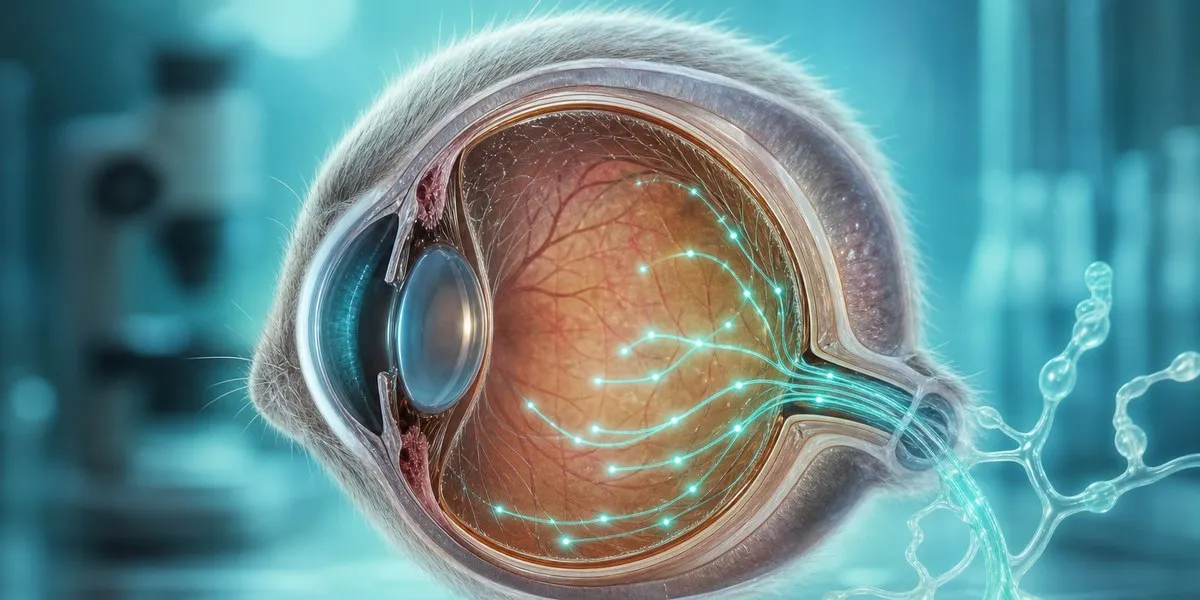
A team from the University of British Columbia and the University of Toronto has identified a previously undescribed pathway in mice through which fluid and metabolic waste products can leave the back of the eye and enter the lymphatic system. The researchers named the new pathway posterior ocular lymphatic outflow, or POLO. ScienceDaily reports on the study results.
An outflow pathway behind the retina
The retina, the light-sensitive tissue at the back of the eye, has high metabolic activity and constantly produces by-products that must be removed. The accumulation of fluid, metabolic waste products and inflammatory material is associated, among other things, with glaucoma, age-related macular degeneration and other retinal diseases that can lead to irreversible vision loss.
To trace fluid movement, the scientists injected fluorescent marker molecules into a narrow space at the back of the eyes of mice. For their observations, they combined magnetic resonance imaging, near-infrared fluorescence imaging and microscopic examination.
The researchers identified small lymphatic vessels in the choroid, a layer beneath the retina that is rich in blood vessels. According to their observations, fluid moved from the back of the eye to the tissues of the orbit, and within several minutes the markers reached nearby lymph nodes.
More current news is available on the UA.News Telegram channel Telegram.
What this means for eye disease research
For more than a century, it was believed that the eye did not have a lymphatic drainage system typical of most other organs. In 2009, Nirou Gupta and Yeni Yucel had already described a uveolymphatic pathway associated with the lymphatic system in the front part of the eye. The new work describes a previously unrecognized route for fluid removal from the back of the eye.
The authors emphasize that the results were obtained in mice, so the functioning of the POLO pathway in humans still needs to be established. It is also necessary to determine whether changes in this mechanism are associated with eye diseases and whether it can be safely influenced. In the future, the research may help study the removal of fluid, proteins and inflammatory material, as well as the delivery of drugs to deep structures of the eye.
The results were published in the scientific journal Translational Vision Science & Technology.




