
Singapore explains adapting strength exercises for women — Channel NewsAsia
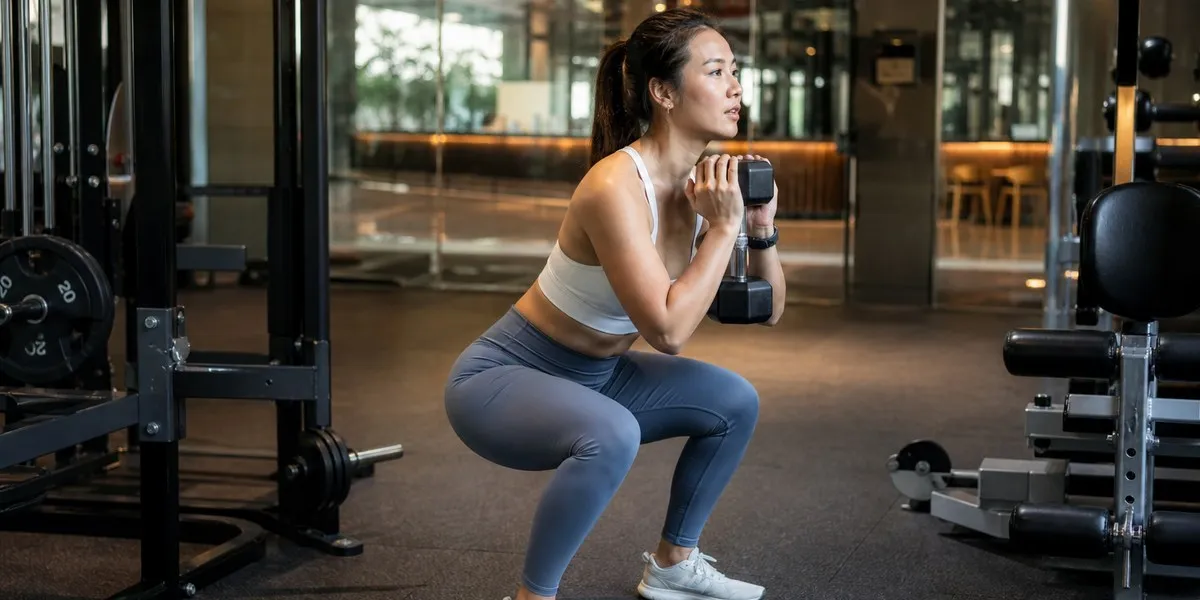
In Singapore, fitness specialists explained that differences in muscles, ligaments and body structure can affect women’s training, including squats, push-ups and strength exercises. As Channel NewsAsia reports, sports medicine doctor Ong Joo How noted that women generally have narrower shoulders, wider hips, and lower absolute and relative strength than men.
Muscles and strength load
According to Ong, women generally have a higher proportion of slow-twitch muscle fibers, which provide endurance during cycling or brisk walking. Fast-twitch muscle fibers are responsible for short explosive efforts and strength, while age-related muscle loss — sarcopenia — affects them more severely.
Catalyst Performance co-founder Lukman Harris said that fast-twitch fibers are properly loaded during high-intensity exercises with a low number of repetitions or explosive movements. For this, he advises using heavier weights and performing fewer than eight repetitions to muscle failure. At the same time, Ong stressed that women can tolerate a greater training volume and shorter rest periods between sets.
Joints, push-ups and menopause
Ong noted that women’s ligaments may be more relaxed, particularly during the luteal phase before menstruation, when levels of hormones such as estrogen and progesterone peak. This can give joints excessive mobility and increase stress on cartilage and tendons. In the knee, excessive laxity of the anterior cruciate ligament may contribute to displacement of the shinbone during a squat.
More current news is available on the UA.News Telegram channel Telegram.
Adam Taylor, a professor of anatomy at Lancaster University, explained that the angle between the forearm and the humerus at the elbow relative to the pelvis averages about 15 degrees in women and about 10 degrees in men. Therefore, during push-ups, women may find it more comfortable to place their hands slightly wider and turn them slightly outward, although the exercise still requires upper-body strength.
A separate issue at the age of 40–50 may be adhesive capsulitis, or frozen shoulder, which causes pain, stiffness and a sharp limitation of movement. Ong named hormonal disorders, diabetes, thyroid disease and parkinsonism among the risk factors. He recommended mobility exercises and continuing strength training within a pain-free range of motion, generally without raising the elbows above shoulder level.
Squat technique
Lukman Harris advises ensuring during a squat that the knees move in the direction of the second and third toes rather than collapsing inward. To do this, the toes can be turned outward by 10–15 degrees and the gluteus medius can be strengthened. He also recommends lowering in a controlled manner over two to three seconds, keeping the core braced and avoiding excessive arching of the lower back. The barbell should be placed on the trapezius muscles and the back of the shoulders, not on the neck.


