
Embedded Finance, AI, and Next-Generation Banking: A Fintech Meetup Featuring Galina Heylo Was Held in Warsaw
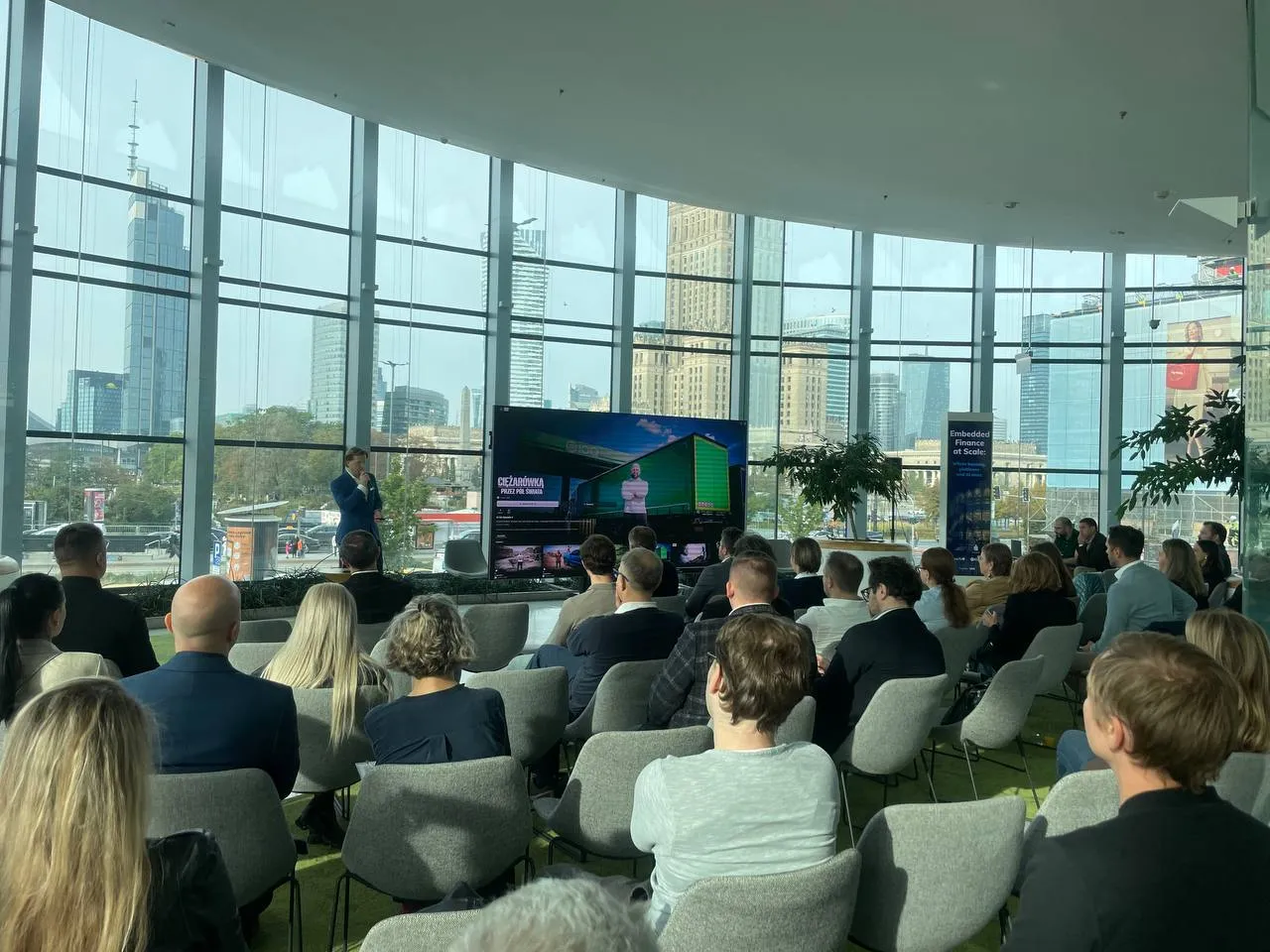
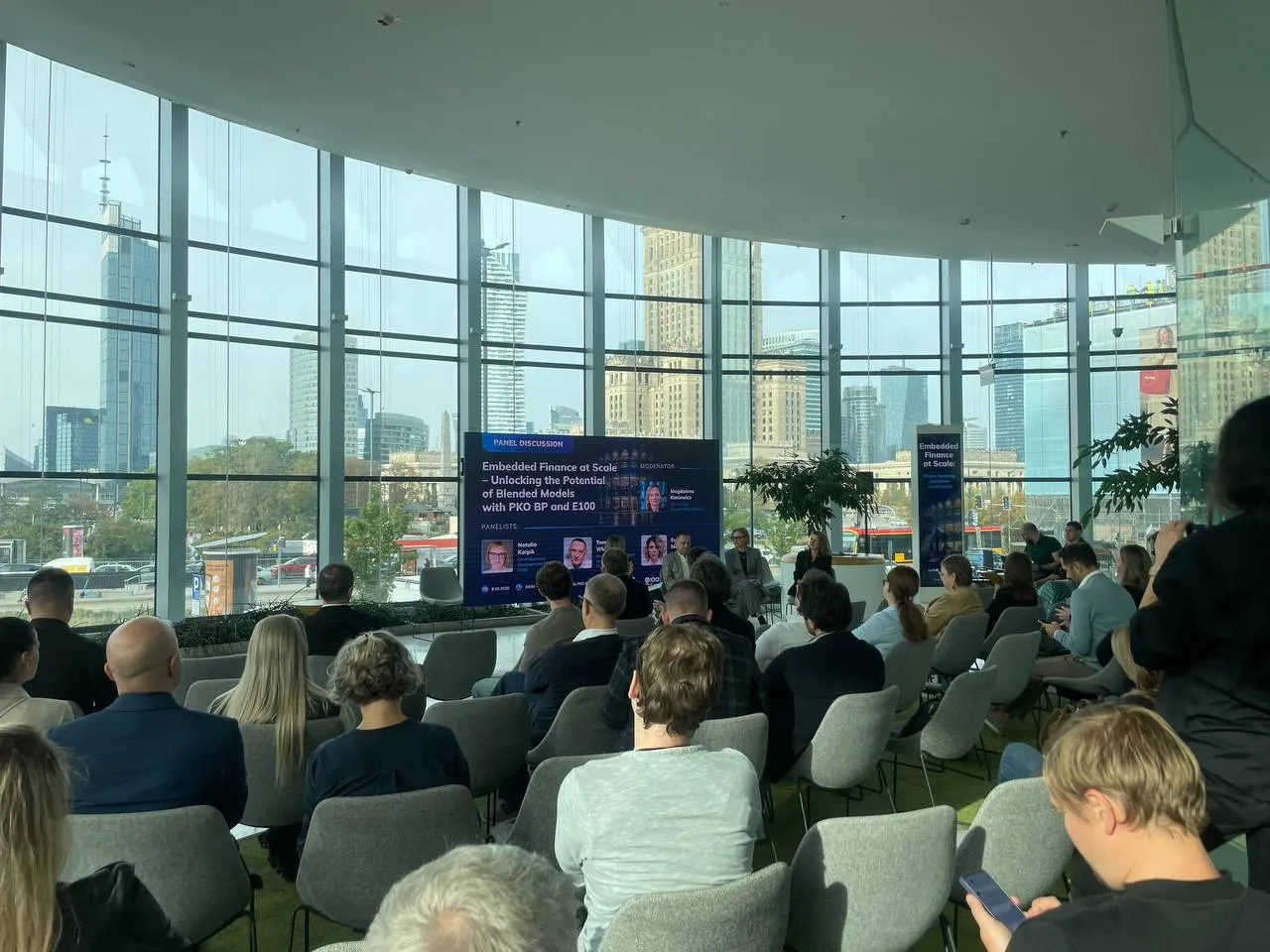
On October 8, a meetup titled “Beyond Banking: Embedded Finance, AI, and the New Financial Ecosystem” was held in Warsaw, focusing on key trends in the development of the modern financial sector. The event was attended by representatives from the banking and fintech industries, technology companies, and major business ecosystems.
The meeting was organized by FinTech Poland, e100, myTU, and PKO Bank Polski.
Among the participants was Halyna Heylo, President of the International Payments Association (IPA) and Chair of the Finance Committee of the Polish-Ukrainian Chamber of Commerce (PUIG).
According to her, the key theme of the meeting was rethinking the role of financial services. This involves a shift from a model in which a bank serves as a separate point of interaction with the customer to an ecosystem-based approach, where financial instruments are integrated directly into services, platforms, and business processes.
“All the presentations centered on the idea that an additional financial framework should encompass not only payments but also various services that help people in different situations, such as when they are in another country,” noted Galina Heylo.
Financial services are becoming part of other services
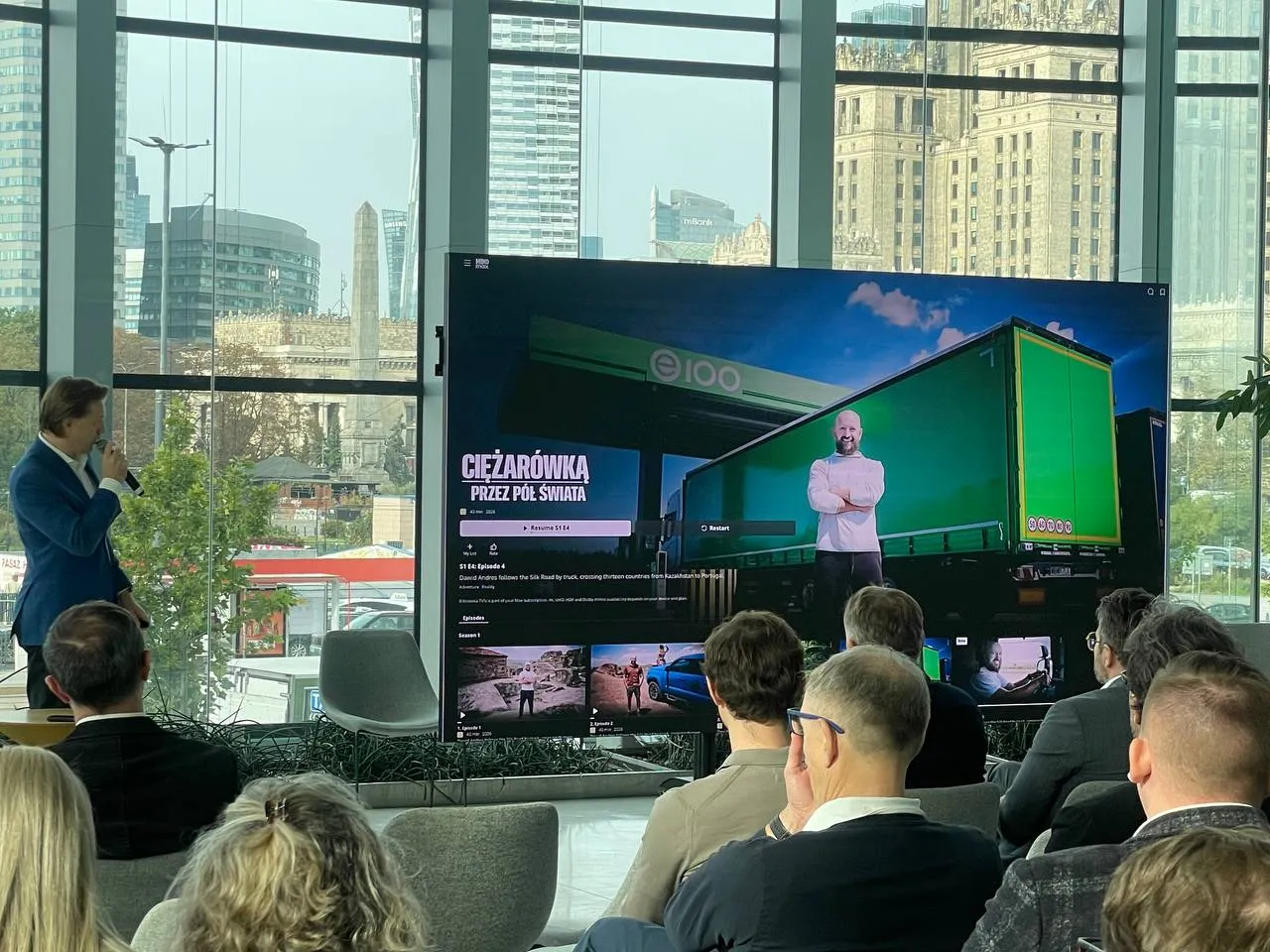
One of the central themes of the meetup was embedded finance—a model in which banking and payment services are integrated directly into non-financial products and services.
Participants discussed what happens when a banking service ceases to be a standalone product and becomes part of a broader customer experience. For example, financial tools can be integrated into corporate platforms, transportation services, marketplaces, or other digital ecosystems.
This approach allows companies not only to process payments but also to develop comprehensive solutions tailored to the needs of a specific industry and customer.
A practical example of this approach was the discussion of embedded banking services for specific industries, using the E100 project as a case study.
Participants explored how financial instruments can be integrated directly into the business-customer interaction process, making them part of everyday operations rather than a separate banking procedure.
Partnerships Between Banks, Fintech Companies, and Major Platforms
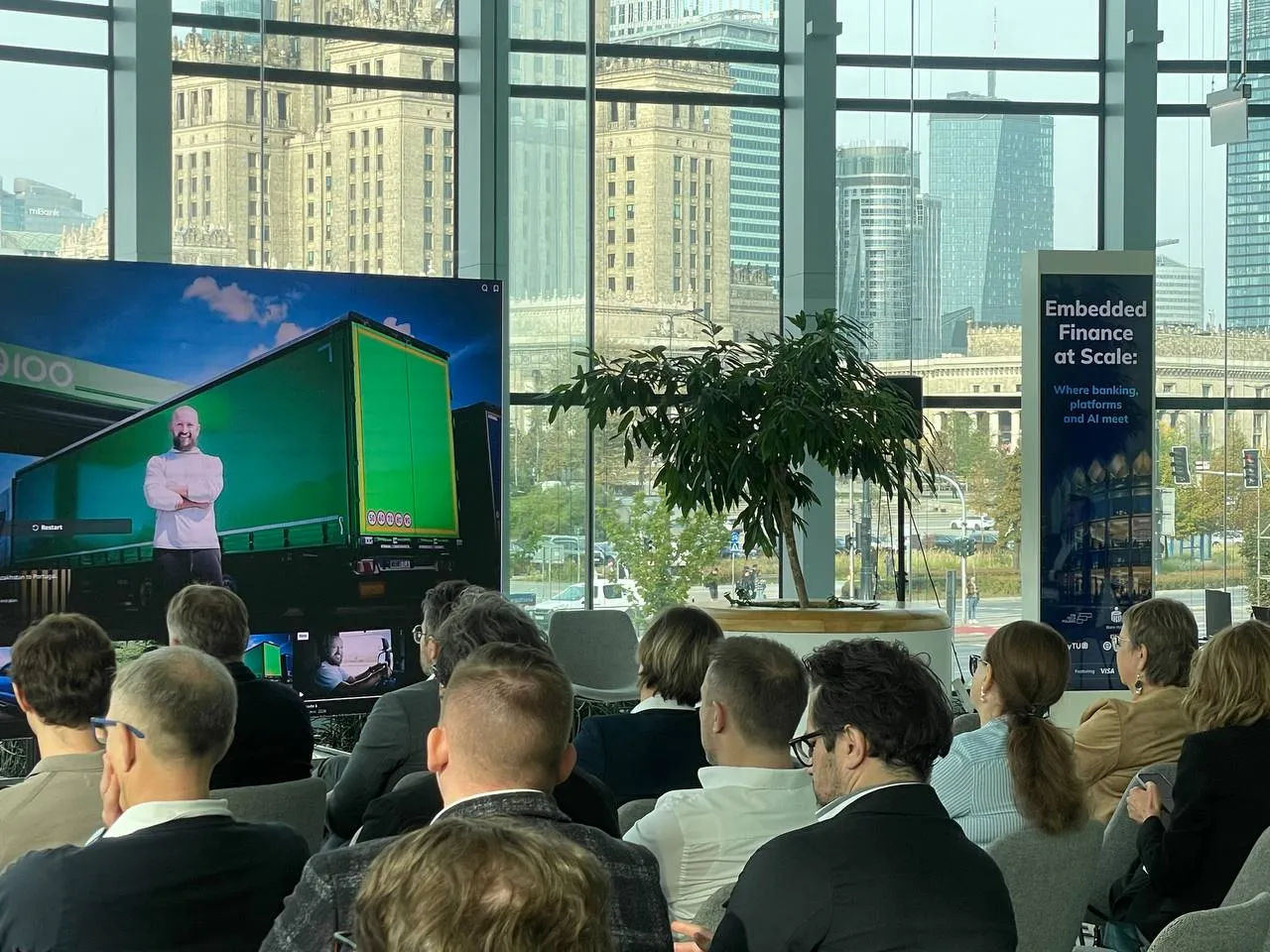
The meeting paid special attention to opportunities for collaboration between traditional banks, fintech companies, and major business platforms.
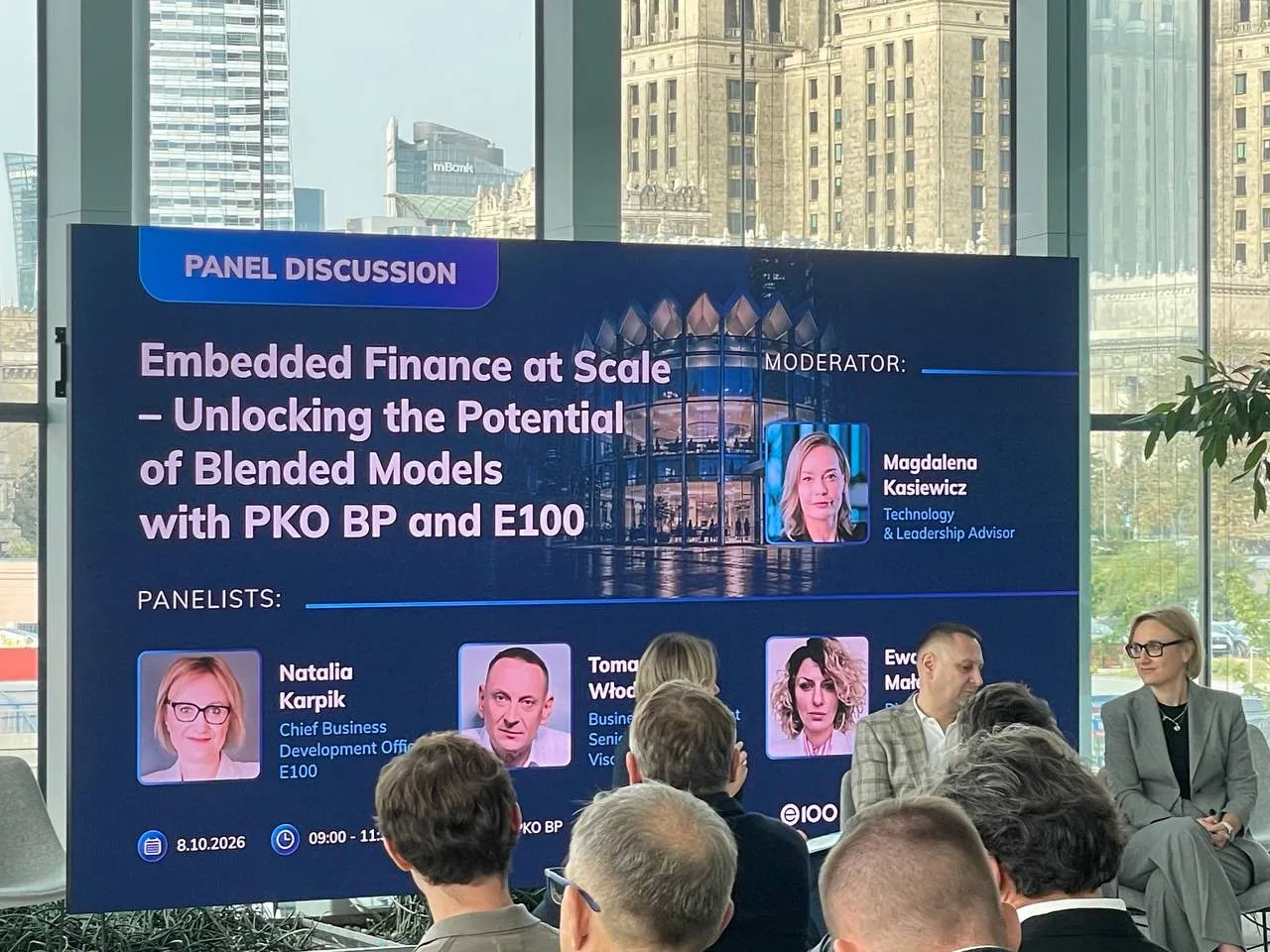
A discussion featuring representatives from E100, Visa, and PKO Bank Polski focused on the potential of hybrid models that combine the customer base and scale of large organizations with the technological capabilities, financial infrastructure, and flexibility of fintech companies.
According to the participants, this format of collaboration enables the creation of new financial products and allows for their faster adaptation to the needs of specific market segments.
The discussion also touched on how embedded financial instruments can function at the level of large enterprises and entire business ecosystems. In particular, participants explored the practical possibilities of models that combine fintech solutions with the resources and infrastructure of large banks.
KYC in 42 seconds and real-time
AML
The final part of the meetup was devoted to technological changes in the financial sector and the role of artificial intelligence.
One practical example was a technology that completes KYC procedures—customer verification and identification—in 42 seconds. Participants also discussed the capabilities of real-time AML, i.e., automated monitoring of transactions to detect potentially risky ones.
The use of artificial intelligence in banking services was examined separately—from customer registration and verification to regulatory compliance and the creation of new financial products.
According to the meeting participants, the development of AI is changing not only individual banking processes but also the very approach to designing financial services. While traditional banks often modernize existing systems, new fintech companies can create products that incorporate the capabilities of artificial intelligence from the very beginning.
That is why large financial institutions are increasingly collaborating with technology companies and fintech firms, seeking to combine the scale and trust of the traditional banking sector with the speed of innovation.
The
New Financial Ecosystem
Overall, the discussion in Warsaw focused on how the role of banks is changing in the digital economy. Financial services are gradually ceasing to be isolated products and are becoming part of broader digital ecosystems.
For customers, this means the ability to access payment, lending, insurance, identity verification, and other financial services directly through the platforms and services they already use.
For businesses, it means the opportunity to create new models of customer engagement, and for banks and fintech companies, it means moving beyond traditional banking services.
According to the meetup participants, it is precisely the combination of embedded finance, partnership models, and artificial intelligence that could become one of the key areas of development for the financial ecosystem in the coming years.




