
Astronomers discover identical knots around a zombie star in Pa 30 — Space.com
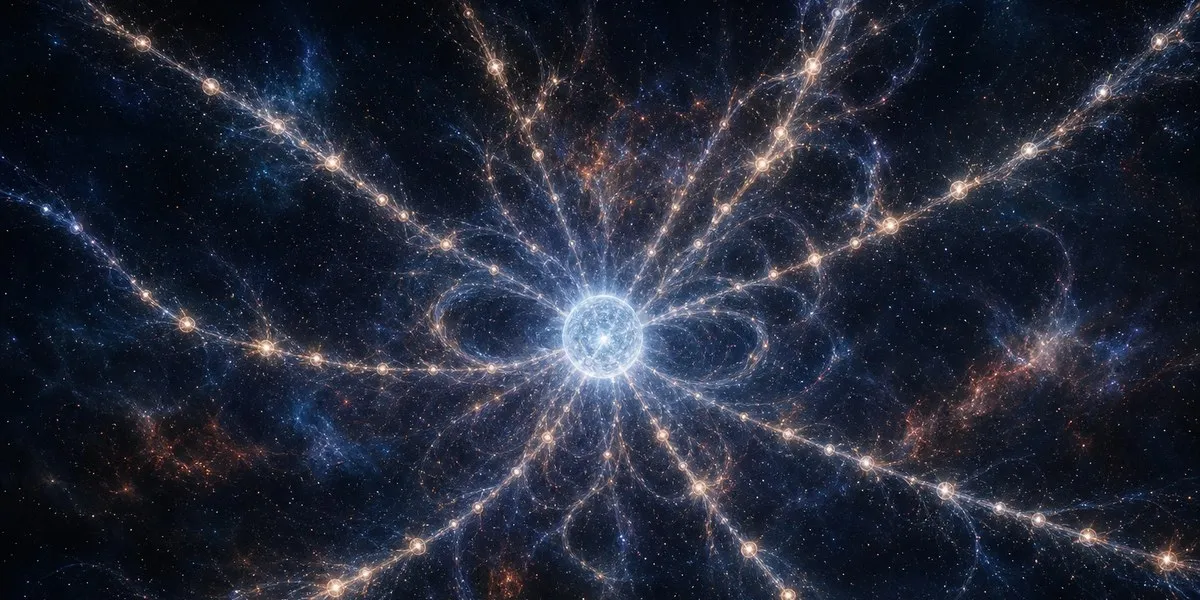
Astronomers have studied the Pa 30 supernova remnant in the Milky Way in detail and discovered nearly identical knots along gas filaments, resembling pearls on a string. At the center of the object is a rare zombie star — the remnant of a white dwarf that survived the explosion. Space.com reports on the observations.
Knots the size of a planetary region
Pa 30 is located about 7,500 light-years from Earth. Observations with the Gemini North telescope made it possible to examine chains of gas and debris spreading out from the explosion site. Each of the detected knots is so large that the region of the Solar System out to Neptune's orbit could fit inside it about ten times.
According to study participant Ilaria Caiazzo, an assistant professor at the Institute of Science and Technology Austria, the knots have remarkably uniform sizes. Scientists plan to model their formation.
An explosion recorded in 1181
Pa 30 was first identified by an amateur scientist in 2013. The object was later linked to an explosion independently recorded in Japanese, Chinese and Arab historical records in 1181. It is one of five supernovas observed by people before the invention of the telescope.
More current news is available on the UA.News Telegram channel Telegram.
Such events belong to the rare class of Type Iax supernovas. Usually, a Type Ia supernova explosion destroys a white dwarf that has accumulated matter from a companion star. However, in some cases, part of the star remains, forming a so-called zombie star.
An almost motionless stellar remnant
The researchers also found that the zombie star is located almost exactly at the center of Pa 30. They measured the upper limit of its transverse velocity and found that it is very low. This indicates the relative symmetry of the explosion: in such a scenario, the ejected matter expands symmetrically, while the surviving star does not receive a significant kick.
Scientists plan to use the distinctive properties of Pa 30 to search for remnants of other Type Iax supernovas in the Milky Way and nearby galaxies. The study results were published in The Astrophysical Journal.




