
Destro raises $8M for AI to coordinate warehouse robots — TechCrunch
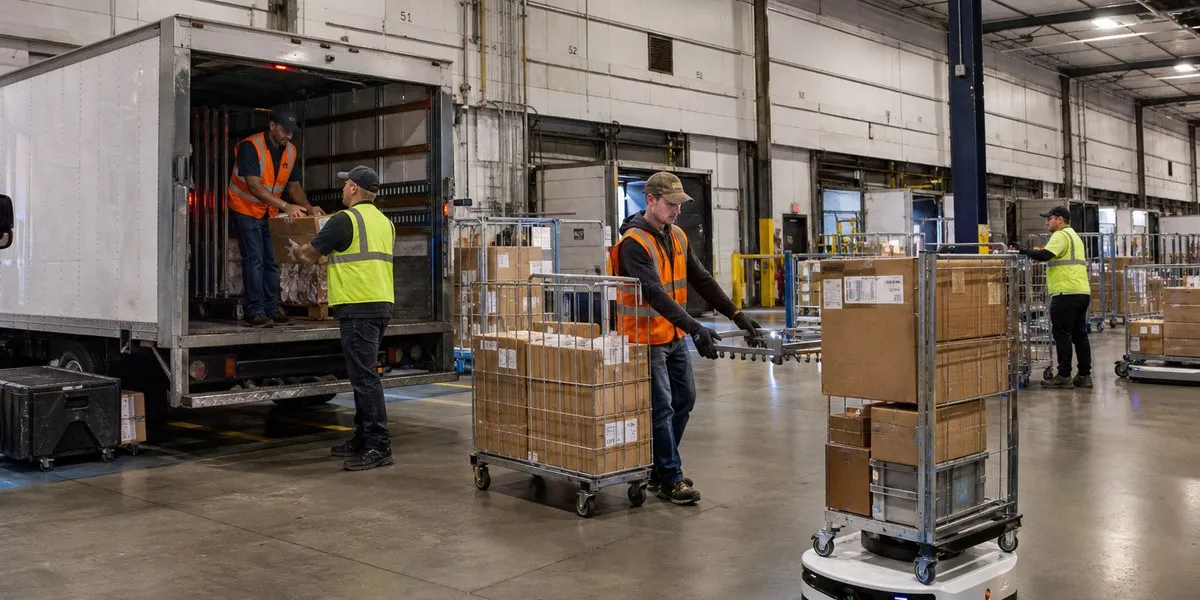
Startup Destro, which is running pilots at logistics facilities in the United States, has emerged from stealth mode and raised $8 million in seed funding. The company develops an AI layer to coordinate robots and workers in warehouses rather than manufacturing its own robots, TechCrunch reports.
The round was led by Base10 Partners and Bonfire Ventures, with CoFound Partners also investing. Destro founder Mantan Pawar, who has worked in supply chains and robotics in the United States for about eight years, said the company is focused on customers’ operational problems and expects to achieve positive cash flow by the end of the year.
Pilot with Yusen Logistics
Destro launched a pilot project at one of Yusen Logistics’ facilities in the U.S. Pacific Northwest. Three robots were used there to move carts manufactured by Miva Robotics. Destro’s Vision operating system is based on vision-language-action-type models that interpret camera images and instructions to control robot movement.
More current news is available on the UA.News Telegram channel Telegram.
Workers unload goods from one truck into different carts, while robots locate the filled carts and deliver them to the required locations. Destro’s Mothership system coordinates workers, carts, and trucks. Richard Brunell, director of automation at the U.S. logistics group Yusen Logistics, said the solution makes it possible to reduce the labor intensity of operations and eliminate paper-based processes.
Expansion of pilots
Destro is expanding the initial pilot into a full deployment of 26 robots and launching another pilot with 17 robots at a Yusen facility in Southern California. The company adapted its solution for cross-docking: cargo is unloaded from one truck and mixed loads are assembled for other vehicles that deliver them to customers.
Pawar plans to apply this approach at thousands of other warehouses with similar processes. At the same time, TechCrunch notes that tasks requiring greater dexterity and object manipulation may be more difficult: existing general-purpose robotic platforms and open AI models have not yet demonstrated sufficient capabilities for such operations.




