
Researchers increased electrosynthesis selectivity from 16% to 97% — ScienceDaily
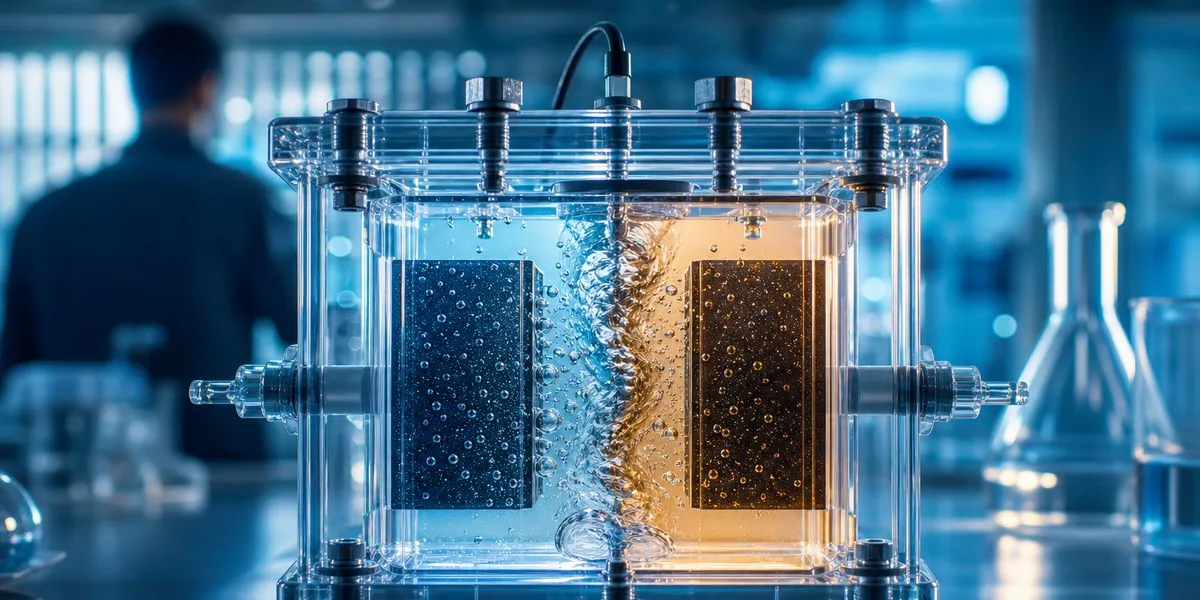
Researchers at Seoul National University found that the success of organic electrosynthesis largely depends on local pH — the acidity or alkalinity directly near the electrodes. Controlling this environment made it possible to increase the selectivity of target-compound formation from about 16% to 97%, ScienceDaily reports.
Acidity near the electrodes
During electrochemical reactions, protons can be produced or consumed faster than they move through the solution. As a result, the pH in a thin layer next to the electrode can differ substantially from that in the entire solution. According to the team's estimates, under generally neutral conditions, the environment near the cathode could reach pH 11, while near the anode it could reach pH 2.5.
Such differences affect the formation of reactive oxygen species, the properties of starting molecules, and the stability of final products. The scientists also analyzed more than 600 studies on organic electrosynthesis published since 2010 and found that about 89% of them described reactions involving the transfer of electrons and protons.
A reactor with electrolyte flow
To control local pH, the researchers changed the reactor design: they moved the electrodes closer together and ensured electrolyte flow between them. This was intended to reduce excessive acidity near the anode and alkalinity near the cathode. As the flow rate increased within the tested conditions, the product formation rate rose by about 14 times. Reducing the distance between the electrodes from 20 to 4 mm increased it by about 2.2 times.
More current news is available on the UA.News Telegram channel Telegram.
The method was tested on a Baeyer—Villiger oxidation reaction, in which ketones are converted into esters or lactones. Instead of separately added peroxide oxidants, the team used oxygen and electricity to generate reactive oxygen species. Isotope labeling confirmed that the oxygen atom in the product came from gaseous oxygen rather than water.
Lactones and epoxides
Under optimized conditions, the scientists synthesized lactones from 18 different ketones. The yield of ε-caprolactone was 82%; this compound is a starting material for a polymer used, among other things, in surgical sutures and drug-delivery systems. The approach was also used to obtain epoxides from six alkenes.
The study results were published in the Journal of the American Chemical Society. The authors note that the technology requires further optimization and testing at larger scales before it can be assessed for industrial use.




