
Archaea With a 238,000-Base-Pair Genome Found Near Japan — ScienceAlert
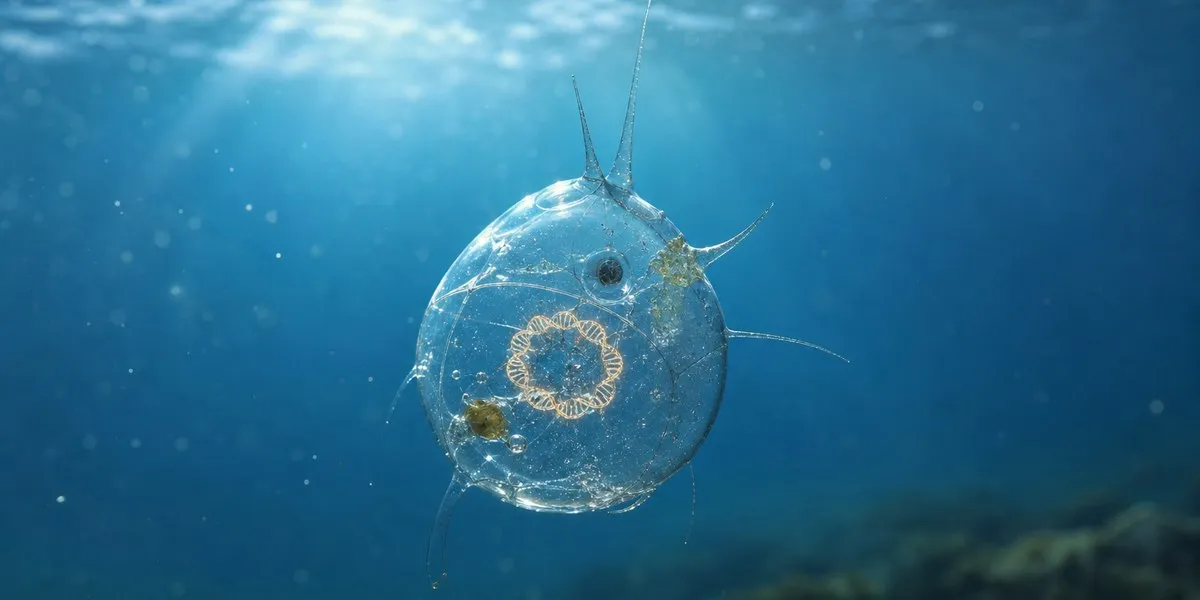
In samples of single-celled marine plankton collected in surface waters near the city of Shimoda, Japan, researchers discovered the archaeon Sukunaarchaeum mirabile with a genome measuring just 238,000 DNA base pairs. It is one of the smallest genomes among known organisms and the smallest among archaea, ScienceAlert reports.
Discovery in marine plankton
Scientists collected the single-celled plankton Citharistes regius to study the genetic material of photosynthesizing cyanobacteria that help it survive. Among the identified genomes, they found a small DNA ring belonging to the archaeon Sukunaarchaeum mirabile.
An international group of biologists and computer science specialists described this microorganism in an article published in the journal Current Biology. It was named Sukunaarchaeum mirabile after the Shinto spirit Sukuna, known for its small size and strength.
Archaea are single-celled organisms whose DNA, as in bacteria, is not contained in a membrane-bound nucleus. At the same time, they have an evolutionary history distinct from bacteria and a number of unique features.
More current news is available on the UA.News Telegram channel Telegram.
Possible parasite
According to the study's authors, the Sukunaarchaeum genome contains almost no genes needed to maintain its own metabolism. At the same time, it retained a significant portion of the mechanisms necessary for genome replication and protein production based on genetic information.
The researchers suggest that the archaeon may be a parasite rather than an endosymbiont, as it has no obvious metabolic pathways that could benefit the host organism. They cite as an additional sign the fact that about a quarter of the genome is associated with the production of large membrane proteins. Similar proteins have been found in another known parasitic archaeon and linked to penetration into host cells.
Molecular biologist Thorsten Allers of the University of Nottingham noted that the discovery may help determine the minimum amount of genetic information a cell needs to reproduce and maintain its own genetic information. For now, Sukunaarchaeum mirabile is known only from genomic data: it has not yet been observed under a microscope.




