
Dragon delivers organoids and equipment for artificial retinas to the ISS — ScienceDaily
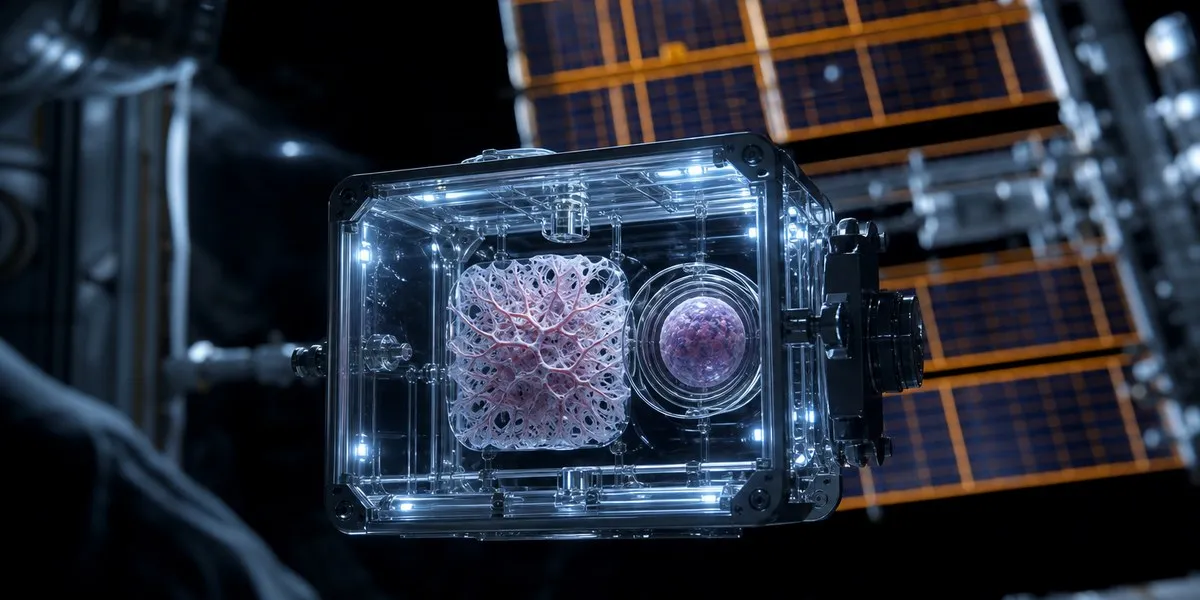
SpaceX's Dragon spacecraft docked with the International Space Station on October 15 and delivered more than 6,300 pounds of food, essential supplies and scientific equipment to the crew of Expedition 75. The cargo included equipment for manufacturing artificial retinas in microgravity, brain organoids, three-dimensional models of heart tissue and materials for studying a new type of glass.
As ScienceDaily reports, Dragon docked with the space-facing port of the Harmony module at 10:27 a.m. Eastern Time. This is SpaceX's 35th commercial ISS resupply mission under a NASA contract.
Research for medicine
The equipment for manufacturing artificial retinas is intended to help study the possibility of creating such structures in microgravity. Scientists hope these technologies may be useful for restoring vision on Earth in the future.
3D models of heart tissue that reproduce important properties of the human heart were also sent to the station. They are planned to be used to improve methods for testing large numbers of potential medicines during future space missions.
More current news is available on the UA.News Telegram channel Telegram.
Brain organoids are small three-dimensional models of brain tissue grown from cells. They make it possible to study aspects of brain biology that are difficult to investigate directly in humans. Researchers hope to identify potential targets for treating Alzheimer's disease, Parkinson's disease and multiple sclerosis.
Solar arrays and cargo return
Dragon also delivered the final set of IROSA roll-out solar arrays for the ISS. They are expected to increase the station's power-generation capacity for its operations and scientific research. Installation of the arrays is scheduled for the later part of autumn.
A separate experiment is devoted to the formation of a new type of glass in microgravity. Studying the process without the usual influence of Earth's gravity may provide more data on the development and properties of this material. The spacecraft, which launched on October 13 aboard a Falcon 9 rocket from Cape Canaveral, Florida, is expected to remain at the ISS until mid-November, after which it will return time-sensitive research materials and other cargo to Earth.




