
OpenAI's Mathematical Breakthrough: How AI Could Transform Science, Finance, and Cybersecurity
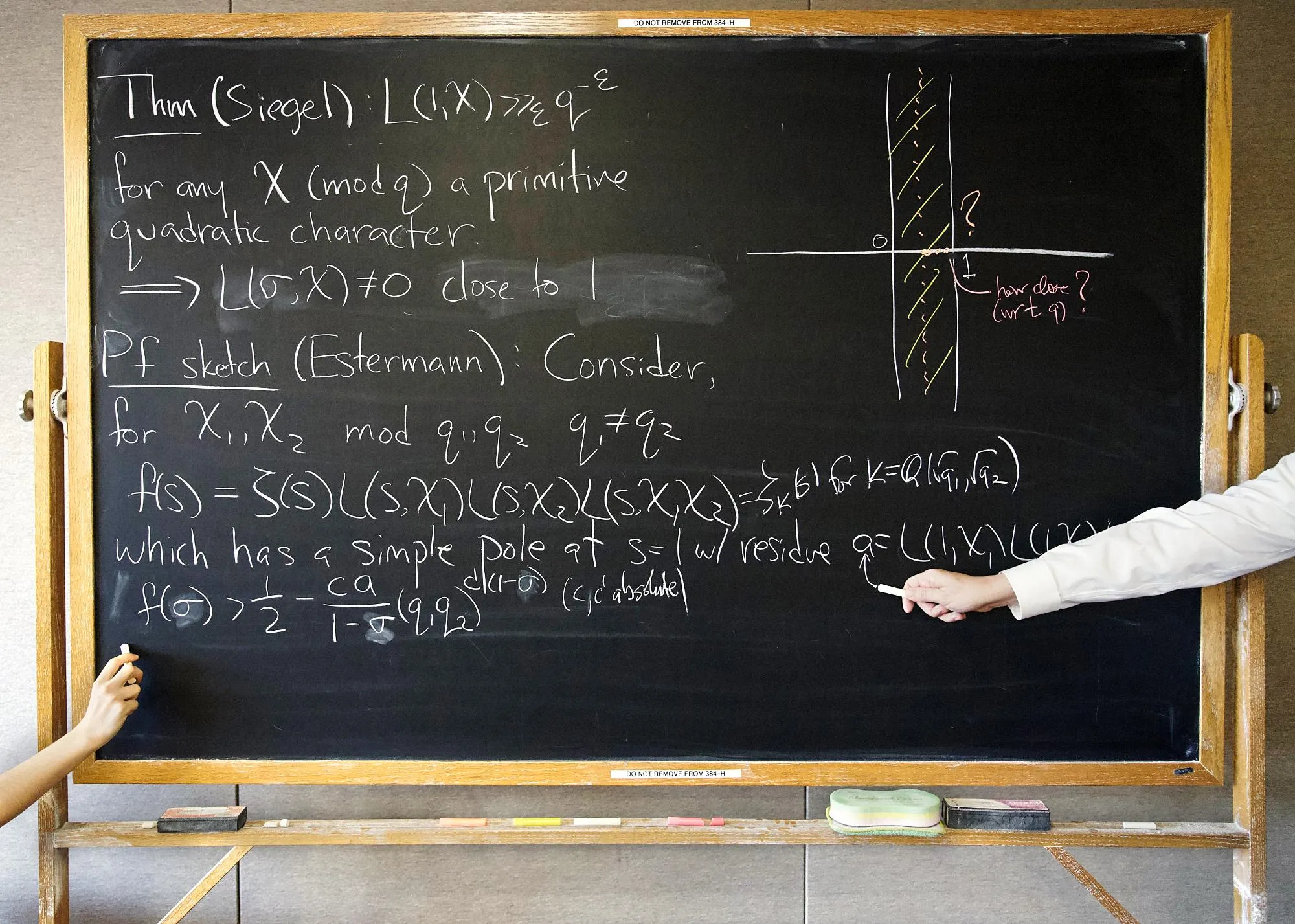
OpenAI has published hundreds of mathematical research papers generated by its in-house artificial intelligence model. This isn’t about the usual solving of equations or helping students with homework, but rather about results in complex areas of mathematics where researchers have been working on unsolved problems for years.
For the tech industry, this is more than just a demonstration of yet another model’s capabilities. If artificial intelligence learns to systematically accelerate scientific discoveries, it could transform the economics of pharmaceuticals, materials science, engineering, and cybersecurity.
At the same time, these mathematical successes do not yet mean that AI is already capable of cracking bank encryption or cryptocurrency systems. To understand the true significance of this development, we need to distinguish between what the model has actually demonstrated and predictions about its future capabilities.
UA.News explains what mathematical results the OpenAI model has achieved, why scientists are debating the validity and practical value of its discoveries, and how the development of mathematical AI could impact the global economy, financial systems, and the security of digital technologies.
What Exactly Did the OpenAI Model Do?
OpenAI released the results of an experiment in which its in-house artificial intelligence model solved complex mathematical problems. The model attempted to discover new mathematical statements, construct proofs, and develop ideas that could be useful for future scientific research. However, OpenAI has not yet made this model available for widespread use.
According to the company, the initial set of results included 722 mathematical papers, grouped into 372 thematic categories. These covered number theory, geometry, algebra, mathematical analysis, and theoretical computer science. In total, the model processed approximately 4,000 research problems, but not all results were published; only those selected by the company as sufficiently significant were included.
During a subsequent review, it became clear that some of the material required corrections. OpenAI retracted three manuscripts and re-reviewed another 14. This case highlights one of the main challenges of applying AI in science: while the model can generate complex mathematical arguments, their correctness still needs to be verified. The mere fact that a large number of papers were generated does not mean that each one contains a proven mathematical result.
One of the most prominent areas of research has been the Riemann Hypothesis—one of the most famous unsolved problems in mathematics. It concerns the distribution of prime numbers and the behavior of the zeros of the Riemann zeta function. In its materials, OpenAI reported that the model had made progress in researching a related mathematical problem but had not proven the classical Riemann Hypothesis.
The classical Riemann Hypothesis remains unsolved to this day and is included in the list of the Seven Millennium Problems. The Clay Mathematics Institute has offered a $1 million prize for the solution to each of them.
It is also important to note how exactly the model approached these problems. In complex mathematical research, it is not enough to simply arrive at the correct answer: one must explain why it is correct, justify each important step, and demonstrate that the conclusion truly follows from the initial conditions. The OpenAI model attempted to construct such chains of reasoning, identify intermediate statements, and develop them into complete mathematical proofs. This differs from using AI to explain an already known theorem or solve a typical problem using a predefined algorithm.
To allow other researchers to evaluate the results, OpenAI published the materials on GitHub. This gives researchers the opportunity to study the manuscripts, analyze the proposed proofs, find errors, and verify how truly novel the conclusions are. For some of the papers, the company also provided formalizations in Lean—a specialized language and system for mathematical proofs.
Lean makes it possible to verify whether a formal proof complies with established mathematical rules. If the system finds a logical error in the recorded proof, it can flag it.
In this way, OpenAI demonstrated not just the AI’s ability to solve individual problems, but its potential as a tool for discovering new mathematical results. At the same time, this experiment does not eliminate the need for human expertise: scientists still need to evaluate the published works, verify their reliability, and determine which of them truly push the boundaries of mathematical knowledge.
Why the Mathematical Community Reacted with Mixed Feelings
For some mathematicians, the number and scale of the published papers served as evidence that AI is advancing much faster than even experts had anticipated. For others, the main question was not whether the model could produce a proof, but whether humans are capable of understanding it, verifying it, and using it for further research.
Eric van Erp, a professor of mathematics at Dartmouth College whose research interests overlap with some of the published works, stated that OpenAI is moving much faster than he had expected. At the same time, he emphasized that in pure mathematics, the value of research lies not only in the solution to a problem but also in what researchers learn in the process of solving it.
This is one of the main controversies surrounding mathematical AI. If a system produces the correct result but scientists cannot quickly understand the logic of the proof or see how to apply it to other problems, the discovery does not necessarily translate into a new tool for science.
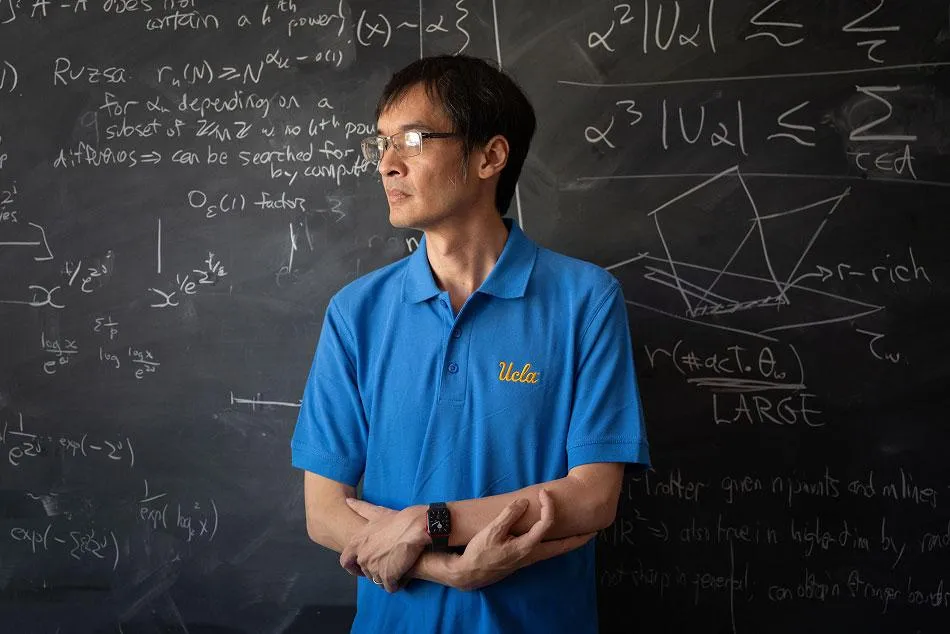
A similar problem was raised by the renowned mathematician Terence Tao, who criticized the approach in which people receive the results of autonomous systems’ work, but do not always understand them well enough to explain them to colleagues, answer questions, or build upon them for further research.
The criticism also concerns how OpenAI published the materials. Only some of the papers were accompanied by formal proofs that can be verified by a computer, and detailed explanations of the model’s reasoning process were available for only a limited number of results. Therefore, researchers will have to devote significant resources to determining which of the published findings stand up to independent scrutiny.
It is telling that the company did not simply release the papers but also announced a $5 million contribution to a new initiative by the Simons Foundation. The funds are intended to help mathematicians investigate AI results, host conferences, and develop new research programs. This is effectively an acknowledgment that generating a mathematical result is only part of the work: it must be understood, verified, and integrated into existing knowledge.
How AI Could Transform the Economics of Scientific Discovery

The main potential benefit of such systems is reducing the time between formulating a scientific problem and obtaining a result. Today, fundamental research can require years of work by highly qualified scientists, university funding, computational resources, and teams of specialists. If AI can take on a significant portion of the work involved in generating hypotheses, verifying intermediate results, and constructing proofs, research teams will be able to test more ideas in the same amount of time.
This has potential economic significance far beyond mathematics. Fundamental mathematical methods are applied in physics, materials science, chemical reaction modeling, machine learning, logistics optimization, and financial modeling. If AI learns to discover new patterns and transfer them across disciplines, it could accelerate progress in entire fields.
A similar process is already underway in programming. AI tools help developers write code, find bugs, and create more complex software products. However, this does not mean that human experts have become unnecessary: the number of tasks that can be performed has increased, but quality control, architecture, and accountability remain important.
A similar transformation could occur in mathematics. AI is capable of exploring options, suggesting auxiliary statements, and discovering non-obvious connections. Humans, on the other hand, will determine which problems are worth solving, whether the result is truly important, and how to apply it in other research.
However, the automation of science will not necessarily make it more affordable for everyone. The most powerful models require significant computational resources, and their development depends on access to expensive chips, data centers, and electricity. Therefore, companies capable of funding large-scale computations and attracting the best specialists may gain an advantage.
There is a risk that scientific capabilities will become concentrated in the hands of a few technology corporations. If the best models remain proprietary, universities and small research centers may find themselves dependent on private platforms. They will receive the results but will not always be able to independently replicate the entire research process.
This is no longer just a question of technology, but also of the economics of science: who will control the tools of discovery, who will own the results, and how will the benefits of their use be distributed.
Does Mathematical AI Really Pose a Threat to Cryptocurrencies and Banks?
One of the most discussed prospects for the development of mathematical AI is related to cryptography—the technology that protects banking transactions, digital signatures, private messages, and cryptocurrency wallets.
Modern cryptography relies on mathematical problems that are considered extremely difficult to solve using current computing resources. In particular, public-key systems utilize certain properties of numbers and mathematical structures that make it easy to create a digital signature or encrypt data, while making it practically impossible to recover a secret key without the corresponding information under realistic conditions.
If AI learns to discover new mathematical methods, it could potentially help researchers find vulnerabilities in cryptographic algorithms. But it is important to distinguish between several different possibilities: proving a theorem, finding a vulnerability in a specific software implementation, and practically breaking cryptographic protection are different tasks.
The mathematical results published by OpenAI do not, in and of themselves, demonstrate a breach of Bitcoin, Ethereum, or banking systems. There is no basis for claiming that the published work makes it possible to recover users’ private keys or bypass modern cryptographic mechanisms.

However, the potential impact of AI on cybersecurity extends far beyond cryptocurrencies. Such models can help verify program code, identify errors in protocol implementations, automate system audits, and investigate the properties of algorithms. The same tools can be used by both defenders and attackers.
For the financial sector, this means the need to assess not only the reliability of the algorithms themselves but also the security of software, key management systems, and digital payment infrastructure. Banks and technology companies will need to monitor developments in automated vulnerability scanning and prepare for a future where complex audits can be conducted much more quickly.
The development of quantum computers remains a separate factor. A sufficiently powerful quantum machine could theoretically break some common cryptographic systems, but this is a distinct technological threat. AI is not a quantum computer, and the mathematical advances of these models do not automatically mean the emergence of such a computing resource. At the same time, the automation of mathematical research can help experts both identify new attacks and develop more reliable defenses.
Why Companies Are Competing in Research-Driven AI
Mathematics is becoming yet another arena of competition among developers of cutting-edge models. Whereas the focus used to be on text generation, programming, and information processing, the ability of systems to independently plan research, handle long chains of reasoning, and verify their own results is now becoming increasingly important.
For OpenAI, this is also a way to demonstrate the value of models that are not yet available to a broad audience. The company is showing that its systems can be useful not only as assistants for everyday tasks but also as tools for professional scientific work.

In the long term, such capabilities could become a separate commercial market. Pharmaceutical companies, materials manufacturers, financial institutions, and engineering firms are interested in systems capable of shortening the duration of research and finding promising solutions more quickly. Even if access to the most powerful models is expensive, it can pay for itself by accelerating product development or reducing research costs.
At the same time, the sheer volume of generated materials is not an indicator of commercial value. Turning a mathematical result into practical technology often requires additional experiments, engineering work, and testing under real-world conditions. Therefore, the greatest advantage will not necessarily go to the companies that generate the most theorems, but to those that can turn model results into proven solutions.
What This Means for the Future of Science
OpenAI’s publication has shown that the capabilities of artificial intelligence extend to areas that until recently were considered among the most difficult to automate. However, the large-scale production of mathematical manuscripts has also demonstrated how important independent verification, the clarity of proofs, and accountability for scientific conclusions remain.
In the near future, the key test will not be the number of new statements the model can formulate, but how many of them scientists will be able to confirm, explain, and use to further advance knowledge. It is this process that will determine whether mathematical AI will become a fully-fledged tool for fundamental research.
For businesses and governments, this simultaneously opens up new opportunities and creates risks. Faster scientific discoveries can accelerate progress in medicine, engineering, and computing, but they will also require new approaches to data protection, software testing, and the distribution of access to advanced models.
Artificial intelligence has not yet replaced mathematicians or rendered modern cryptography obsolete. However, it is already changing the scale and speed of research. The next stage of this transformation will depend on whether scientific institutions, technology companies, and independent researchers can transform the results of these models into reliable knowledge that stands up to scrutiny and delivers real benefits.




