
NASA prepares training facilities for the era of commercial stations
NASA is adapting the infrastructure of the Johnson Space Center in Houston for future work with commercial orbital stations while continuing to support the International Space Station until approximately 2030. Space.com reports this following a tour of the center for journalists.
NASA expects private stations in low Earth orbit to be able to host astronauts after the ISS ends operations. Under the Commercial LEO Destinations program, the agency in 2021 awarded initial contracts totaling about $415 million to teams led by Nanoracks, Blue Origin, and Northrop Grumman. Following consultations with industry, NASA is preparing a new request for proposals for the program's further development.
Mission control center
At the ISS mission control center, specialists monitor the condition of the station's systems, communications with the crew, and its current activities. According to flight director Diane Daley, separate consoles are responsible for different areas of spacecraft operations, including propulsion, communications, and computer systems. SpaceX has its own mission control center in California for its spacecraft, while Boeing has integrated its center with NASA systems.
More current news is available on the UA.News Telegram channel Telegram.
The ISS will remain an active program for several more years. NASA managers confirmed the target of ending its operations around 2030, while stating their readiness to extend the station's service life if the U.S. Congress makes an appropriate decision. The agency also said the leak situation in the Russian segment is under control: Roscosmos agreed to effectively isolate the relevant section, while other key station systems are in good condition, according to NASA's assessment.
Training for emergencies and spacewalks
At the Building 9 Space Vehicle Mockup Facility, astronauts practice actions in emergency situations, including during a fire and while performing cardiopulmonary resuscitation in weightlessness. For this procedure, astronauts need to secure themselves because they do not have Earth's gravity to assist them. The building also houses equipment from SpaceX and Blue Origin, as well as a multilevel station mockup from the Starlab Space consortium.
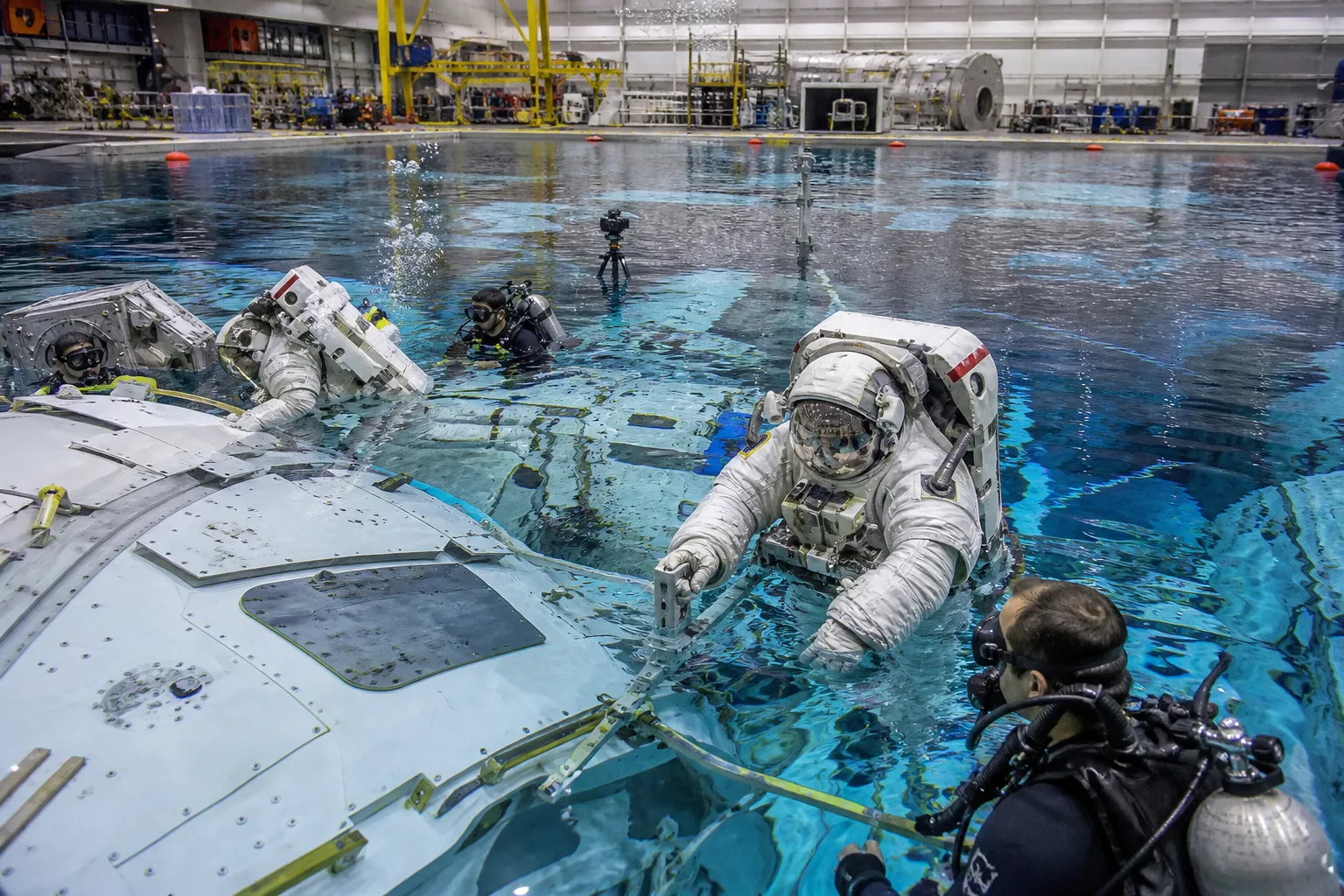
At the Neutral Buoyancy Laboratory, astronauts train for spacewalks in a pool with mockups of ISS modules. Orion spacecraft recovery operations were also practiced there as part of preparations for the Artemis 2 mission, including various positions of the capsule on the water. Private space companies have already used the pool for spacesuit-related tasks, and the laboratory expects to expand commercial services in the future.




