
NASA continues development of PRIMA infrared telescope — Live Science
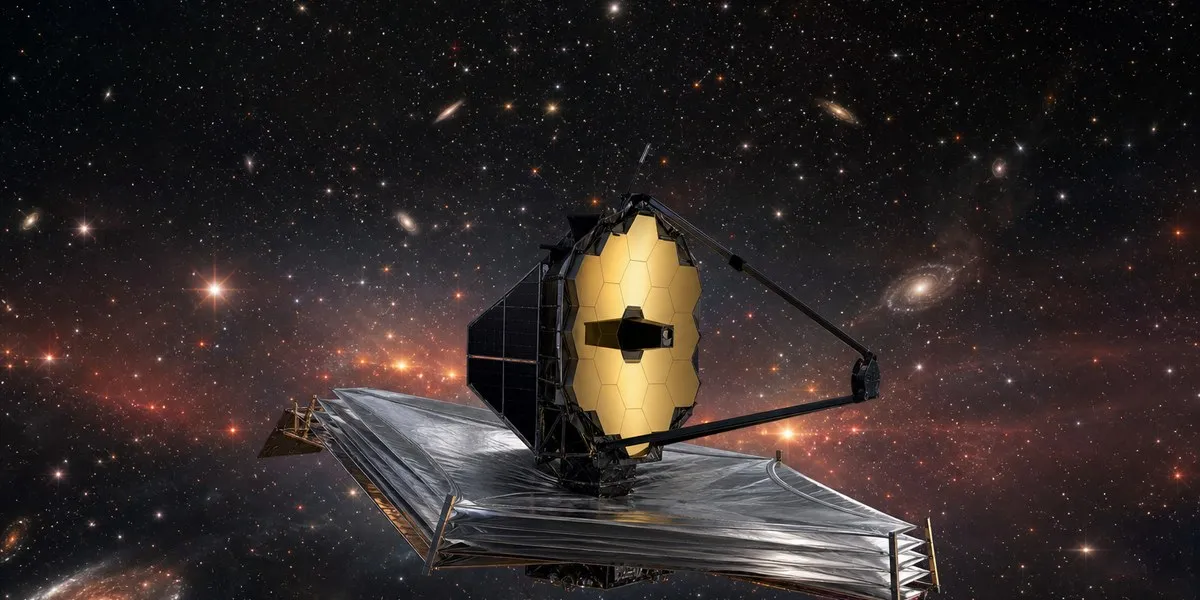
NASA is continuing development of the PRIMA space telescope, designed for observations in the far-infrared range. The mission has moved to Phase B, the preliminary design and technology development stage. As Live Science reports, the spacecraft could launch no earlier than 2033, and the planned mission duration is five years.
Observations in the far-infrared range
PRIMA is short for Probe far-Infrared Mission for Astrophysics. The 1.8-meter-wide telescope is intended to study the Universe in the far-infrared range — at longer wavelengths than those targeted by the James Webb Space Telescope, launched in 2021.
PRIMA's main scientific objectives include studying the origins of exoplanets, the growth of galaxies, and the evolution of black holes. Johns Hopkins University astronomer Meredith MacGregor noted that the mission could help determine the role of water in planet formation, the total mass of gas, and the abundance of carbon and oxygen in disks where exoplanets form. According to her, the spectral lines needed for such research are located in the far-infrared range and are inaccessible to James Webb.
More current news is available on the UA.News Telegram channel Telegram.
A new class of scientific missions
PRIMA is intended to become the first mission in the new Probe Explorers class, which NASA positions between major flagship projects such as James Webb and the agency's smaller programs. The project's cost cap is $1.2 billion, excluding launch and other non-project expenses. By comparison, the cost of James Webb at the time of its 2021 launch was estimated at $10 billion, excluding inflation and launch costs.
In 2024, NASA allocated $5 million each to develop two Probe Explorer concepts — PRIMA and the Advanced X-ray Imaging Satellite. The agency selected PRIMA for further development, taking into account its scientific value, the realism of its cost and schedule plans, and technologies that may be useful for future major missions. If launched, the project will be managed by NASA's Jet Propulsion Laboratory with the participation of other agency centers and international partners.




