
From Oil to Artificial Intelligence: How the UAE Is Investing Billions in OpenAI and Becoming a Global Hub for AI
03 November 2026 12:10The United Arab Emirates, which for decades has profited from oil production and exports, is increasingly investing in artificial intelligence. The country is investing in the construction of data centers, collaborating with American technology corporations, and striving to become one of the key hubs of the global AI industry.
On November 2, 2026, the state-owned oil and gas company ADNOC, the technology group G42, and the American company OpenAI announced a strategic partnership. The companies plan to use cutting-edge artificial intelligence models to manage oil production, analyze oil fields, optimize logistics, and make business decisions. At the same time, Abu Dhabi-based investment firms have entered into new agreements with the developer of ChatGPT regarding financial analytics and the implementation of AI in public administration.
These agreements mark the next stage in the technological transformation of the Persian Gulf. The UAE and Saudi Arabia have already brought OpenAI, Microsoft, NVIDIA, Google, and other tech giants on board for their projects. The region’s sovereign wealth funds are financing U.S. AI infrastructure, while plans are underway in the Middle East to build data centers with a capacity of thousands of megawatts.
UA.News explains why the oil monarchies are betting on artificial intelligence, how the energy sector is becoming a competitive advantage, who is financing the largest projects, and what risks could prevent the Gulf states from becoming new hubs of the digital economy.
What OpenAI’s New Agreement with Oil Company ADNOC Entails
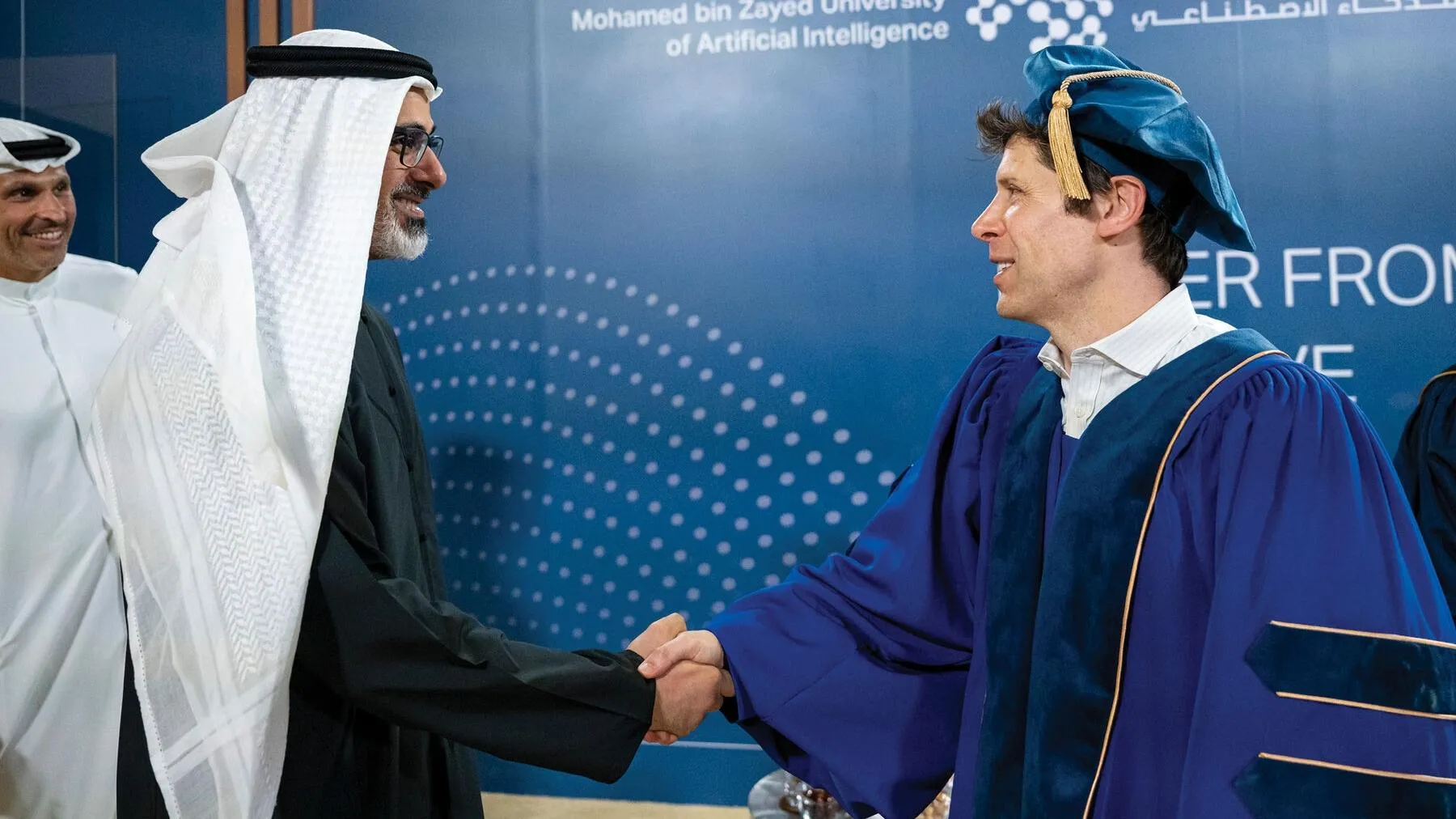
On November 2, the ADIPEC 2026 international energy conference opened in Abu Dhabi, during which ADNOC, OpenAI, and G42 announced a multi-year partnership. The signing took place in the presence of Abu Dhabi’s Crown Prince Sheikh Khaled bin Mohammed bin Zayed Al Nahyan, who also met with OpenAI CEO Sam Altman.
According to an ADNOC statement, the company will become the first in the energy sector to use the OpenAI Frontier platform to coordinate complex production and commercial processes.
The main idea is to integrate previously separate systems. Currently, oil production planning, field analysis, cost calculations, raw material transportation, and sales are handled by different teams using different software. The new system is designed to take all these factors into account simultaneously.
For example, when planning field development, artificial intelligence will analyze geological data, well characteristics, infrastructure, drilling costs, and the expected value of production. The company expects that the preparation of comprehensive plans, which previously could take months, will be reduced to a few hours.
Another area involves assessing the economic value of oil even before it is extracted. AI agents will be able to compare information on global demand, prices, refinery utilization rates, transportation costs, and the potential profitability of operations.
At the same time, experts will retain control over key decisions. Artificial intelligence is intended to serve as a tool for more rapid evaluation of various scenarios.
ADNOC has been implementing similar technologies for several years. One of its flagship projects is the ENERGYai system, developed in collaboration with AIQ. It is based on a language model with 70 billion parameters that draws on over 50 years of data accumulated by the company.
According to ADNOC, the company has over 200 AI applications and 70 robotics use cases that have already been implemented or are currently under development. Its real-time operations control center aggregates information from more than 120 drilling rigs.
AI is also used to predict malfunctions. If the system detects unusual equipment vibration, pressure changes, or other anomalies in time, staff can investigate the problem before it leads to an accident.
Why Gulf Oil-Producing Countries Are Investing in Artificial Intelligence
For decades, oil has provided the Persian Gulf countries with enormous revenues. Thanks to energy exports, the UAE, Saudi Arabia, Qatar, and other countries in the region have established large investment funds, built out infrastructure, and begun investing capital in international business.
However, dependence on energy exports carries its own risks. Revenues fluctuate with global oil prices, and the growth of electric vehicles and renewable energy creates uncertainty about future demand.
That is precisely why the UAE has long been developing financial services, aviation, tourism, logistics, and the digital economy. Artificial intelligence has become one of the new pillars of this strategy.
Building AI infrastructure allows for the simultaneous development of several industries. The construction of data centers requires power plants, cooling systems, telecommunications, engineers, and cybersecurity specialists. Once operational, these facilities can serve international companies and government agencies. As a result, energy—which was previously exported mainly in the form of oil and gas—is becoming a resource for the production of digital services.
However, money and access to electricity alone are not enough. A competitive AI industry also requires modern processors, software, research, skilled personnel, and clients. Therefore, Gulf countries are attracting international partners who already possess the necessary technologies.
Saudi Arabia is implementing a similar strategy. In May 2025, its Public Investment Fund established the company HUMAIN to develop AI infrastructure and proprietary models. Subsequently, HUMAIN and NVIDIA agreed to build computing complexes with a capacity of up to 500 megawatts over the course of five years. The first phase involved the use of 18,000 NVIDIA GB300 processors.
Consequently, competition is emerging between the UAE and Saudi Arabia for investments, state-of-the-art equipment, international companies, and specialists. Both countries are striving to transform their accumulated oil revenues into new sources of economic growth.
Who Is Funding the Development of Artificial Intelligence in the UAE
One of the distinctive features of Abu Dhabi’s technology strategy is the involvement of large state-affiliated investment entities.
Mubadala Investment Company is a sovereign wealth fund that invests in various industries around the world. As of 2025, the value of assets under its management reached approximately $385 billion. This figure represents the fund’s total portfolio assets, not the amount allocated exclusively to artificial intelligence.
On November 2, Mubadala, OpenAI, and Inception42 agreed to collaborate in the field of investment analytics. They plan to use cutting-edge models to identify promising opportunities, analyze financial information, and assess risks.
The MGX fund, established in Abu Dhabi to invest in artificial intelligence and related infrastructure, plays a distinct role. It became one of the initial investors in the large-scale American Stargate project, alongside OpenAI, SoftBank, and Oracle.

Another key player is the G42 technology group. It operates in the fields of artificial intelligence, cloud computing, and digital infrastructure, and is also involved in the construction of large data centers.
In April 2024, Microsoft announced a $1.5 billion investment in G42. The agreement provided for collaboration on the use of the Azure cloud platform and the development of AI solutions.
Consequently, a system has emerged in Abu Dhabi in which various entities perform distinct functions. Some provide funding, others build infrastructure, and international partners supply cutting-edge technologies.
The UAE is also seeking to utilize artificial intelligence in public administration. On November 2, the Abu Dhabi government and OpenAI announced the launch of the Machine-Readable Government initiative. The initiative involves converting certain regulatory documents and administrative procedures into a format that AI systems can process.
The first pilot project is already underway in the area of food import control. In the future, such solutions could be used to verify documents, process applications, and streamline administrative procedures.
Stargate UAE: How the UAE Is Building One of the World’s Largest Data Centers
The most notable example of the country’s technological ambitions is the Stargate UAE project, announced in May 2025. It is being implemented by G42, OpenAI, Oracle, NVIDIA, Cisco, and SoftBank.
The initial agreement called for the creation of a large artificial intelligence infrastructure complex in Abu Dhabi with a potential capacity of up to 5 gigawatts. The plan was to house the 1-gigawatt Stargate UAE computing cluster within it.
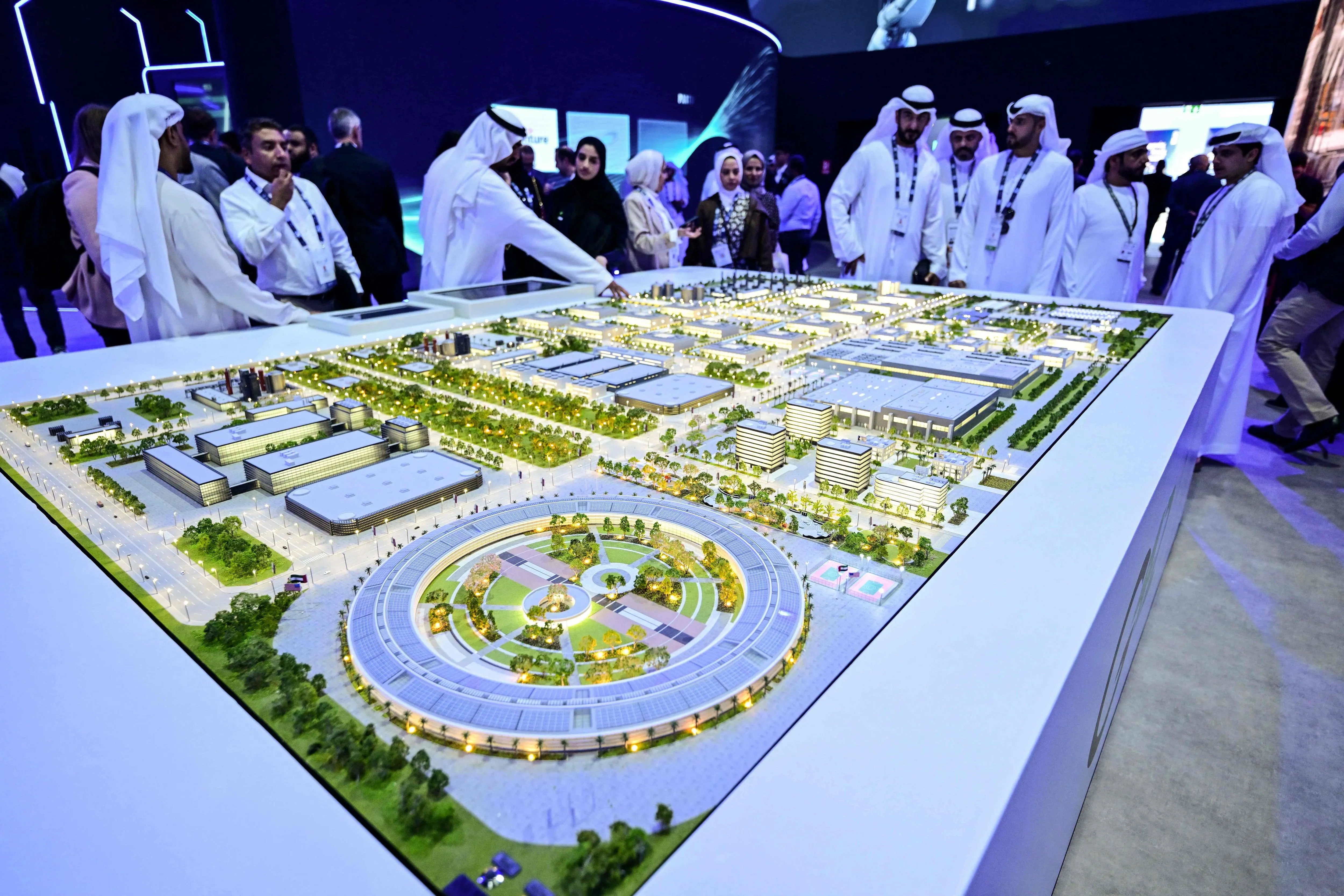
One gigawatt equals one thousand megawatts. These figures illustrate the scale of the energy and computing infrastructure required to power the servers. According to OpenAI’s initial plan, the first 200 megawatts of capacity were to become operational in 2026. However, the stated 5 gigawatts do not mean that the entire complex has already been built or connected to the power grid.
The partners plan to use state-of-the-art NVIDIA processors and high-speed data transfer equipment, which is necessary for training and running large language models.
If the launch is successful, the computing capacity in Abu Dhabi will be able to serve clients from other countries, including government agencies, research organizations, and international companies.
However, the infrastructure business does not guarantee a profit. Large data centers require significant initial investments, and their economic efficiency depends on server utilization, electricity prices, and demand for AI services.
The experience in the U.S. is telling, where some data center projects are already facing delays and resistance from local communities. Even with funding in place, construction may be halted due to infrastructure issues and environmental concerns.
Why Electricity Is Becoming the Key Resource for AI Development
Just a few years ago, the focus in the race for artificial intelligence was on algorithms, data, and developers. Now, physical infrastructure—above all, access to a stable power supply—is becoming an increasingly important factor.
Large language models require thousands of specialized processors running simultaneously. Training such systems can take weeks or months, and once completed, electricity is needed to process requests from millions of users.
According to estimates by the International Energy Agency, global electricity consumption by data centers could rise from approximately 485 terawatt-hours in 2025 to 950 terawatt-hours in 2030. Demand from data centers focused specifically on AI may grow even faster.
Although data centers currently account for a relatively small share of total global energy consumption, their concentration in certain regions places a strain on local power grids.
In the U.S., utility companies have already encountered instances where the simultaneous shutdown of large server complexes posed risks to the stability of the power grid. The problem lies not only in generating sufficient amounts of electricity. It is also necessary to build power lines, install transformers, provide backup power sources, and prepare the grids for sudden changes in load.
This is precisely where the Gulf states see one of their competitive advantages. They possess significant energy resources, the ability to finance new generation capacity, and government mechanisms for coordinating large-scale infrastructure projects. However, oil should not be equated with the primary source of electricity for data centers. In the UAE, natural gas, nuclear power, and solar power plants play a significant role in electricity generation.
The country operates the Barakah nuclear power plant, which has four reactors. Its installed capacity exceeds 5 gigawatts, and its output accounts for approximately one-quarter of the UAE’s electricity consumption. Nuclear power is important for data centers because they require a round-the-clock power supply. Solar power plants provide energy during the day, but additional generation sources or storage systems are necessary for the continuous operation of servers.
Another factor is the climate. High temperatures in the Gulf countries make it difficult to cool equipment, which increases the cost of engineering systems. Therefore, the availability of cheap energy sources alone does not guarantee low computing costs. Cooling efficiency and the reliability of power grids remain critical.
Why the U.S. Is Interested in Arab Investment in Artificial Intelligence
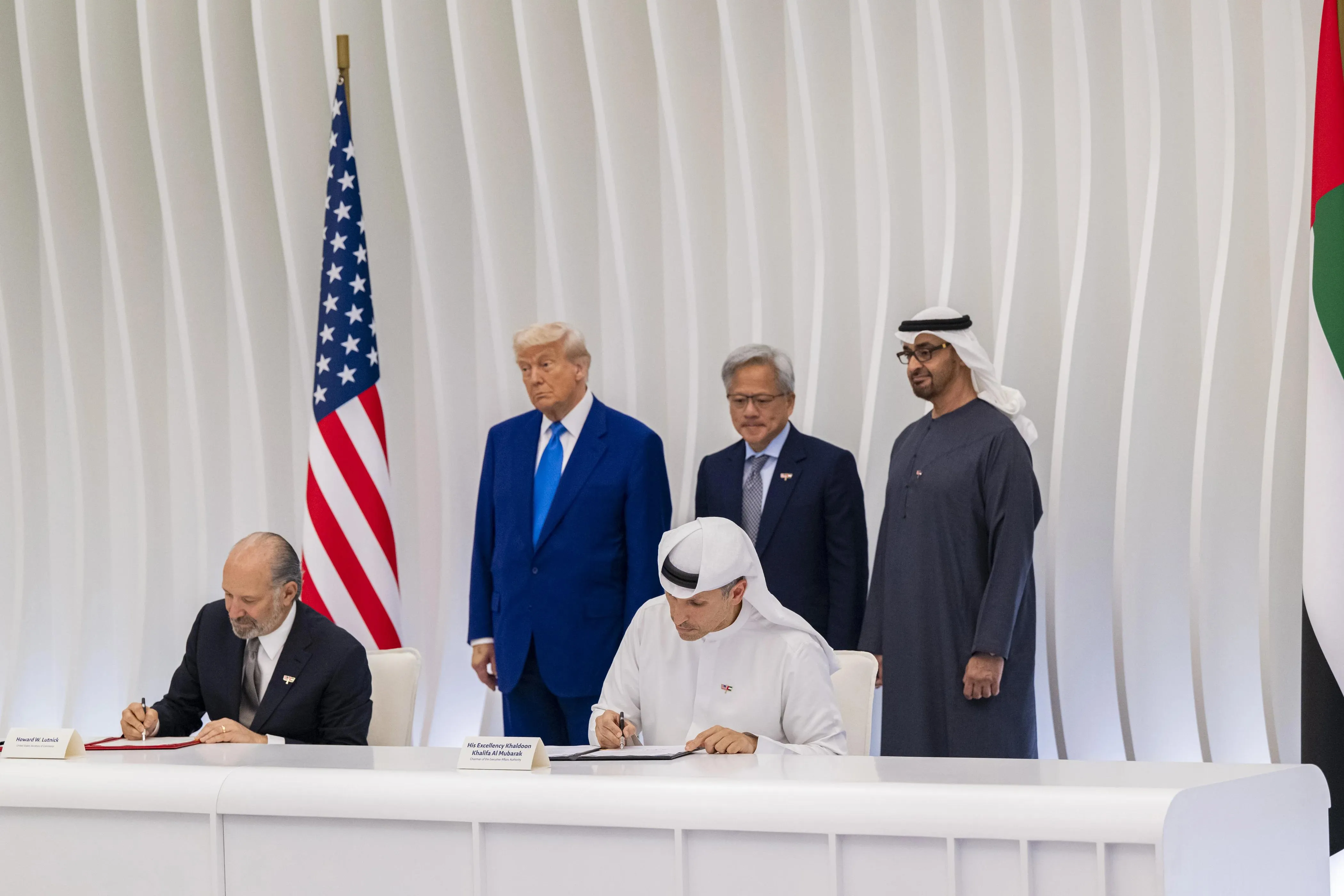
Cooperation between American technology corporations and Gulf countries has not only economic but also political significance. Developing cutting-edge models requires ever-increasing capital investments. Companies are spending tens of billions of dollars on processors, server farms, power equipment, and training specialists.
The largest tech companies’ spending on AI development is already in the hundreds of billions of dollars. For American companies, the sovereign wealth funds of the UAE and Saudi Arabia are a source of substantial long-term capital. Arab investors, in turn, gain access to a promising technology industry.
A prime example is the U.S.-based Stargate, which OpenAI, SoftBank, Oracle, and MGX announced in January 2025. The initial plan called for investments of up to $500 billion over four years to develop AI infrastructure in the U.S.
It is important to view this amount as a stated investment intention rather than funds that have already been spent. The actual deployment of capital depends on the construction of facilities and the signing of contracts. At the same time, Washington is interested in ensuring that American technology companies remain key partners of the Gulf states.
NVIDIA’s state-of-the-art processors are of particular importance, as they can be used not only for civilian but also for defense technologies. For this reason, the supply of the most powerful components often requires U.S. export licenses.
In fact, AI infrastructure is becoming a focal point of competition among the world’s technology hubs. Gulf countries must balance international partnerships with the security requirements of nations that control access to cutting-edge technologies.
How the War in the Middle East Forced a Rethinking of Data Center Construction Plans
Despite significant investments, Gulf countries face a problem that cannot be solved simply by purchasing modern processors. The issue is the physical security of critical infrastructure.
Following Iranian missile and drone attacks in 2026, the issue of data center security has taken on particular importance. Large server complexes depend on an uninterrupted power supply, cooling, and communications, and damage to even a single critical component can shut down a significant portion of their capacity.
On September 11, Reuters reported, citing six informed sources, that UAE authorities are revising plans to build a large AI campus with a capacity of up to 5 gigawatts. The initial concept called for concentrating the infrastructure at a single site near Abu Dhabi. However, the possibility of locating data centers in different parts of the country is now being considered.

Among the proposed protective measures were the construction of separate underground facilities, the use of more resilient structures, the installation of additional air defense systems, and the creation of backup power and cooling systems.
Construction of the first phase of Stargate UAE was set to continue, although some of its specifications might be modified. G42 stated that the project is proceeding on schedule, but infrastructure details are constantly being revised in accordance with security requirements.
This situation highlights a new aspect of the AI industry: large data centers are becoming strategic facilities, the protection of which requires approaches typical of power plants and military infrastructure.
At the same time, large investments do not yet guarantee the emergence of a self-sustaining technology hub. To achieve this, it is necessary to create an environment in which developers, researchers, equipment manufacturers, cloud operators, and client companies can work together.
Economic returns are a separate issue. Server equipment gradually becomes obsolete, processors are expensive, and electricity and maintenance must be paid for regardless of capacity utilization.
That is precisely why the UAE is trying not to limit itself to the role of an investor. The country aims to simultaneously become a major customer of AI solutions, an infrastructure provider, and a partner to leading technology corporations.




