
Science Corporation implants PRIMA in patient with Stargardt disease — TechCrunch
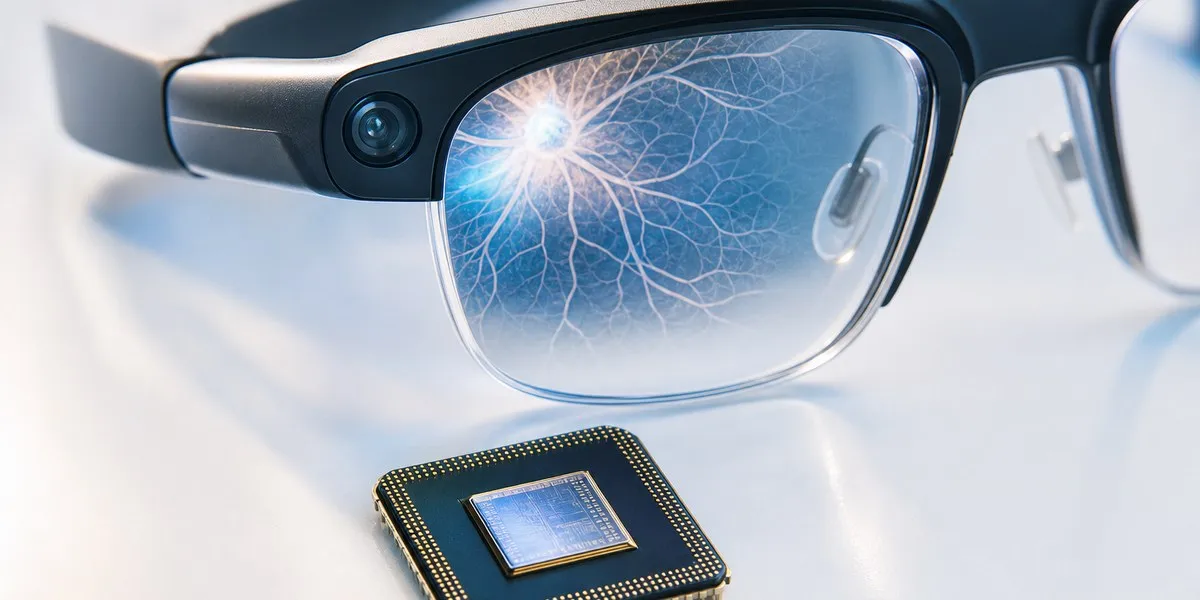
Science Corporation has implanted its PRIMA vision-restoration chip in its first patient with Stargardt disease as part of a clinical trial at Sydney Eye Hospital in Australia. The company’s CEO, Max Hodak, a former president and co-founder of Neuralink, reported this. As TechCrunch writes, the implantation was performed in May.
Initial rehabilitation results
According to Science Corporation, during the first rehabilitation session, the patient saw a letter, and during the second, was able to read a word. Stargardt disease is an inherited eye condition that gradually destroys central vision.
The disease affects the outer part of the retina, causing light-sensitive cells to die. At the same time, the inner part of the retina, which transmits visual signals to the brain, may remain intact. The disease causes a central blind spot that gradually enlarges. According to data cited by the publication, about 150,000 people worldwide have lost their vision because of it. The disease is currently considered incurable.
More current news is available on the UA.News Telegram channel Telegram.
How the implant works
PRIMA is a chip measuring 2 by 2 millimeters that is installed in the back of the eye, where photoreceptors have already degenerated, during a procedure lasting about an hour. Patients also use glasses with a camera that transmit images to the implant. It effectively functions as artificial photoreceptors.
The current version of the system provides a small area of high-contrast black-and-white central vision. It does not provide a wide field of view or color images, but may allow users to distinguish several letters at once. According to Hodak, the company is working on the next generation of the device with a wider field of view and smaller electrodes.
PRIMA is already available in Europe for patients who lost their sight due to geographic atrophy, an advanced form of age-related macular degeneration. Hodak also described the development as part of Science Corporation’s broader work on brain-computer interfaces. The company views such technologies as potential medical applications, rather than solely as a way to control computers.




