
Self-stabilizing nuclear clock created in Vienna — ScienceDaily
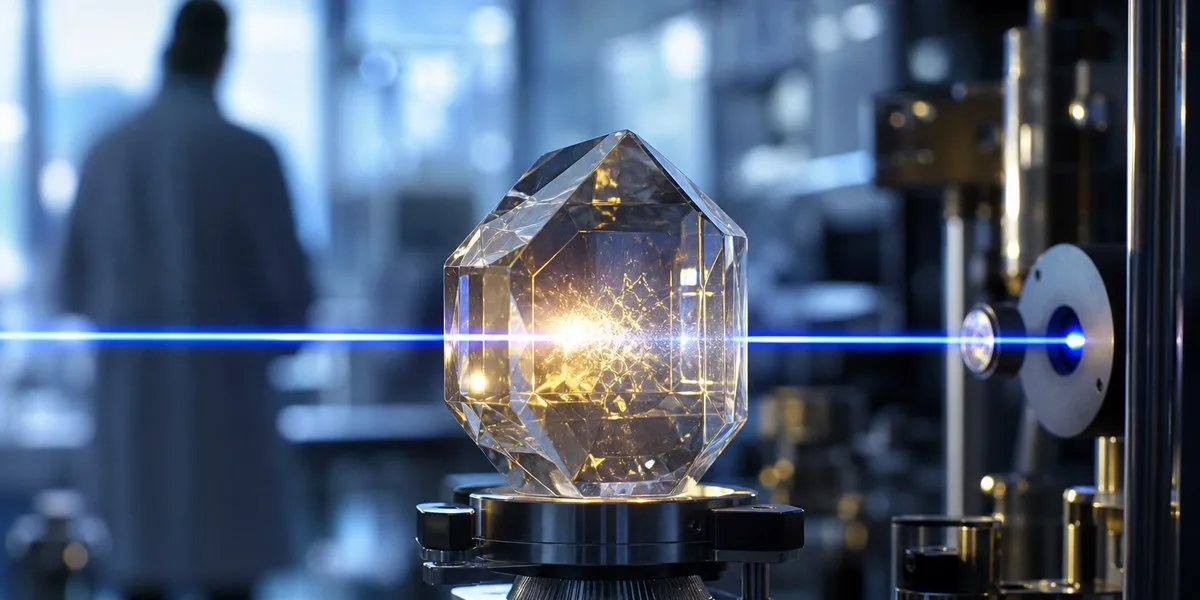
Researchers at TU Wien in Austria have created a self-stabilizing nuclear clock capable of maintaining its own stability without relying on a conventional atomic clock. The device operated steadily for more than 24 hours without intervention, ScienceDaily reports.
Thorium as a frequency standard
The new device uses thorium atomic nuclei rather than electron transitions in atoms, on which traditional atomic clocks are based. Thorium nuclei have two energy states with an unusually small energy difference, making it possible to excite the transition between them with laser light.
A special crystal containing thorium atoms, produced at TU Wien, is irradiated with a laser. The nuclei absorb light only at a precisely defined frequency. If the laser frequency deviates, absorption decreases, and the system automatically adjusts the laser and returns it to the required value.
More current news is available on the UA.News Telegram channel Telegram.
Prototype accuracy
In April 2024, a group led by Professor Thorsten Schumm, in cooperation with the team of Professor Ekkehard Peik from PTB in Braunschweig, experimentally detected the nuclear transition in thorium and demonstrated laser excitation of nuclei for the first time. In the autumn of the same year, the thorium excitation setup was connected to an optical atomic clock, demonstrating the possibility of using nuclei as a highly accurate time standard.
During measurements over the course of a day, the prototype’s relative accuracy was approximately 10⁻¹⁵, corresponding to an error of about one second in 30 million years. This does not mean that the device was tested for millions of years, but is an estimate of accuracy based on measurement results.
The development still falls short of the best optical atomic clocks. Researchers hope to improve its accuracy with more powerful lasers and higher-quality thorium crystals. Nuclei are less sensitive to external influences because they are more than 10,000 times smaller than atoms.




