
Artemis II crew describes yellow and green hues on the Moon’s surface — Live Science
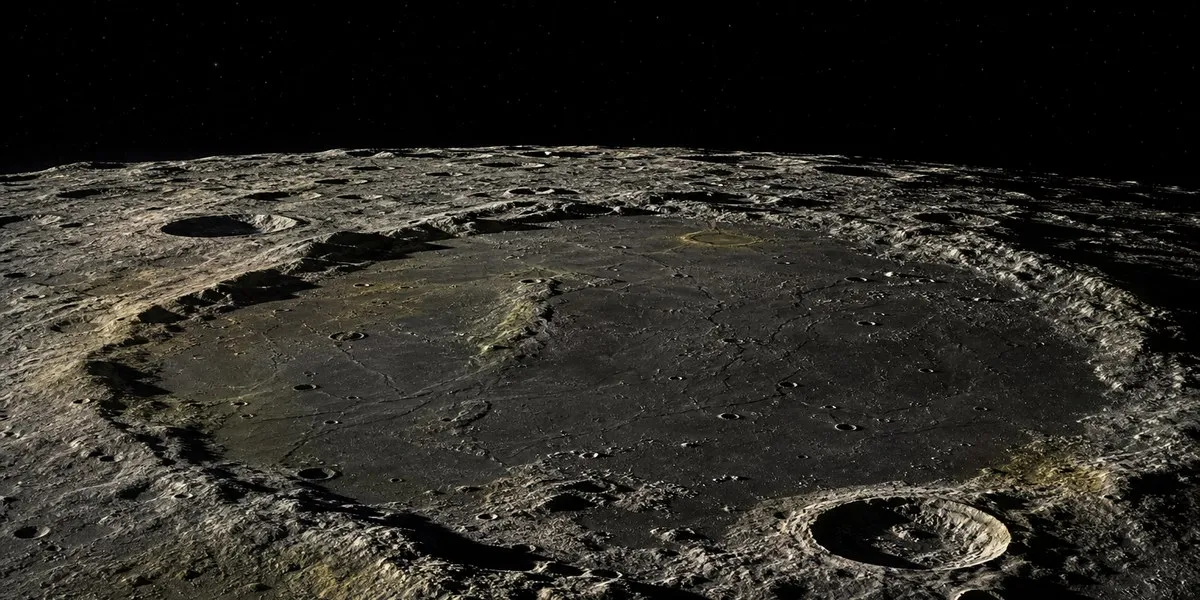
Astronauts on NASA’s Artemis II mission saw yellow, green, brown, blue and beige hues on the Moon’s surface during a close flyby in April. The observations were included in NASA’s preliminary report on the mission’s lunar research, Live Science reports.
Observations from the Orion capsule
On April 6, the crew of Reid Wiseman, Victor Glover, Christina Koch and Jeremy Hansen orbited the Moon for nearly seven hours, approaching its surface to a distance of about 6,400 kilometers. The 130-page report compiles the astronauts’ observations based on 814 gigabytes of photos, video and audio recordings made from the Orion capsule.
One of the areas that drew the crew’s attention was the Aristarchus Plateau, an elevated region in the northwest of the Moon’s near side. It contains many ancient volcanic formations, including dark lava deposits and colored volcanic glass. Koch noted pronounced yellow tones, while mission pilot Glover also reported green and brown streaks.
More current news is available on the UA.News Telegram channel Telegram.
Possible explanation for the colors
The report’s authors noted that the orange and green hues may be linked to glass beads rich in titanium and magnesium, respectively. Similar volcanic glass beads were previously collected by members of the Apollo 15 and Apollo 17 missions in other areas of the Moon.
Another area of observation was the Orientale Basin, a large young multi-ring impact crater that stretches between the Moon’s near and far sides. During the flyby, the astronauts noted gray, brown, beige and green areas; Koch described the crater’s outer ring as having almost swamp-like colors. Before the flight, the crew spent more than two years training to observe and describe the Moon’s geological features, including visiting Earth’s craters and conducting simulated flybys.




