
After eight years in space, the BepiColombo probe reached Mercury
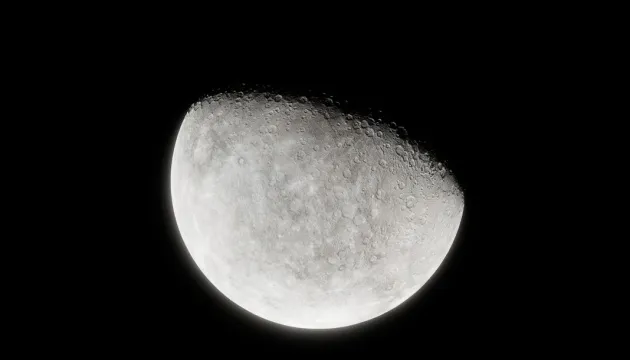
On Sunday, November 22, the European space probe BepiColombo reached Mercury after an eight-year journey. The spacecraft established contact with mission control and is now preparing for its main scientific mission. Researchers plan to study the planet’s magnetic field, its surface, core, and tenuous atmosphere.
The agency confirmed that the spacecraft has established contact with the flight control center. “We received a response from Bepi,” agency representatives said. The probe will now prepare for the main phase of the mission. In its initial orbit, it will be able to approach Mercury’s surface to a distance of up to 674 kilometers.
The BepiColombo mission is a joint project of the European Space Agency and the Japan Aerospace Exploration Agency (JAXA). Its cost is 1.7 billion euros, or about 1.9 billion dollars. The main goal of the mission is to gather more information about Mercury, the planet closest to the Sun. Although scientists already have some data on it, Mercury remains one of the least-studied planets in the inner Solar System.
What Will Be Studied on Mercury
BepiColombo consists of two orbiters equipped with different scientific instruments. They will study Mercury’s magnetic field, map its surface, and investigate its core and tenuous atmosphere. One of the scientists’ main goals is to determine whether there is water on the planet. Researchers want to find out where it might be located, what its composition is, and how it formed.
The probe was launched in October 2018. Since then, it has traveled more than 10 billion kilometers before reaching Mercury. The mission is being managed from the European Space Agency’s center in Darmstadt, Germany, near Frankfurt. In September, the two orbiters separated from the propulsion module. They are now under the influence of Mercury’s gravity, although they remain connected to each other for the time being.
According to the plan, the spacecraft are scheduled to separate in December. After that, they will continue on to their operational orbits. They are scheduled to reach those orbits by March 2027, and full-scale scientific research is set to begin in April.
How the Probe Is Protected from Solar Radiation
The journey to Mercury has been a difficult challenge not only because of the great distance. The planet is located very close to the Sun, so the spacecraft are exposed to significantly more heat and radiation than they would be near Earth. According to the ESA, solar radiation near Mercury can be ten times more intense than on Earth. Therefore, during the development of BepiColombo, special attention was paid to protection against overheating.
Both orbiters have a special heat-resistant coating and multilayer insulation. These materials are designed to protect the equipment from extreme temperatures and help it operate under challenging conditions. One of the spacecraft also has an unusual design. It will rotate at a speed of 15 revolutions per minute to prevent overheating while operating near the Sun.
Now, after an eight-year journey, BepiColombo is moving on to the next phase. If all planned maneuvers are successful, the two spacecraft will begin a detailed exploration of Mercury as early as spring 2027. The European Space Agency (ESA) announced the probe’s arrival on November 22.




