
Israel creates ice 10 times stronger than ordinary ice — ScienceAlert
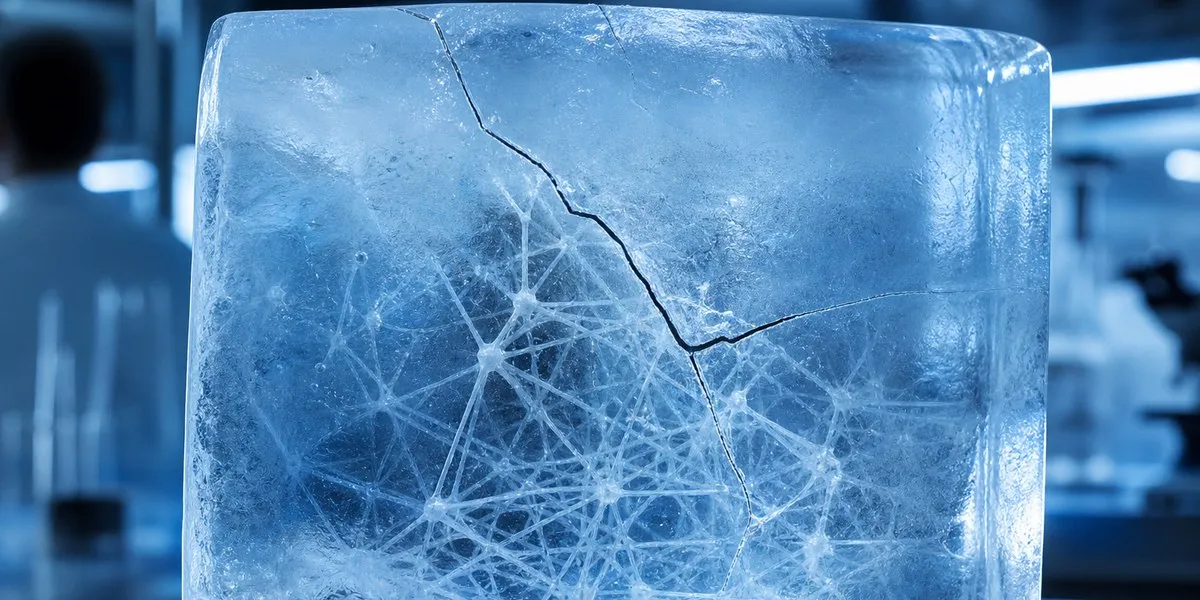
Researchers at the Hebrew University of Jerusalem have created BioPykrete, an ice-based composite material that is 10 times stronger than ordinary ice and can absorb 70 times more energy before failure. ScienceAlert reports.
The new material develops the idea of Pykrete, a composite of ice and wood pulp that the United Kingdom’s Royal Navy tested during World War II for the potential construction of an aircraft carrier. The project was ultimately abandoned due to rising costs and the emergence of other options.
Ice with cellulose and protein
For BioPykrete, scientists added plant-derived cellulose nanocrystals and the CBM3a-AFPIII protein to ice. Cellulose is the main structural component of plants, and its nanocrystals can strengthen ice, including by making crack propagation more difficult.
More current news is available on the UA.News Telegram channel Telegram.
CBM3a-AFPIII combines an antifreeze protein and a carbohydrate-binding module. It is intended to hold the cellulose nanocrystals and ice together, ensuring their bonding at the molecular level. According to the researchers, this prevents the material from failing suddenly and allows it to deform gradually and absorb more energy.
Prospects for cold regions
Scientists are considering BioPykrete as a possible construction material for remote cold regions, including the Arctic and Antarctica, where conventional construction methods are difficult to use. Its main components are ice and plant cellulose, so the material could potentially have a low carbon footprint and be biodegradable.
However, the work is a small-scale proof of concept. Before practical use, the long-term stability of BioPykrete under changing conditions, as well as the mechanisms of crack propagation in the composite, need to be studied. The results were published in the journal Colloids and Surfaces B: Biointerfaces.




